What Separates Advanced Brewing from Basic Setup
A standard drip machine and pre-ground supermarket coffee produce technically acceptable coffee if you define acceptable as "hot and caffeinated." Advanced brewing defines acceptable differently: consistent extraction across a measured parameter range, flavor accuracy relative to origin and roast, and repeatability so you can refine your process systematically rather than hoping each cup turns out well.
This requires equipment with meaningful precision, not just marketing language about precision. A grinder that produces a uniform particle size distribution matters because uneven particles extract at different rates — some areas of the puck over-extract (bitter) while others under-extract (sour) simultaneously. A kettle with precise temperature control matters because water 10°F above optimal extracts harsh phenolic compounds; 10°F below optimal leaves sweetness and body in the grounds. A scale with a fast refresh rate matters because controlling pour rate during a pour-over requires feedback you can actually see and respond to.
The equipment decisions that matter most, ranked by impact on cup quality:
- Grinder (highest impact — affects extraction uniformity)
- Water quality and temperature control (high impact — affects extraction chemistry)
- Espresso machine or brewing device (high impact for espresso; moderate for manual methods)
- Scale and timer (moderate impact — enables repeatability)
- Storage (moderate impact — preserves the quality you started with)
Espresso Machines: What to Actually Look For
Espresso machines are the most discussed and most expensive category. The relevant technical specifications that distinguish capable machines from marketing-heavy underperformers:
PID temperature control — a Proportional-Integral-Derivative controller maintains boiler temperature within ±0.5°C of the target, versus ±5°C or worse in machines without one. At espresso extraction temperatures (90–96°C for most coffees), a 5°C variation produces a noticeably different shot. PID is not a luxury feature; it's a basic quality requirement for any machine worth buying for specialty coffee.
Pre-infusion — wetting the puck with low pressure before full 9-bar extraction reduces channeling (where pressurized water finds a preferential path through the puck rather than extracting uniformly). Machines without pre-infusion extract unevenly from pucks with any density variation.
Pressure profiling — higher-end machines allow you to vary pressure through the shot, not just control the single-point target. This is meaningful for experienced users working with specific coffees; it's irrelevant for most home setups.
E61 group head — a thermosyphon group head design that stabilizes brewing temperature at the puck level. Most prosumer espresso machines use this or a similar thermal management approach.
Espresso Machine Tiers
| Machine | Price (approx.) | Key Features | Best For |
|---|---|---|---|
| Breville Bambino Plus | $500 | Auto milk texturing; 3-second heat-up; basic PID | Entry prosumer; space-limited setups |
| Breville Barista Express | $700 | Integrated grinder; PID; pre-infusion | All-in-one upgrade from basic drip |
| Rancilio Silvia Pro X | $900 | Dual boiler; PID; E61 group head | Serious home use; espresso + steaming simultaneously |
| Profitec Pro 300 | $1,100 | Dual boiler; PID; compact form factor | Flat learners who want professional-grade temp stability |
| La Marzocco Linea Mini | $5,400 | Professional components; saturated group head; dual boiler | Café-grade home setup; maximum longevity |
| Decent Espresso DE1 | $3,000+ | Full pressure profiling; real-time graphing; programmable | Data-oriented enthusiasts; experimental brewing |
The most significant jump in functional quality is between entry-level single-boiler machines and mid-tier dual-boiler or heat-exchanger machines. The La Marzocco Linea Mini is exceptional but the price reflects commercial-grade components more than proportionally better results versus a Profitec Pro 300 for most home users.
Grinders: The Most Important Equipment Decision
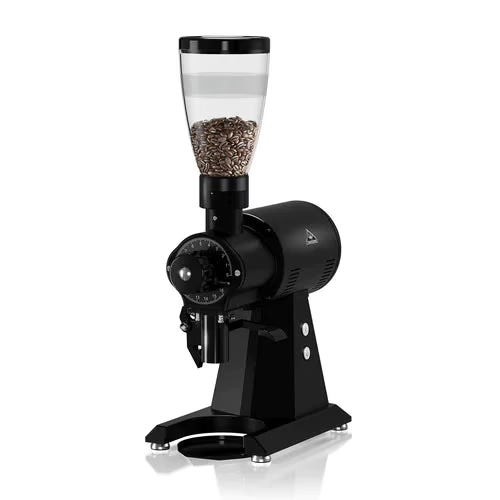
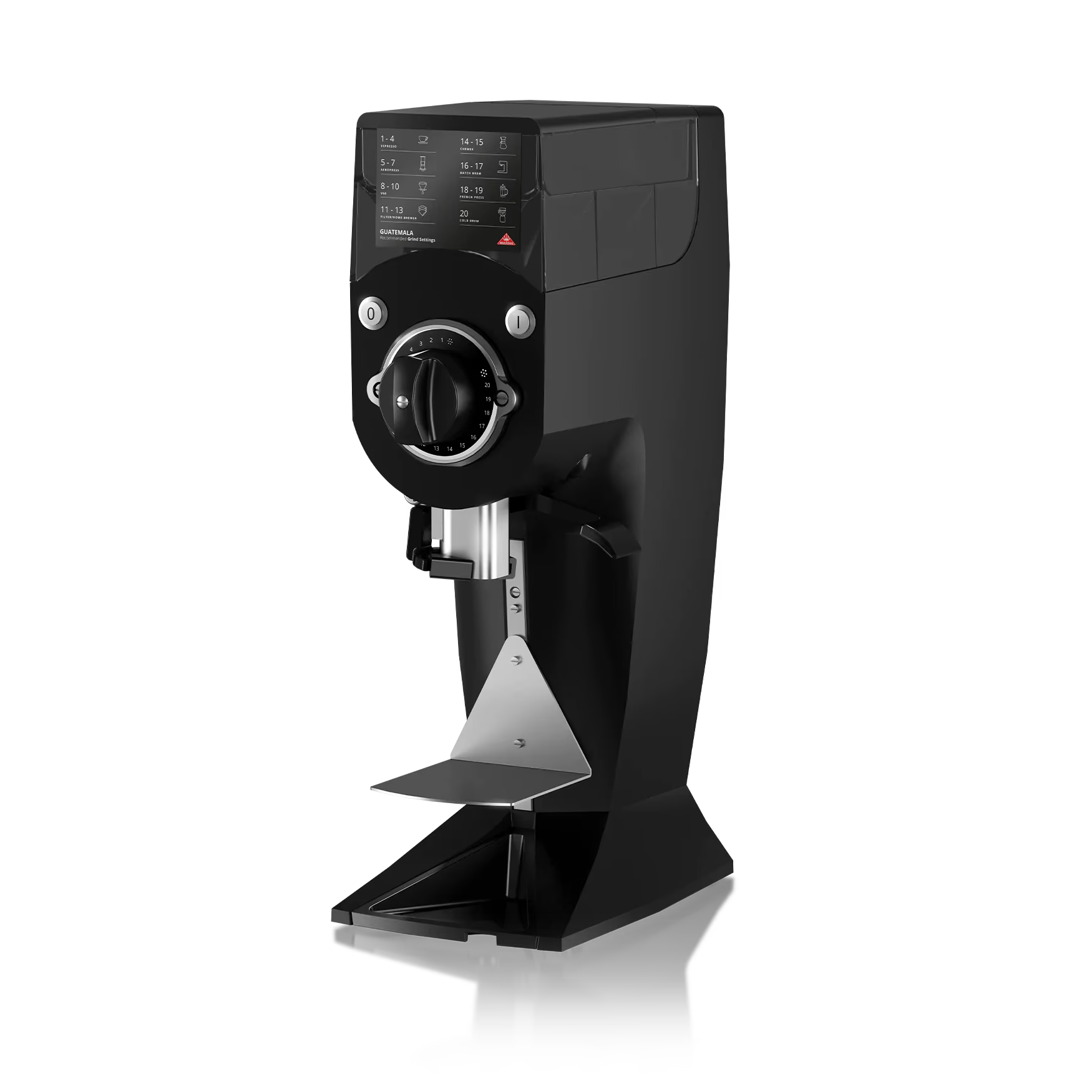
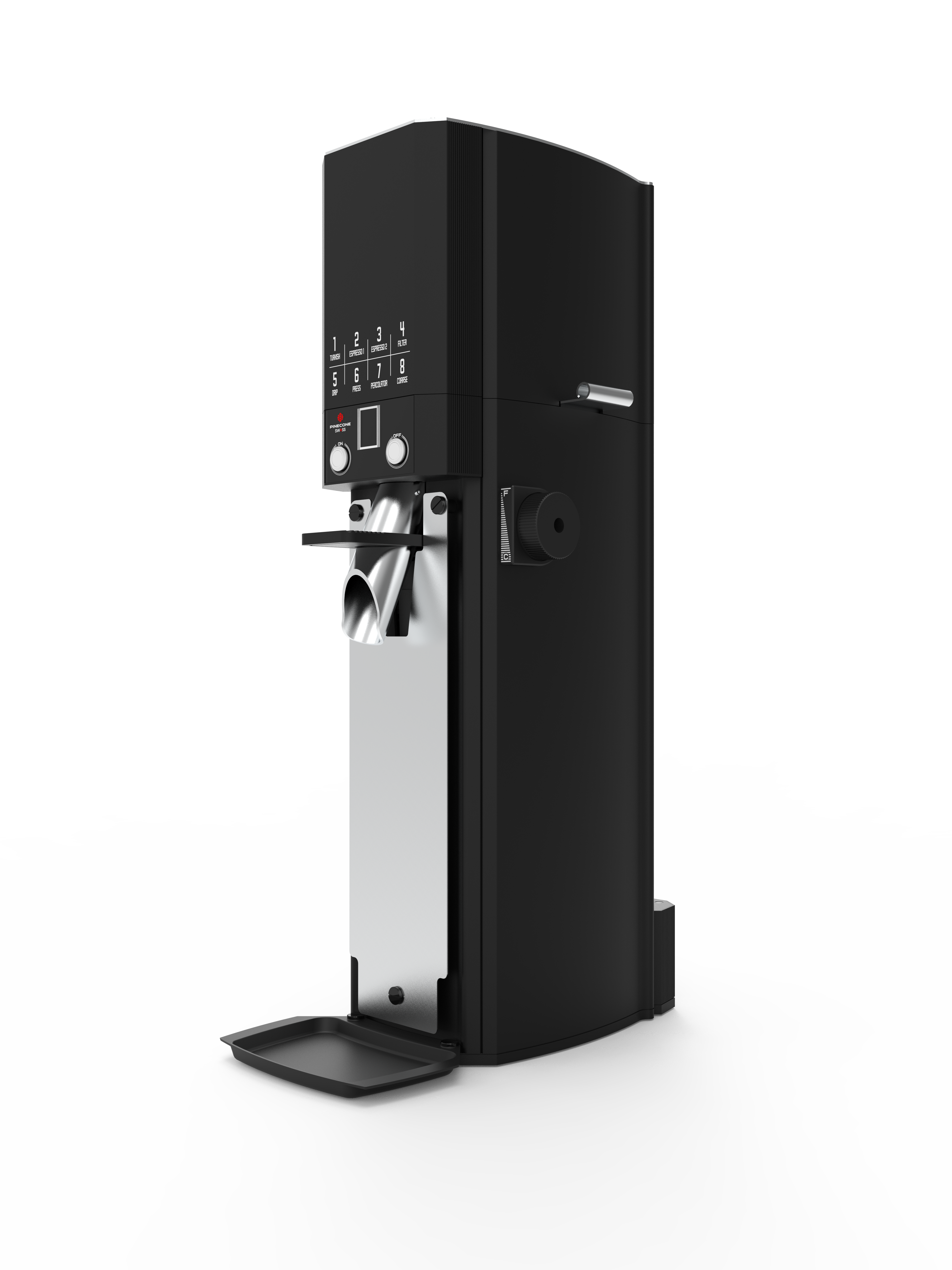
Every coffee professional who has spoken publicly on the subject agrees: the grinder is the single most impactful equipment choice in any brewing setup. The reason is particle size distribution.
Burr Grinders vs. Blade Grinders
Blade grinders chop beans with a spinning blade that generates heat, produces extremely uneven particle sizes, and offers no meaningful control over grind fineness. Fine particles over-extract; large chunks under-extract. The result is a muddy, inconsistent cup regardless of the coffee quality. Blade grinders are unsuitable for any brewing beyond basic automatic drip.
Burr grinders use two abrasive surfaces — the burrs — to crush beans to a consistent size. The gap between burrs determines particle size; adjusting the gap adjusts the grind. Two subtypes exist:
Conical burrs — a cone-shaped inner burr rotates inside an outer ring burr. They operate at low speed (600–1000 rpm), generate minimal heat, and produce a slightly bimodal particle distribution (which some espresso users prefer for its impact on extraction dynamics). The majority of prosumer grinders use conical burrs.
Flat burrs — two parallel disc-shaped burrs facing each other. They operate at higher speed, produce more uniform particle distribution, and are typically found in higher-end grinders and commercial equipment.
Grinder Recommendations by Use Case
| Grinder | Price | Burr Type | Grind Settings | Best For |
|---|---|---|---|---|
| Baratza Encore | $170 | 40mm conical | 40 stepped | Pour-over, drip; entry-level |
| Baratza Virtuoso+ | $270 | 40mm conical | 40 stepped + digital timer | All manual methods; value benchmark |
| 1Zpresso J-Max | $230 | 48mm conical | 90 click-stepped (hand grinder) | Travel; pour-over; espresso capable |
| Comandante C40 | $240 | German steel conical | 30+ stepped (hand) | Premium hand grinder; excellent pour-over |
| Baratza Forte BG | $910 | 54mm flat steel | 260 stepless | Espresso + filter; weight-based dosing |
| Eureka Mignon Specialita | $400 | 55mm flat steel | Stepless | Espresso; quiet operation; dosing chamber |
| Niche Zero | $700 | 63mm conical | Stepless | Single-dose workflow; minimal retention |
The Baratza Encore represents the minimum viable grinder for serious manual brewing. Above it, the meaningful upgrades are: stepless adjustment (which allows micro-tuning rather than locked step positions), larger burrs (which reduce heat generation and improve consistency), and low retention (which means less old coffee mixing with fresh grounds).
Pour-Over Equipment: The Manual Precision Setup
Manual pour-over is the method that gives a home brewer the most direct control over extraction. The variables you control — pour rate, water temperature, bloom time, total brew time — map directly to extraction outcomes in ways that are learnable and refineable.
Drippers
The three designs that dominate specialty coffee:
Hario V60 — the conical Japanese design with interior spiral ribs and a large single hole at the base. The ribs hold the filter away from the dripper walls, promoting airflow and enabling fast extraction. The single large hole means flow rate is controlled primarily by grind size. It rewards practiced technique; beginners find it less forgiving than other options.
Kalita Wave — flat-bed design with three small holes at the base. The flat bed promotes even extraction across the puck; the three holes self-regulate flow rate better than the V60's single hole. More forgiving than the V60; produces a slightly fuller-bodied cup.
Chemex — thick paper filter (40% heavier than standard) removes essentially all oils and very fine particles, producing an exceptionally clean, clear cup. The filter thickness slows flow rate, increasing contact time and often producing a somewhat richer flavor profile despite the oil removal.
The Variable-Temperature Gooseneck Kettle
A gooseneck kettle is not optional for manual pour-over. The narrow, curved spout is what allows you to control pour rate and target specific areas of the coffee bed with precision. A standard kettle's wide spout pours too fast and too imprecisely for controlled extraction.
Variable temperature control eliminates the need to boil and then cool — you set 93°C (199°F) and pour when ready.
Two clear options:
Fellow Stagg EKG+ ($199) — temperature control accurate to 1°F, Bluetooth connectivity for logging, flow restrictor that limits pour rate for better control, and aesthetics that have made it the signature piece of specialty coffee counter setups. The Bluetooth integration with the Acaia scale app enables pour-by-pour brewing data logging.
Bonavita Digital Variable Temperature Kettle ($70) — functional temperature control, gooseneck spout, 1-liter capacity. Lacks the Stagg EKG+'s flow restrictor and connectivity, but performs the essential function reliably at a fraction of the price.
Scales and Timers: The Foundation of Repeatability
Brewing by volume ("fill to the 2-cup line") is imprecise because coffee density varies between origins and roasts. Brewing by weight — 60 grams per liter of water for pour-over, 1:2 dose-to-yield ratio for espresso — enables genuine repeatability.
Key scale specifications for coffee:
Resolution: 0.1g minimum for brewing applications. Espresso users benefit from 0.01g for dosing.
Response speed: The scale's refresh rate determines how quickly you see weight changes. For pour-over, you're controlling flow rate in real time — a slow scale defeats the purpose.
Integrated timer: Separate timers add friction to the workflow; an integrated timer is more practical.
Waterproofing: Coffee drips. A water-resistant scale survives the workflow a non-resistant one doesn't.
| Scale | Price | Resolution | Timer | Connectivity | Best Use |
|---|---|---|---|---|---|
| Hario V60 Drip Scale | $55 | 0.1g | Yes | No | Entry pour-over; auto-tare |
| Timemore Black Mirror | $65 | 0.1g | Yes | No | Clean design; rechargeable |
| Acaia Pearl | $175 | 0.1g | Yes | Bluetooth | App logging; flow-rate display |
| Acaia Lunar | $225 | 0.1g | Yes | Bluetooth | Espresso; compact; water-resistant |
| Felicita Arc | $110 | 0.1g | Yes | Bluetooth | Budget smart scale alternative |
The Acaia Pearl's real-time flow-rate indicator is a genuine workflow enhancement for pour-over: you see not just total weight but the rate of water addition in grams-per-second, which allows you to control pour consistency across the bloom and main pours. The Bluetooth integration enables multi-session brew logging that supports systematic recipe development.
The AeroPress: Versatile, Fast, and Experimental
The AeroPress deserves its own section because it doesn't fit neatly into any other category. Invented by Alan Adler in 2005 and now the subject of its own annual World Championship, it combines immersion brewing (grounds steep in contact with water) and pressure extraction (the piston forces liquid through a microfilter).
What makes it useful for advanced brewers:
Rapid iteration — a full AeroPress brew takes 90 seconds to 3 minutes. Comparing five different recipes in an afternoon is practical in a way that pour-over or espresso comparisons aren't.
Forgiving extraction range — the AeroPress produces acceptable results across a wide range of variables. This makes it ideal for exploring parameter effects without catastrophic failure modes.
Portability — travels as carry-on luggage without concern. For professionals who travel frequently, this means consistent quality in hotel rooms.
Standard vs. inverted method — the standard orientation drains by gravity during brewing; the inverted method keeps the puck fully submerged until you flip and press, enabling longer immersion times and more controlled extraction. World Championship recipes almost universally use the inverted method.
Water Quality: The Variable Most People Ignore
Water constitutes over 98% of a brewed cup. Its mineral content directly affects extraction efficiency and flavor.
The Specialty Coffee Association's recommended water specifications:
| Parameter | SCA Target | Acceptable Range |
|---|---|---|
| Total Dissolved Solids (TDS) | 150 ppm | 75–250 ppm |
| Calcium Hardness | 50–175 ppm | 17–85 ppm |
| pH | 7.0 | 6.5–7.5 |
| Chlorine | 0 ppm | 0 ppm |
| Sodium | 10 ppm | Under 30 ppm |
Soft water (TDS under 75 ppm) under-extracts — minerals act as carriers for flavor compounds, and too few minerals means compounds stay in the grounds. Hard water (TDS above 250 ppm, particularly with high calcium) over-extracts and can produce harsh, dry astringency.
Most municipal tap water contains chlorine or chloramine, both of which add detectable off-flavors to coffee. A basic carbon block filter removes chlorine; chloramine requires a catalytic carbon filter or a reverse osmosis system.
For serious brewing, some enthusiasts use reverse osmosis water with specific mineral additions — potassium bicarbonate for buffering capacity, magnesium sulfate for enhanced flavor extraction, calcium chloride for body. This is called "water recipe" development and is documented in published resources from coffee scientists like Barista Hustle's Maxwell Colonna-Dashwood.
Coffee Storage: Protecting Your Investment
Green coffee lasts 1–2 years under proper conditions. Roasted coffee degrades meaningfully within 2–4 weeks of roasting and exponentially faster after grinding. The enemies are oxygen, moisture, light, and heat.
What storage actually needs to accomplish:
- Minimize oxygen contact (oxidation degrades volatile aromatics)
- Prevent moisture absorption (coffee is hygroscopic; moisture accelerates staling and mold)
- Block light (UV degrades organic compounds)
- Maintain cool, stable temperature (heat accelerates all degradation reactions)
The Fellow Atmos Vacuum Canister ($40–60 depending on size) uses a simple vacuum mechanism that removes air from the container with a twist. It's not perfect vacuum, but it meaningfully reduces oxygen content and provides airtight storage. More practical than vacuum-seal bags for daily-use quantities.
The Airscape Coffee Storage Canister ($30–50) uses a patented plunger lid that pushes air out before sealing. The CO2 valve allows freshly roasted coffee to continue degassing without letting oxygen in — relevant if you buy coffee within days of the roast date.
Freezing whole beans is controversial but evidence-supported for long-term storage of specialty or rare lots. The key requirements: freeze in single-use portions (to avoid repeated freeze-thaw cycles), use vacuum-sealed packaging (to prevent moisture absorption when the bean warms after removal), and thaw completely before opening (condensation forms on cold surfaces).
Frequently Asked Questions
Do I need an espresso machine for specialty coffee?
No. Some of the most nuanced specialty coffees — particularly light-roasted Ethiopian and Kenyan washed lots — express their best qualities through pour-over or AeroPress, not espresso. Espresso is an intensive extraction method that emphasizes body and intensity; it can overwhelm delicate floral or high-acidity profiles. Many specialty roasters design their filter roasts specifically for manual brewing.
What grinder should I buy first?
For pour-over and manual brewing, the Baratza Virtuoso+ ($270) is the best value at its price point — consistent enough for serious work, repairable, and upgradeable. If you want to brew espresso, step up to the Eureka Mignon Specialita or Niche Zero, which offer the stepless adjustment espresso requires.
How important is water temperature?
Very. The ideal extraction temperature for most specialty arabica is 90–96°C (194–205°F). Below 88°C, you systematically under-extract (sour, weak, empty aftertaste). Above 96°C, you risk extracting harsh phenolic compounds before the sweeter compounds finish extracting. A variable-temperature kettle is a worthwhile investment for anyone brewing more than casually.
Is the AeroPress worth it for experienced brewers?
Yes, for specific reasons. It allows rapid recipe iteration that longer-brewing methods don't permit. The World AeroPress Championship generates a body of documented expert recipes annually that serve as excellent starting points for exploring your specific coffees. And it travels, which matters if you drink specialty coffee seriously while away from home.
What water TDS is ideal for coffee brewing?
The SCA recommends 150 ppm as the target with an acceptable range of 75–250 ppm. Below 75 ppm (very soft or distilled water) produces flat, under-extracted coffee; above 250 ppm produces harsh extraction and potential equipment scaling. Most municipal tap water in the US and Europe falls within the acceptable range, but chlorine treatment is the more common quality issue.
Conclusion
Every piece of equipment described here solves a specific, documentable problem in the brewing process. A PID-controlled espresso machine solves temperature instability. A quality burr grinder solves particle size inconsistency. A gooseneck kettle solves pour rate control. A precision scale solves repeatability. Proper storage solves degradation between the roaster and your cup.
The most useful approach is sequential: identify the weakest link in your current setup and address it before adding new variables. For most home setups, that weakest link is the grinder. Fix it first, then work outward.
Browse our curated roasting equipment selection alongside our roasted coffee — matched pairs that deliver on the precision your gear makes possible.