Why the Grinder Comes First
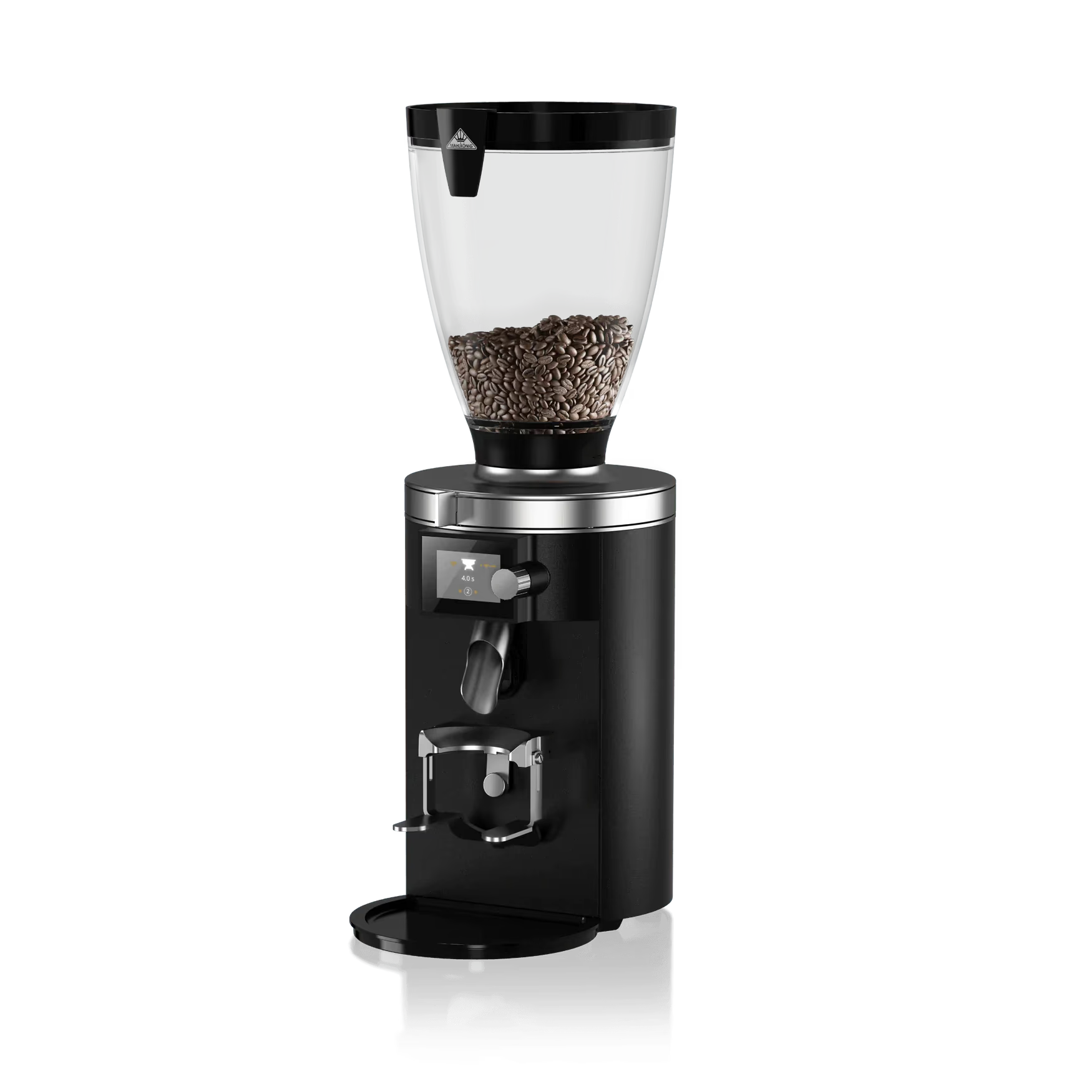
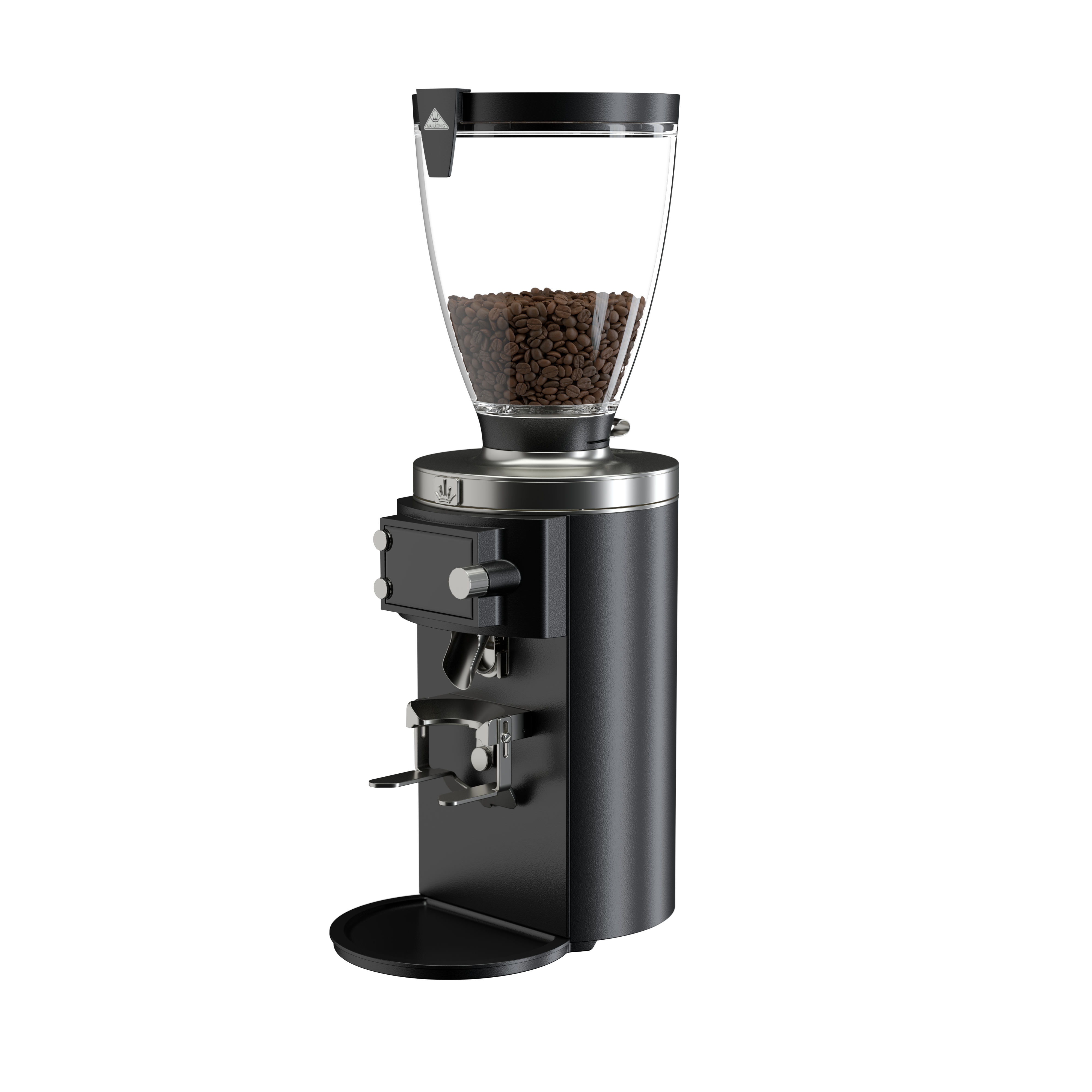
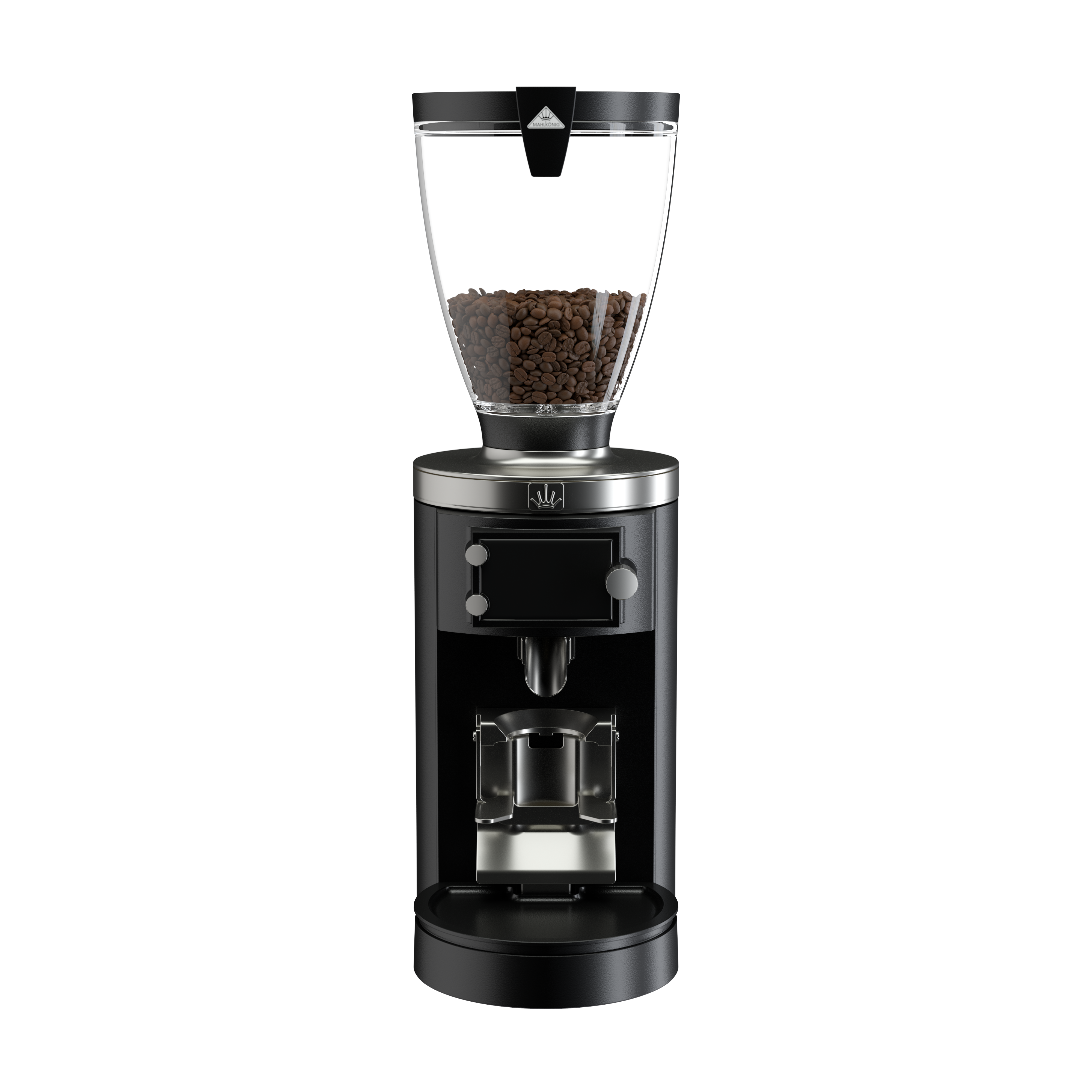
Every upgrade path in specialty coffee starts with the grinder. The espresso machine can be extraordinary, but if the grind has excessive fines or bimodal particle distribution, the shot will channel and pull bitter. Pour-over can use a beautiful hand-hammered Hario V60, but coarse grinds with uneven particle size produce a flat, thin cup regardless of how carefully you pour.
The logic is straightforward: grinding converts whole beans into a surface area for water to contact. Uniformity of particle size determines how evenly extraction occurs. Blade grinders shatter beans randomly; the resulting mix of powder and chunks extracts at wildly different rates. Burr grinders — two abrasive surfaces spinning against each other — cut beans into particles of similar dimensions.
Flat burr vs. conical burr is the first meaningful choice. Flat burrs produce a narrower, more bimodal distribution: they are well suited to espresso because the fine fraction helps choke the puck and extend contact time. Conical burrs run cooler (less heat transferred to grounds), retain fewer grounds between doses, and produce a slightly broader distribution that many filter-coffee enthusiasts prefer. Neither is objectively better — match the burr type to your primary brew method.
The Grinder Tier Table
| Grinder | Type | Best For | Grind Settings | Price Range |
|---|---|---|---|---|
| Baratza Encore | Conical | Entry filter | 40 macro steps | ~$170 |
| Fellow Ode Gen 2 | Flat | Filter / AeroPress | 31 macro steps | ~$345 |
| Eureka Mignon Specialita | Flat | Espresso / filter | Stepless | ~$550 |
| Baratza Sette 270Wi | Conical | Espresso (weight-based) | 270 macro steps | ~$600 |
| Comandante C40 MK4 | Conical (manual) | Travel / filter | ~40 macro steps | ~$230 |
| Niche Zero | Conical | Espresso / filter | Stepless | ~$700 |
The Baratza Sette 270Wi deserves specific mention for espresso newcomers: its downward grind path eliminates retention (the grounds that stay inside the grinder and go stale), and the built-in weight-based dosing removes one variable immediately. The Fellow Ode Gen 2 added an acoustic dampener and a revised burr carrier in its second version — it is now one of the cleanest, quietest filter grinders at its price point.
Espresso Machines: What Each Tier Adds
Entry-level consumer machines (under $500) typically offer single-boiler, single-thermostat designs with no temperature control beyond a ready light. They work, but temperature drift is unpredictable, steam capability is limited, and pressure is fixed by the pump.
Mid-range prosumer machines ($800–$1,500) introduce either PID temperature control or dual-boiler systems. A PID holds boiler temperature to within ±0.5°C and allows you to dial in extraction temperature as a variable — useful when switching origins or roast levels. This change alone can take espresso from inconsistent to repeatable.
High-end prosumer machines ($2,000–$5,000) add pressure profiling, dual independent boilers (simultaneous brew and steam at stable temperatures), pre-infusion control, and plumbing options. These machines are built from commercial-grade components and often outlast their owners.
| Machine | Boiler Type | PID | Pressure Profile | Best For |
|---|---|---|---|---|
| Breville Bambino Plus | Thermocoil | No | No | Entry / milk drinks |
| Rancilio Silvia Pro | Dual | Yes | No | Espresso learner |
| Profitec Pro 300 | Dual | Yes | No | Home espresso focus |
| La Marzocco Linea Mini | Dual | Yes | Via paddle | Serious prosumer |
| Rocket R58 | Dual | Yes | Manual profiling | Enthusiast / precision |
The La Marzocco Linea Mini brings commercial-grade group-head saturation to the home. Its saturated group has massive thermal mass; temperature stays stable shot to shot even with back-to-back doubles. The group is pre-heated by a dedicated circuit, eliminating the cool-down shot that single-boiler machines require before pulling. The downsides are price ($4,500+), weight (22 lb), and counter space — but it is built to last decades without a service call.
The Rocket R58 offers a different philosophy: two independent PID controllers (one for the brew boiler, one for the steam boiler) with a pressure gauge for the brew group, giving you visibility into pressure during the shot. It is the choice for enthusiasts who want to experiment with lower-pressure pre-infusion manually.
Precision Tools: Scale, Kettle, Thermometer
No espresso machine or grinder upgrade improves consistency as much as adding a precision scale to your workflow. Dose variance of even 0.5g changes shot yield and extraction percentage noticeably. A scale accurate to 0.1g, with a fast response time (under 0.5 seconds), and a built-in timer is the minimum for reproducible shots.
The Acaia Pearl S is the benchmark: 0.1g resolution, 50ms response time, flow-rate display, Bluetooth logging. At roughly $245, it removes measurement as a variable entirely. The Hario V60 Drip Scale is the budget alternative — accurate to 0.1g with a built-in timer, no Bluetooth, no flow-rate, half the price.
For pour-over, water temperature matters more than most beginners realize. A gooseneck kettle with a built-in PID holds water at any temperature you set. The Fellow Stagg EKG holds ±1°C from 135°F to 212°F and has a slow-pour spout accurate enough for single-origin light roasts that prefer 88°C over 94°C.
Water: The Overlooked Variable
Water is 98–99% of the finished cup. Chlorinated tap water off-gasses during brewing and leaves a flat, chemical-tinged aftertaste. Water too low in dissolved minerals (TDS under 50 ppm) under-extracts; water too high in calcium (over 150 ppm) over-extracts and scales equipment quickly.
The specialty coffee community has converged on a few practical approaches:
- Third Wave Water mineral packets dissolved in distilled water hit the SCA target profile (~150 ppm TDS, low calcium, higher magnesium). Magnesium enhances flavor compound solubility relative to calcium.
- BWT Bestmax Premium filters add magnesium and remove chlorine in-line. Well suited to plumbed machines.
- Peak Water pitcher uses an adjustable cartridge so you can tune hardness while keeping mineral content in the specialty range.
Brewing Accessories Worth the Investment
Distribution Tools and Tampers
Uneven coffee distribution in an espresso portafilter creates channels — paths of least resistance where water flows through without contacting the rest of the puck. The OCD (Ona Coffee Distributor) or the similar Pesado distribution tool spins the grounds level with one motion. Paired with a calibrated tamper (like the Pullman Big Step with its flat base and 58.5mm diameter), they eliminate most channeling. Budget alternative: the WDT (Weiss Distribution Technique), using a fine needle to break up clumps before tamping, costs almost nothing but requires practice.
Storage
Green coffee keeps for months; roasted coffee degasses CO2 for 2–4 days post-roast, then starts to oxidize. The Fellow Atmos Vacuum Canister uses a twist-lock that pumps air out before sealing. The Airscape uses a one-way valve under a pressure plate. Both are effective; the Atmos is more elegant, the Airscape is faster to open daily.
Milk Frothing
For milk-based drinks, a steam wand on a dual-boiler machine is the gold standard. The Linea Mini's steam wand runs hot enough to texture 300ml of milk to a perfect 65°C in under 20 seconds. If you have a machine with an underpowered steam wand, the Nanofoamer Pro handheld device can produce surprisingly credible microfoam — it will not replace a commercial wand but it bridges the gap on a modest setup.
Maintenance: The Habit That Protects Your Investment
Advanced gear is only as good as how consistently it is maintained. Neglect compounds: a scaled boiler runs hotter than its PID target; worn burrs produce more fines and make dialing in harder; a buildup of coffee oils in the group head imparts bitterness to every shot.
- Espresso machine: Backflush with water daily; backflush with espresso detergent weekly. Descale every 1–3 months depending on water hardness. Replace group-head gasket annually.
- Grinder: Brush burr chamber weekly. Run cleaning pellets (Urnex Grindz) monthly. Inspect burrs for wear annually.
- Kettle: Descale with citric acid or commercial descaler every 2 months if using tap water.
- Scale: Keep dry. Even splash-resistant models benefit from a silicone mat under the portafilter.
Frequently Asked Questions
Should I upgrade my grinder or my espresso machine first?
Almost always the grinder. Even a mid-range grinder like the Eureka Mignon Specialita will expose more of what a modest machine is capable of than upgrading the machine while keeping a poor grinder. The exception: if your machine has no temperature stability whatsoever, adding a PID or upgrading to a dual-boiler has an immediate, dramatic effect that a grinder change cannot replicate.
What is pressure profiling and do I need it?
Pressure profiling means varying pump pressure during a shot — typically starting low (3–5 bar) for pre-infusion, ramping to 9 bar during extraction, then tapering. It can highlight sweetness in light-roasted single-origins and prevent channeling in finely ground espresso. It is a refinement tool for experienced brewers, not a starting point. Most beginners benefit more from consistent 9-bar extraction with good distribution than from a profiling machine used inconsistently.
How do I know when my burrs need replacing?
Signs of worn burrs: shots that used to be dialed in at a certain setting now require dramatically different settings; excessive fines visible as sludge in the espresso cup; shots that pull fast and taste thin despite a finer grind. For home use, burrs typically last 5–7 years with weekly cleaning.
Is filtered water really necessary?
If your tap water has no chlorine and sits in the 75–250 ppm TDS range with low calcium hardness, it may be adequate. Test with an inexpensive TDS meter. Most municipal water in the US either has too high TDS or chlorine. Third Wave Water packets dissolved in 1 liter of distilled water are the cheapest, most consistent fix.
The Takeaway
The upgrade path in advanced home coffee follows a consistent logic: fix the grind first, stabilize water temperature second, calibrate measurement third, then optimize for your preferred brew method. The La Marzocco Linea Mini and the Niche Zero represent the ceiling of practical home prosumer gear — machines used by professional baristas in their own kitchens. Gear removes constraints; it does not substitute for the attention that specialty coffee rewards.
Browse our selection of coffee beans sourced for precision brewing — because the best equipment shows you exactly what the coffee can do.