Start With the Grinder, Not the Brewer
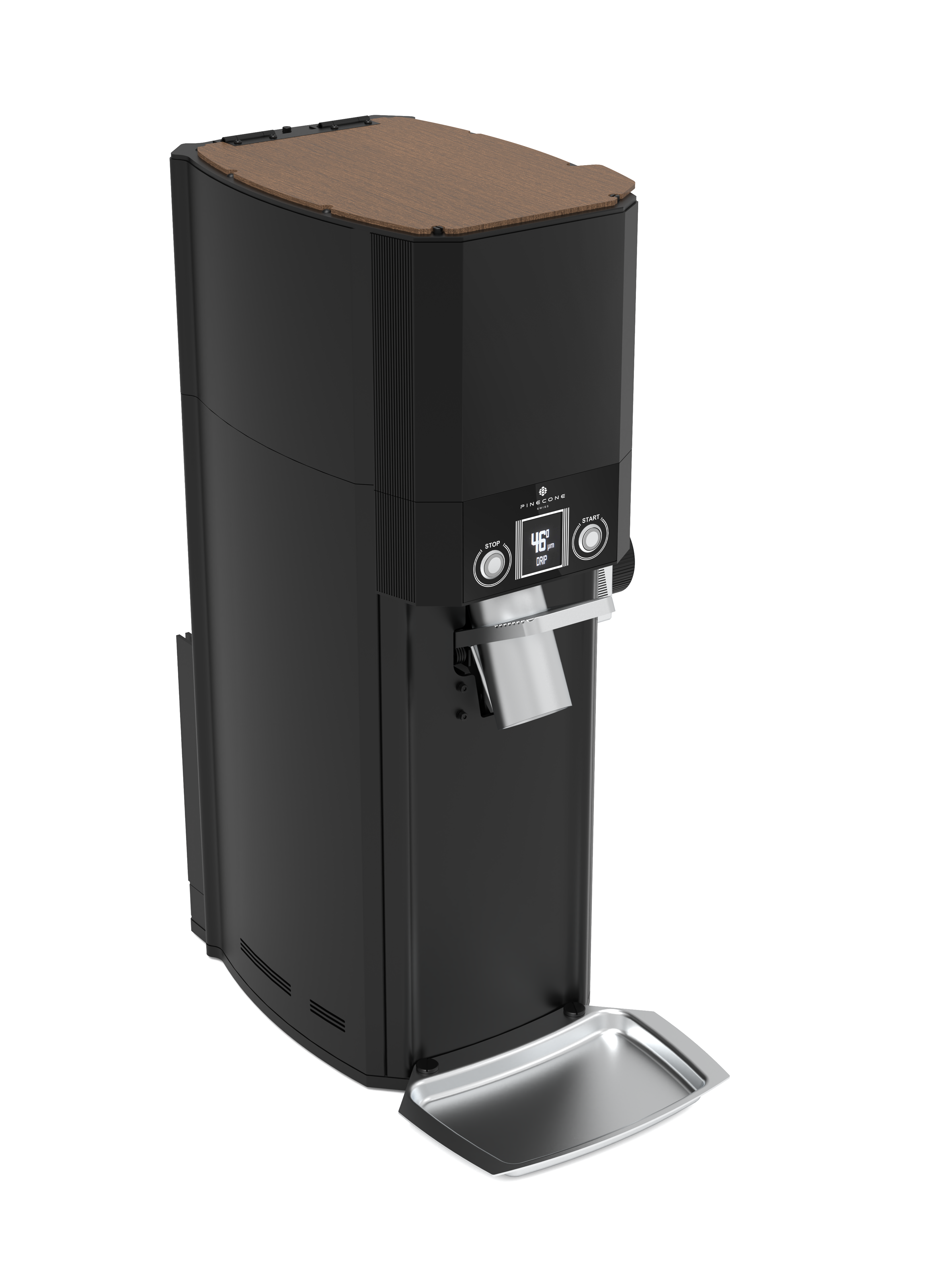
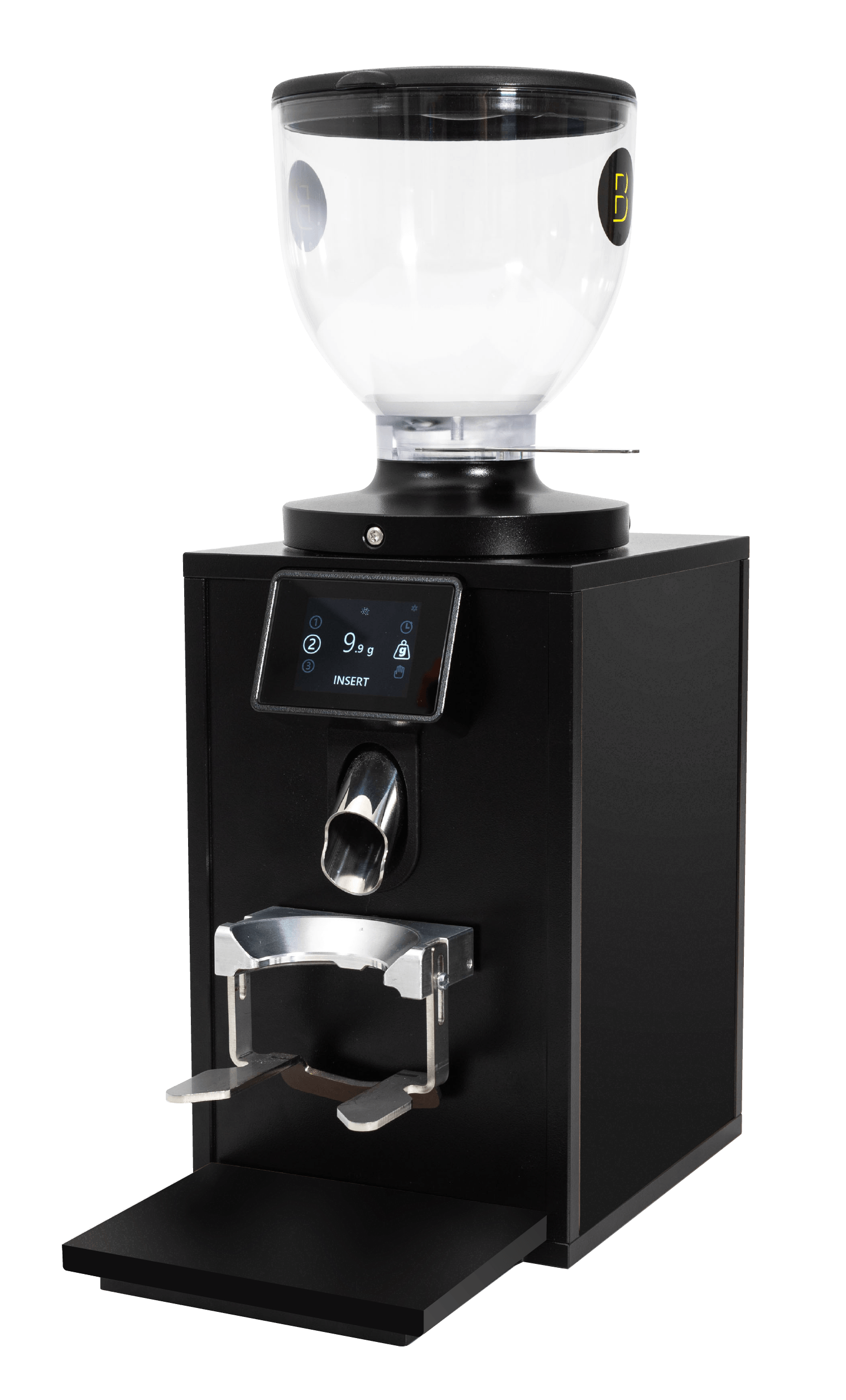
Every barista and coffee educator will tell you the same thing: buy the grinder first. A $20 pour-over cone brewed with freshly ground coffee from a quality burr grinder will produce a better cup than a $300 drip machine paired with a blade grinder or pre-ground coffee.
Here's why. Extraction depends on uniform particle size. A blade grinder produces a distribution of powder, medium particles, and coarse chunks in the same batch. When hot water hits that mixture, the fine particles over-extract (contributing bitterness) while the coarse chunks under-extract (contributing sourness). The cup tastes simultaneously sharp and flat.
A burr grinder — two abrasive surfaces rotating against each other — produces a consistent particle distribution. Every particle extracts at the same rate. The result is a cup where sweetness, acidity, and bitterness are in balance.
The Four Budget Tiers
The table below maps each budget level to a complete equipment list with approximate retail prices as of 2025.
| Setup | Grinder | Brewer | Kettle | Scale | Total |
|---|---|---|---|---|---|
| $50 Starter | Hario Mini Slim (~$30) | AeroPress (~$35) | Stovetop with thermometer | Kitchen scale | ~$65–$80 |
| $200 Quality | Baratza Encore ESP (~$200) | Hario V60 + filters (~$20) | Standard electric kettle | Basic digital scale (~$15) | ~$235 |
| $500 Serious | 1Zpresso JX-Pro (~$170) | Chemex 6-cup (~$45) | Fellow Stagg EKG (~$165) | Timemore Black Mirror (~$60) | ~$440–$500 |
| $1000 Enthusiast | Baratza Vario+ ( |
Kalita Wave + V60 (~$60) | Fellow Stagg EKG Pro (~$195) | Acaia Pearl (~$170) | ~$850–$950 |
Note: Espresso machine setups occupy a separate cost structure — entry point is roughly $450 for the machine plus $300 for an adequate grinder. See our dedicated espresso machine guide for those specifics.
The $50 Starter Setup
Goal: Transform pre-existing brewing habits from mediocre to genuinely good, at minimal cost.
Hario Mini Slim Plus (~$30) — a hand-powered conical burr grinder made from BPA-free resin. It produces a grind distribution that is meaningfully more consistent than any blade grinder. For coarse grinds (French press, AeroPress) it performs very well. For espresso it reaches its mechanical limit, but that is not the point of this tier.
AeroPress Original (~$35) — the most forgiving brewer on the market. Short brew time (90 seconds), immersion plus pressure, easy cleanup, produces no sediment with the included paper filters. The AeroPress tolerates a wide range of grind sizes and water temperatures, which makes it ideal for beginners learning variable-by-variable adjustments.
At this tier, use boiling water cooled for 30 seconds off boil (~93°C) for light roasts, or water right off the boil for darker roasts. A kitchen scale is sufficient — measure 15g of coffee to 250ml water as a starting ratio.
The $200 Quality Setup
Goal: A setup that can produce specialty-grade filter coffee and reveal the character of good beans.
Baratza Encore ESP (~$200) — Baratza's entry-level electric burr grinder, updated with a more powerful motor and an espresso-capable range. For pour-over and drip, it performs at or near the level of grinders twice its price. It grinds consistently at the medium to medium-fine settings that V60 and Chemex demand.
Hario V60 (~$15–$20, ceramic recommended) — the conical dripper that produces the clearest, most transparent representation of a coffee's character. Requires some technique: a bloom pour (pre-wetting grounds for 30–45 seconds), a consistent pour rate, and total brew time of 2:30–3:30 for a standard 250ml cup. The ceramic version retains heat better than plastic.
For a kettle at this tier, an electric kettle with a thermometer insert gets you to the right temperature without spending on a gooseneck. Pouring from a standard kettle spout over a V60 is harder to control — use a slow, circular motion.
Basic digital scale (~$15) — any scale accurate to 1g with a timer function. Timing your brew is as important as measuring your dose.
The $500 Serious Setup
Goal: A setup that a skilled home barista can use to produce coffee comparable to specialty café output.
1Zpresso JX-Pro (~$170) — a hand grinder with 48mm steel conical burrs. Its particle distribution at pour-over settings rivals electric grinders in the $400–$600 range. The external grind adjustment is crisp and stepless. It handles medium to coarse grinds with ease; for espresso it is capable but slow (45–60 seconds per dose). The JX-Pro is the preferred travel grinder for many professional baristas.
Chemex 6-cup (~$45) — a pour-over brewer that uses thick paper filters, producing an exceptionally clean, low-sediment cup. The Chemex excels with medium-light to light roasts and rewards consistent pouring. Total brew time for a standard 400ml batch is 4–5 minutes.
Fellow Stagg EKG (~$165) — the benchmark gooseneck kettle at this price point. Variable temperature control (49–100°C in 1°C increments), a precision pour spout with minimal drip, and a hold function that maintains setpoint for 60 minutes. The EKG transforms pour-over from an exercise in water-temperature guessing into a controlled variable.
Timemore Black Mirror Basic (~$60) — a pour-over scale with 0.1g precision, a built-in timer, and a flow rate display. The flow rate visualization is useful when learning to pour consistently on a V60 or Chemex.
The $1000 Enthusiast Setup
Goal: Eliminate equipment as a limiting variable entirely. The remaining limit is your technique and your beans.
DF64 Gen 2 (~$350) — a single-dose electric burr grinder with 64mm flat burrs. The DF64 is a rare proposition: flat burr grind quality at a price point that would typically buy conical burrs. Single-dose operation (no retention, grind what you need) means zero waste and zero stale grounds between doses. The Gen 2 version resolves the motor stability issues of the original.
Alternatively, the Baratza Vario+ (~$480) — a macro/micro dual adjustment system that makes grind dialing precise and repeatable. Preferred by users who brew multiple methods (it adjusts efficiently from French press to V60 without recalibration reference).
Kalita Wave 185 (~$40) — a flat-bottomed dripper with three small holes that produce a more forgiving, even-extraction brew compared to the V60. The flat bed distributes water uniformly; small variations in pour rate affect the final cup less dramatically. An excellent second dripper alongside the V60 for experimenting with different extraction profiles.
Fellow Stagg EKG Pro (~$195) — adds Bluetooth connectivity and power-mode options to the standard EKG. The Pro's precision is identical; the upgrade is workflow convenience for enthusiasts who track brew sessions digitally.
Acaia Pearl (~$170) — the reference standard for pour-over scales. Real-time flow rate display, 0.1g resolution, automatic timer triggering on first drop, and a companion app for session logging. Its latency is below that of any competitor in the category.
Manual vs. Automatic Brewers
The choice between manual and automatic is primarily about convenience and ritual, not cup quality. A well-maintained automatic drip machine — specifically one SCA-certified for brew temperature and water distribution — produces coffee equivalent to a skilled V60 pour.
SCA-certified drip machines worth naming: Technivorm Moccamaster ($350), Breville Precision Brewer ($200), OXO Brew 9-Cup (~$160). These machines heat water to 93–96°C and distribute it evenly over the grounds — the two variables most basic drip machines fail at.
Manual pour-over (V60, Chemex, Kalita Wave) gives the brewer full control over every variable. This is an advantage if you want to experiment and a disadvantage if you want your coffee ready before you're fully awake.
| Method | Control | Consistency | Time Required | Best For |
|---|---|---|---|---|
| AeroPress | High | High | 2 min | Beginners, travelers |
| French press | Medium | Medium | 5 min | Full-body preference |
| V60 pour-over | Very high | Technique-dependent | 4–6 min | Flavor clarity, light roasts |
| Chemex | High | Medium | 5–7 min | Clean cup, larger batches |
| Kalita Wave | High | More forgiving than V60 | 4–6 min | Beginners learning pour-over |
| Drip (SCA) | Low | High | 6–8 min | Convenience, repeatability |
| Cold brew | Low | High | 12–24 h | Smooth, low-acid concentrate |
Water and Storage: The Variables Nobody Talks About
Two often-ignored variables affect cup quality more than equipment upgrades past a certain threshold: water quality and bean freshness.
Water for coffee brewing should measure 150–200 ppm total dissolved solids (TDS). Below 100 ppm (pure water, reverse osmosis), extraction becomes flat and mineral notes disappear. Above 300 ppm, minerals compete with coffee compounds for your palate. In most US cities, tap water or a simple carbon filter produces water in the target range. Hard-water areas benefit from a BWT Penguin filter cartridge, which conditions both mineral content and pH.
Beans should be used within 14–28 days of roast date for filter methods. Store whole beans in an airtight, opaque container at room temperature — not the refrigerator, where condensation introduces moisture.
Frequently Asked Questions
Do I need a scale for pour-over coffee?
Yes, for consistent results. Volumetric measurements (tablespoons) vary by grind density and bean density. A scale removes one variable from every brew and lets you reproduce a cup you liked. At the $200 tier, a $15 basic scale is adequate.
Is a gooseneck kettle necessary for V60?
Not for your first dozen brews, but it matters. Standard kettle spouts pour in uncontrollable surges that create uneven saturation of the coffee bed. A gooseneck spout gives you a thin, controllable stream. If the Fellow Stagg EKG is out of budget, the Hario Buono gooseneck (~$45 without temperature control) is adequate.
How long does a burr grinder last?
Quality burr grinders — Baratza Encore, Vario, DF64 — last 7–10 years with basic maintenance (brushing burrs monthly, replacing burrs every 2–3 years at ~$30–$50). The electric motor on Baratza machines is user-replaceable; Baratza's service program offers discounted repairs. Hand grinders last indefinitely with clean burrs.
Can I use the same grinder for espresso and pour-over?
With most grinders, yes but with friction. Espresso requires fine grind settings and consistent micro-adjustments; pour-over requires medium to medium-fine settings. The DF64 Gen 2 and Baratza Vario+ handle both well. Budget grinders often lack the step resolution to dial in both methods without recalibration.
Conclusion
Equipment selection for home coffee simplifies to one decision tree: grinder first, then brewer, then kettle, then scale. At the $50 level, a Hario Mini hand grinder with an AeroPress delivers remarkable coffee for the investment. At $200, a Baratza Encore with a V60 produces specialty-grade filter coffee. At $500, a 1Zpresso JX-Pro, Chemex, and Fellow Stagg EKG remove equipment as a limiting variable for filter methods. Beyond $500, you are buying precision, durability, and workflow improvements rather than fundamental quality gains.
The most durable advice: spend more on beans than on equipment. A $25 bag of freshly roasted single-origin coffee brewed on a $50 setup will produce a more interesting cup than a $5 supermarket blend brewed on a $500 machine. Browse our specialty coffee beans to see what well-sourced, freshly roasted coffee tastes like on whatever setup you own today.