Burr vs blade at a glance
| Attribute | Burr grinder | Blade grinder |
|---|---|---|
| How it cuts | Two abrasive surfaces crush beans through a set gap | High-speed blades chop beans on contact |
| Particle distribution | One narrow size range, fixed by the burr gap | Bimodal: lots of fines plus lots of boulders |
| Grind adjustment | Stepped or stepless settings you can repeat | None; particle size depends on how long you run it |
| Repeatability | Same setting, same grind, day after day | Different every time, even with the same beans |
| Cost | Starts at $149.95 for the entry electric Baratza Encore, on the manufacturer's site | Low, because they reuse blender components |
| Best for | Espresso, pour-over, drip, moka pot, Aeropress | French press, cold brew, spices |
- the gap you set
How a blade grinder actually grinds
A blade grinder is a blender motor with a blade on top. Beans sit in a cup, the blade spins past them thousands of times, and whatever the edge hits gets cut. Beans that dodge the blade stay whole; beans near it get shredded. The result is a bimodal distribution, meaning the same batch holds many tiny fines and many large boulders, a split Mahlkoenig documents in its own burr-versus-blade comparison.
- the two sizes a blade leaves
That mix is what wrecks extraction. Fines dissolve fast and give up bitterness; boulders barely get wet and stay sour. Both land in the same cup, which is why blade-ground coffee often tastes sharp and hollow at the same time.
How a burr grinder works
A burr grinder passes beans between two cutting surfaces, one driven by the motor and one fixed. The surfaces, either conical or flat burrs, meet at a gap you set. Every particle has to exit through that gap, so the grind comes out one consistent size. Widen the gap for French press, close it for espresso, and the machine repeats the setting exactly on every batch.
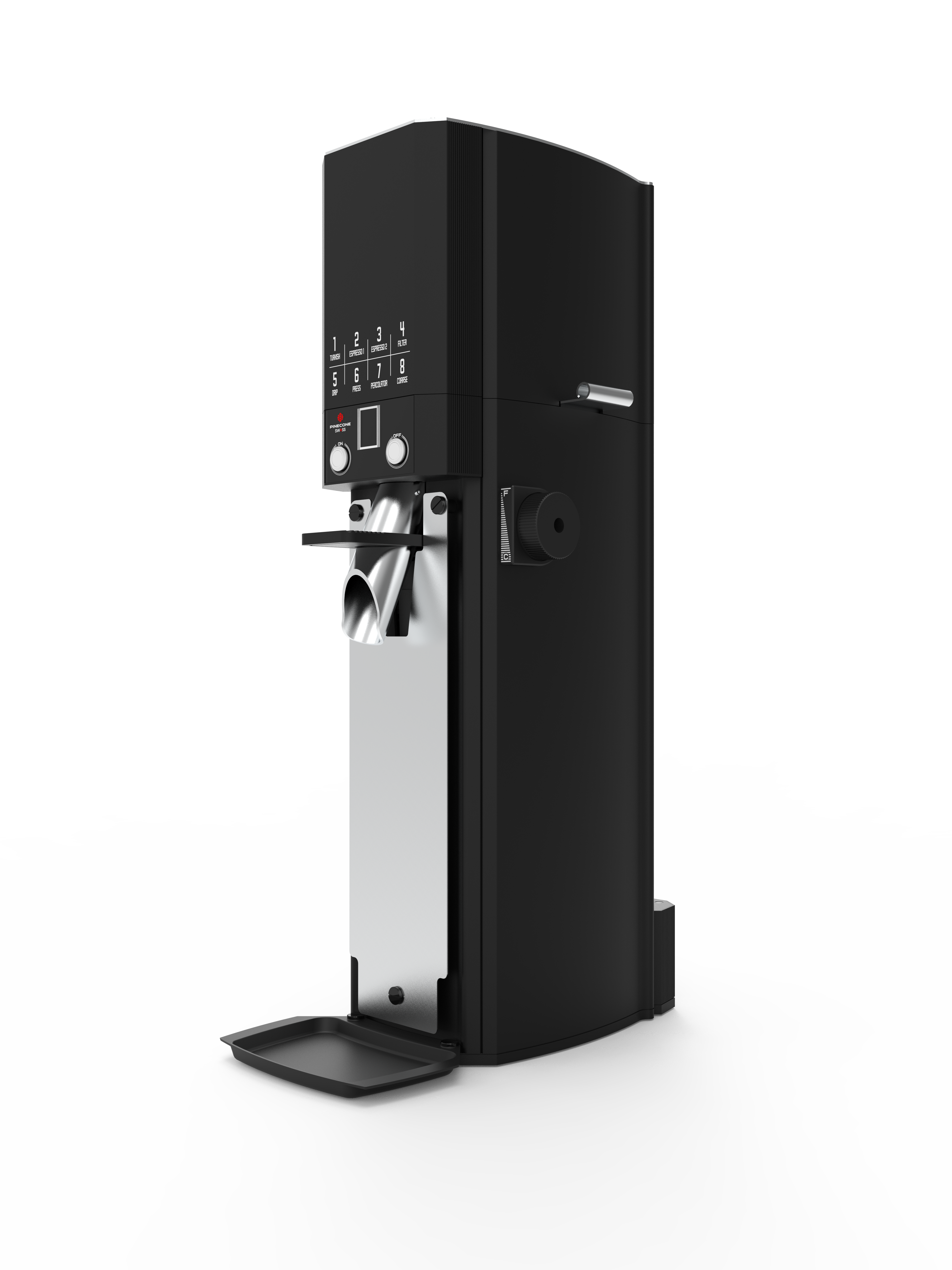
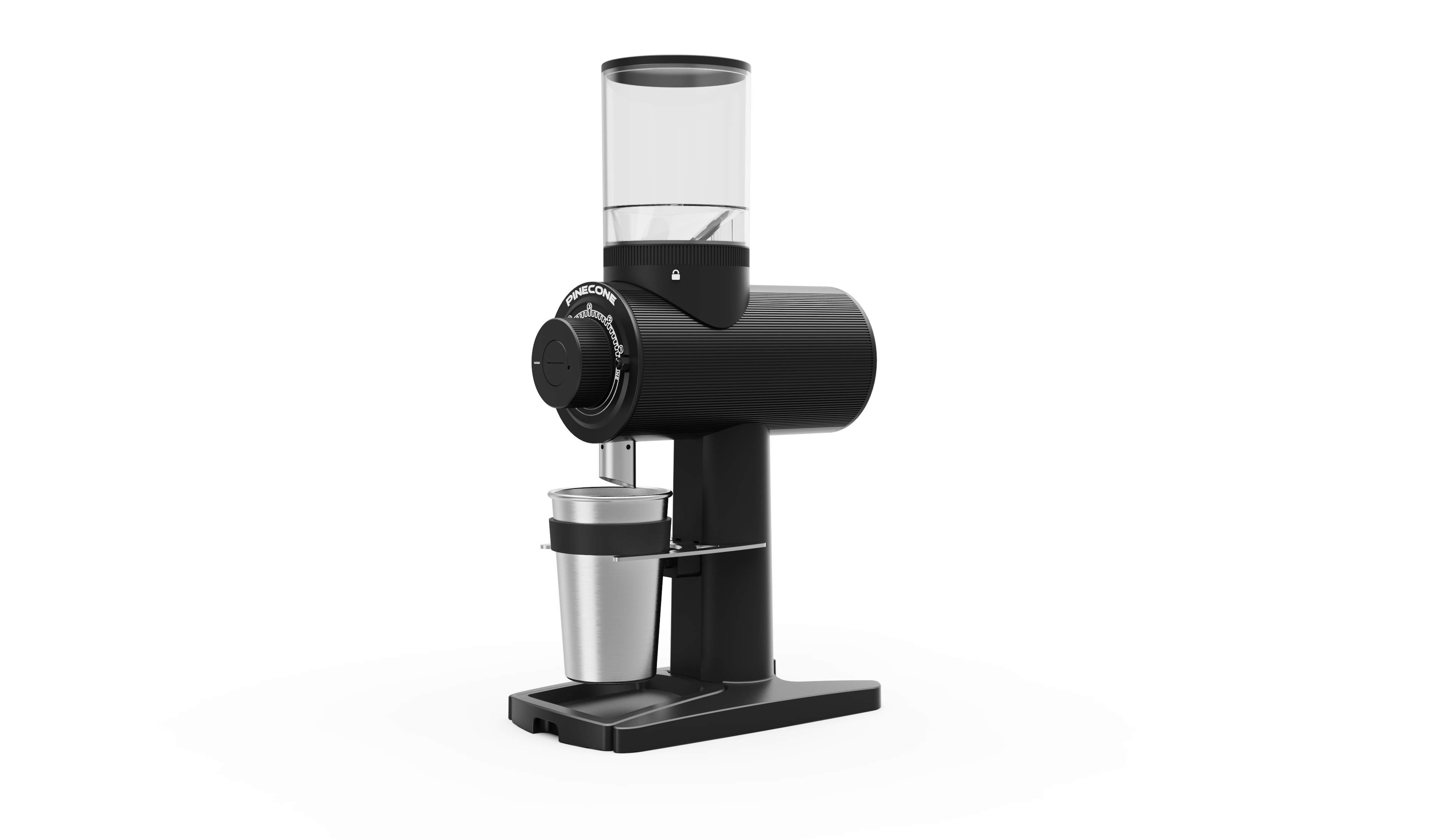
Conical and flat burrs both enforce that consistency; they differ in geometry, not in whether they work. Flat burrs run in home all-rounders like the Mahlkoenig X54 (54 mm) and in espresso-focused machines like the Pinecone Pinion (65 mm); Mahlkönig's own specifications list flat burrs for the X54, correcting an older conical listing. Conical burrs remain common in filter-first and entry-level designs. What matters for this comparison is that either geometry gives you a repeatable grind, which a blade never can.
Burrs need occasional cleaning to hold that consistency over the years; our grinder maintenance guide covers the routine.
What the difference tastes like in the cup
Uniform particles extract at the same rate, so the sweetness, body, and aroma a roaster paid for actually reach the cup. Mixed particles extract unevenly, and the more demanding the brew method, the louder the result:
- where the defect lands
- French press and cold brew forgive the most. Immersion brewing at a coarse grind evens things out, so a blade grinder produces a drinkable, if muddy, cup.
- Pour-over and drip show the mismatch clearly. Fines clog the bed and stall the drawdown while boulders drain under-extracted.
- Espresso punishes it completely. Pressurized water through a bed of mixed particle sizes channels unpredictably, and there is no blade setting fine and stable enough to dial in a shot.
When a blade grinder is still the right call
Honest answer: if French press or cold brew is genuinely all you brew, a cheap blade grinder is acceptable, and spending more buys you little for those methods. It also pulls double duty grinding spices and nuts. Two habits narrow the spread: grind in short pulses, and shake the grinder between pulses. That does not make it a burr grinder, but it makes the coffee noticeably more even.
We do not sell blade grinders, so there is nothing to link here. Buy one if it fits the list above, and skip the upgrade until your brewing outgrows it.
Who should buy a burr grinder
Buy a burr grinder if you pull espresso shots, brew pour-over or drip most mornings, drink specialty beans whose flavor you actually paid for, or want the same cup every day instead of a new lottery each morning. It is the single upgrade that improves every brew method you own, and stepless models let you move between espresso and filter on one machine. If you want help weighing a hand grinder against an electric one, our manual vs electric grinders comparison walks through that decision.
Who should buy a blade grinder
Buy a blade grinder if your coffee life is coarse-immersion only, budget is the deciding factor, or the grinder will mostly process spices. An inexpensive blade grinder still beats buying pre-ground coffee on freshness, because you grind right before brewing. Anyone past that point, especially espresso and pour-over drinkers, will hit the blade's ceiling quickly and end up buying a burr grinder anyway.
Our burr grinder picks
We do not sell blade grinders, and we do not sell sub-$150 burr grinders either, so the picks below are genuine upgrade machines. Browse the full grinders category if none of the five below fits. For the entry price tier we do not cover, Baratza's Encore at $149.95 on the manufacturer's site is the common recommendation, and we are comfortable saying buy that rather than a pricier machine from us if budget is the deciding factor.
Mahlkönig X54. The home all-rounder in this list: 54 mm flat steel burrs with stepless adjustment covering everything from espresso to French press, ultra-quiet operation, and a multifunctional LED display, sized for a kitchen counter. Choose it if you brew several methods and want one grinder to do all of them. Mahlkönig X54
Pinecone Pinion All-Purpose Coffee Grinder. A 65 mm flat-burr all-rounder covering espresso to filter in a compact, low-noise body, with dial-based adjustment on a single control and a modular portafilter holder plus included dosing cup. Choose it if you want flat-burr espresso capability without giving up filter brewing or counter space. Pinecone Pinion All-Purpose Coffee Grinder
Bentwood Vertical 63 Espresso Grinder. The step-up pick: 63 mm special steel burr geometry designed for fuller body, enhanced sweetness, and greater aromatic expression, with full-range grinding from espresso through French press and double ventilation that keeps the grind chamber cool. Choose it if flavor texture matters more to you than price. Bentwood Vertical 63 Espresso Grinder
Ceado Life Home Espresso Grinder. Ceado's home espresso grinder, handmade in Venice, switching between on-demand hopper mode and single-dose bellows mode with near-zero retention between doses. Choose it if espresso is all you brew and you rotate different coffees. Ceado Life Home Espresso Grinder
Anfim Luna Espresso Grinder. An espresso-only grinder from an established Italian maker, built for consistent extraction across daily service and available in Black or White. Choose it if espresso is the only method you grind for and you want a dedicated machine for it. Anfim Luna Espresso Grinder
Frequently Asked Questions
Is a burr grinder really worth it over a blade grinder?
Yes if you brew espresso, pour-over, or drip regularly, because only a burr holds one particle size and repeats it. If you exclusively make French press or cold brew, the difference shrinks and a blade grinder remains acceptable.
Can you taste the difference between blade-ground and burr-ground coffee?
In demanding brews, yes. Fines and boulders extract at different rates, so a blade-ground cup shows bitterness and sourness together, while a burr-ground cup of the same coffee tastes cleaner and sweeter.
Is a blade grinder fine for French press?
It is the method where a blade grinder does least damage, since coarse immersion brewing forgives an uneven spread. Expect some sediment and muddiness, which a coarse burr grind would reduce.
What does a blade grinder do wrong exactly?
It chops rather than cuts, so one batch contains powder-fine fines and large boulders at the same time. It also gives you no repeatable setting, since particle size depends on grinding time.
Why does blade-ground coffee taste bitter and sour at the same time?
The fines over-extract and turn bitter while the boulders under-extract and stay sour. Both defects come from one uneven batch, so adjusting the brew usually cannot fix both.
Conical or flat burr: which is better?
Both produce a consistent grind, so either beats any blade. Flat burrs are common in home all-rounders like the Mahlkoenig X54 and in espresso-focused grinders like the Pinecone Pinion, while conical burrs remain common in filter-first and entry-level designs.
What is the cheapest burr grinder worth buying?
Among electric burr grinders, the Baratza Encore lists at $149.95 on baratza.com and is the common entry point. We do not sell Baratza or any sub-$150 grinder, so we say that plainly; our catalog starts at the Ceado Life and the Mahlkönig X54.
Can a blade grinder make espresso?
Not reliably. Espresso needs a fine, stable grind under pressure, and a blade gives you neither a fine-enough setting nor repeatable particle size, so shots channel and swing between sour and bitter.
Does shaking a blade grinder help grind consistency?
Yes. Grinding in short pulses and shaking the grinder between pulses spreads the beans through the blade path more evenly, so the grounds come out somewhat more uniform. It still cannot match a burr grinder's fixed gap.
Does a burr grinder matter for Nespresso or pod coffee?
Not for the capsules themselves, since those come pre-ground and sealed. It matters for everything you grind at home, including the beans you brew alongside pod drinks.
Is a manual burr grinder better than an electric blade grinder?
For coffee quality, a manual burr grinder wins, because it enforces one particle size where a blade cannot. The trade is effort and speed; our manual vs electric grinders comparison lays out when each makes sense.
Conclusion
A burr grinder turns grind size from a guess into a setting, and that is the difference between coffee that tastes like its origin and coffee that tastes like a compromise. Match the grind to your brewer, pick the machine that fits your methods, and start with our grind size calculator. If you are choosing between two Mahlkönig burr grinders specifically, see our Mahlkönig X54 vs E65S comparison, then pair the grinder with beans worth the upgrade from our specialty coffee selection.