The Case for Advanced Equipment
Advanced coffee equipment serves a single purpose: control. Each variable that influences extraction—water temperature, pressure curve, contact time, grind uniformity, dose precision—exists as a control point. Consumer-grade machines hide these variables behind plastic interfaces and fixed programs. Professional-grade tools expose them, letting roasters and home enthusiasts manipulate extraction with surgical precision.
Consider espresso extraction: the process of forcing pressurized water through a puck of ground coffee. Optimal extraction (18–22% of the coffee's dry mass dissolving into the cup) happens when water contacts grounds at 9 bars for 25–30 seconds, with water temperature between 90–96°C. A 2-degree temperature drop, a 0.5-bar pressure fluctuation, or a 2-second timing variance shifts the extraction window. Underextracting produces sour, thin espresso; overextracting yields bitter, hollow shots. No entry-level machine holds these tolerances. Advanced equipment does.
Why Pressure Profiling Matters
Traditional espresso machines apply constant pressure: the pump delivers 9 bars throughout the shot. Pressure profiling—varying pressure over time—allows:
- Pre-infusion: Low pressure (2–3 bars) for 5–10 seconds wets grounds evenly, preventing channeling
- Ramp: Gradual pressure increase (from 5 to 9 bars) allows water to extract compounds in sequence by solubility
- Decline: Reducing pressure near the end prevents over-extraction as dissolved solids increase
This mimics manual lever machines (used by baristas for decades) but adds reproducibility. Machines like the Lelit Bianca (with its flow-control paddle) and the Decent DE1 (with fully programmable pressure curves) enable these adjustments. The result: shot-to-shot consistency and flavor nuance impossible on fixed-pressure machines.
Essential Advanced Equipment Categories
1. Espresso Machines: Pressure Profiling and Temperature Stability
Decent DE1 ($1,500–$1,800)
The Decent redefines the home espresso machine category by integrating a smartphone app, pressure sensor, and fully programmable pump. Users design custom pressure curves, log shot data, and refine profiles based on real-time feedback. The app displays pressure, temperature, and flow rate live, transforming extraction from guesswork to reproducible protocol.
Pros:
- Unparalleled pressure profiling flexibility
- Direct observation of extraction dynamics
- Rapidly developing user community sharing shot profiles
- Compact footprint (espresso-only, no steam wand)
Cons:
- Steep learning curve; requires app familiarity
- No integrated steam capability (external milk pitcher required)
- Requires USB-C connectivity; software updates necessary
Lelit Bianca ($2,000–$2,400)
The Lelit Bianca combines commercial-grade durability with a dual-boiler system and rotary pump. Its standout feature: the flow-control paddle—a manual lever that throttles water flow, allowing barista-style pressure manipulation within a single shot. This analog approach (no electronics required) appeals to purists, while the integrated steam boiler handles milk work.
Pros:
- Dual boiler: simultaneous espresso and steam without temperature surfing
- Rotary pump ensures stable 9-bar delivery
- Mechanical flow control offers tactile, intuitive adjustment
- Built to commercial tolerances; expected lifespan 20+ years
Cons:
- Manual flow control requires technique and muscle memory
- No digital display; must rely on sound/sight/experience cues
- Premium pricing demands commitment to the learning curve
Mid-Range Alternative: Breville Dual Boiler ($650–$800)
For those preferring digital assistance without Decent/Bianca complexity:
- PID temperature control on both boilers
- Programmable pre-infusion and shot timing
- Integrated grinder option available
- 90% of advanced capability at 40% of premium-tier cost
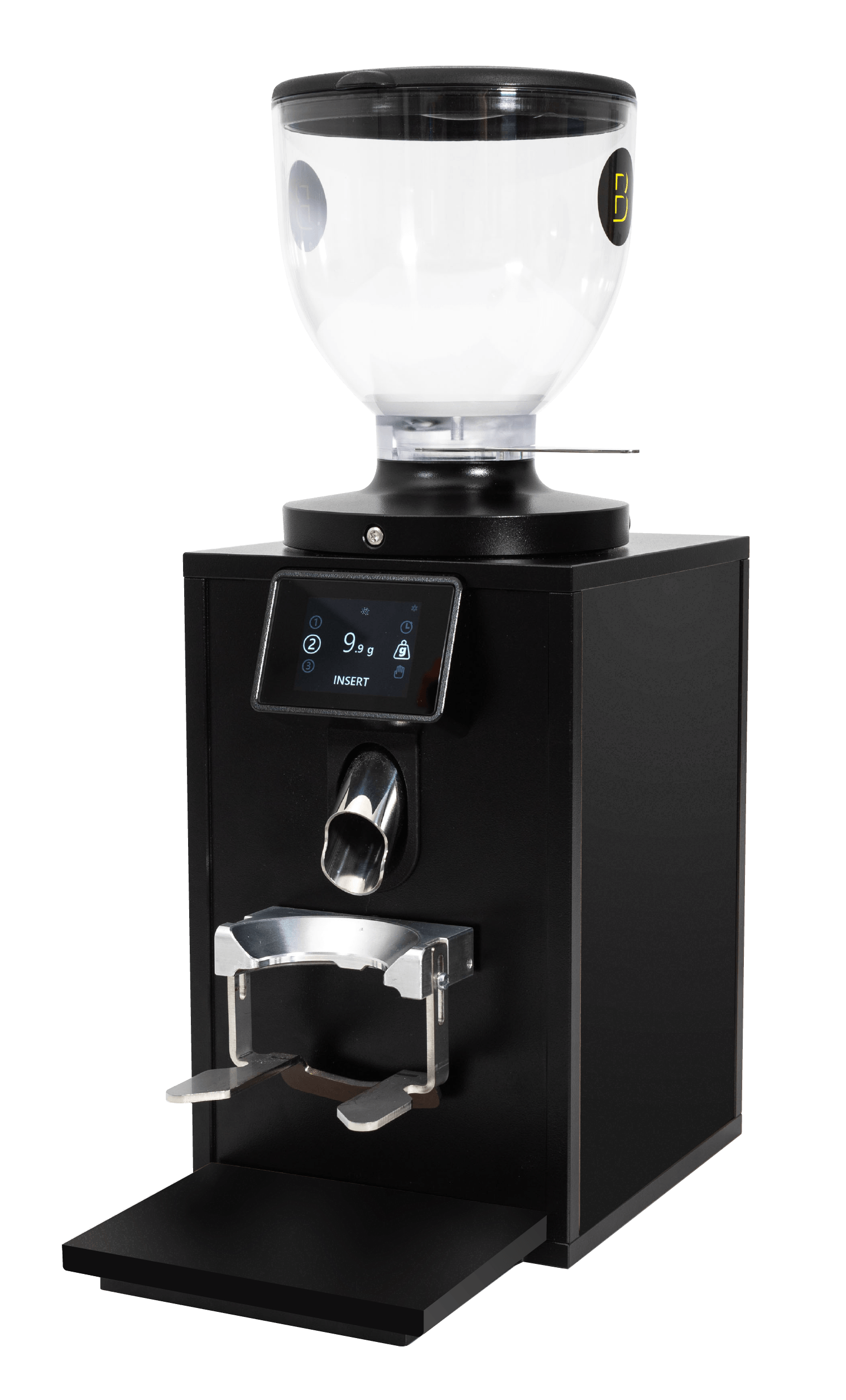
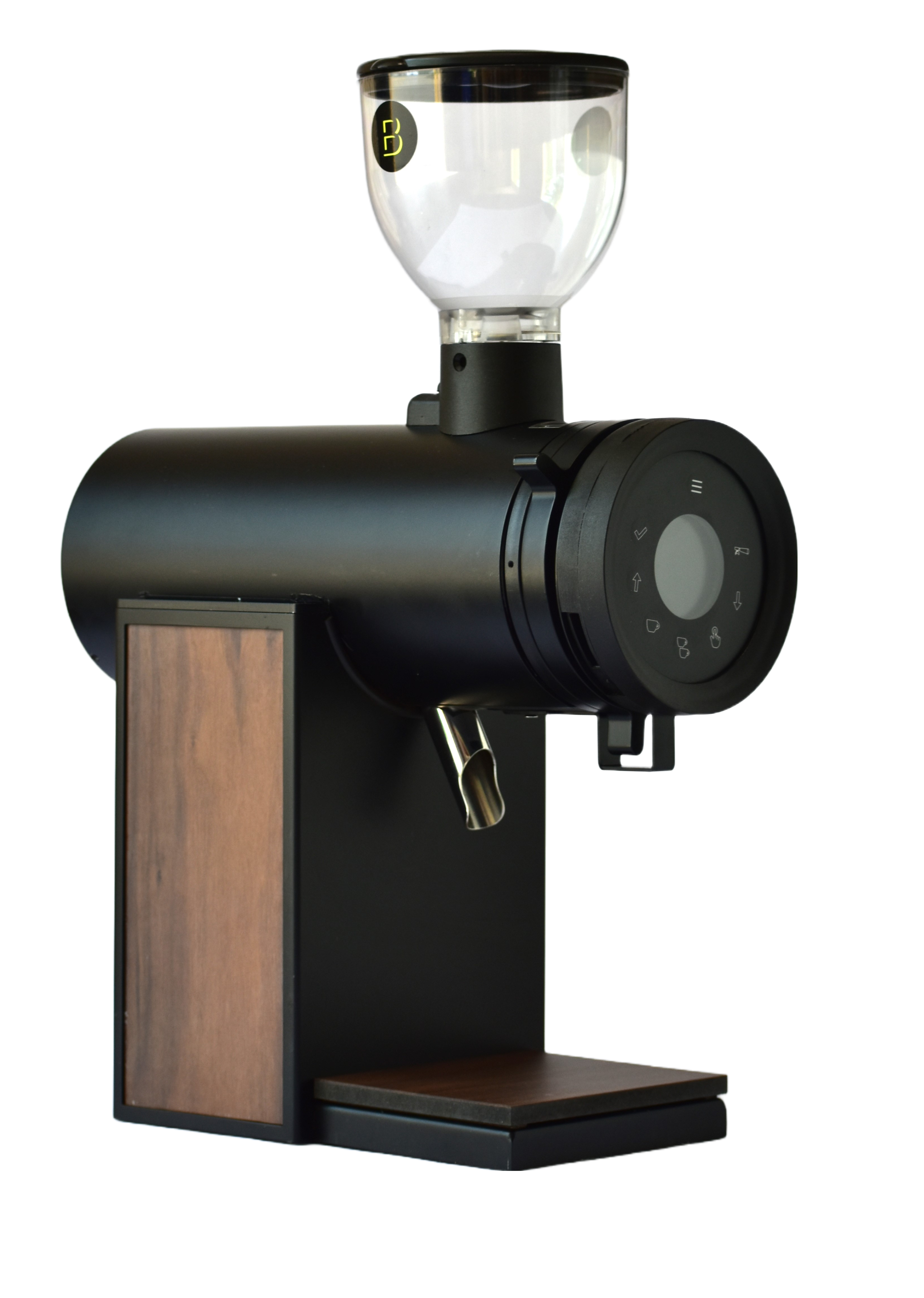
2. Coffee Grinders: Uniformity and Retention
The grinder is arguably more impactful than the espresso machine. Uneven grinds (particle size variance >100μm) cause channeling—water racing through gaps—and uneven extraction. Burr quality, adjustment precision, and grind retention (how much coffee clings to internal surfaces) separate hobby grinders from precision instruments.
Niche Zero ($600–$700)
The Niche Zero single-dose grinder prioritizes zero retention: each portafilter gets ground, dispensed, and emptied into the group head with <0.1g lost to internal surfaces. This eliminates stale-grounds contamination, ensures batch-to-batch consistency, and enables rapid switching between coffee origins.
Pros:
- Conical burrs (83mm) produce remarkably uniform grinds
- Near-zero retention enables origin switching without purging
- Compact size suits small countertops
- Community support and modification culture
Cons:
- Single-dose workflow requires attention; slower for high-volume cafes
- Burr alignment crucial; users must calibrate post-assembly
- Premium pricing reflects quality but demands commitment
Eureka Atom / Atom Specialty ($150–$250)
The Eureka Atom delivers industrial-grade grind uniformity at entry-level price. Designed for espresso, it produces tight particle distribution with minimal fines. While not zero-retention, the Atom's hopper capacity and speed make it ideal for daily 2–4 shot routines.
Pros:
- Flat burr design (50mm) produces consistent particle size
- Fast grinding (35–45 seconds for 18g espresso dose)
- Minimal static; easy cleanup
- Reliable workhorse; minimal maintenance
Cons:
- Hopper retention (~2g) requires purging when switching origins
- Louder than conical-burr grinders
- Tuning grind size requires patience; no microstep adjustment
Hand Grinder Alternative: Comandante C40 MK4 ($250–$300)
For pour-over enthusiasts or minimalists:
- Extraordinary grind uniformity despite manual operation
- Portable; ideal for travel brewing
- ~50 seconds for Chemex-grind 30g dose
- Eliminates electricity dependency entirely
3. Precision Scales: 0.1g Accuracy and Real-Time Feedback
A quality scale eliminates guesswork from dosing and yield measurement. The difference between 18.0g and 18.2g espresso translates to measurable extraction differences; scales under 0.1g sensitivity can't resolve these nuances.
Acaia Pearl ($300–$350)
The Acaia Pearl integrates a timer, pressure profiler display, and Bluetooth connectivity. Built for cafe use (Bluetooth allows remote data logging) but beloved by home enthusiasts for its responsiveness and haptic feedback.
Pros:
- 0.1g accuracy at ±1% precision
- Ultra-responsive (reads weight every ~100ms)
- Integrated timer with flow-rate display
- Bluetooth logging enables shot analysis and recipe refinement
Cons:
- Premium pricing (3–5x budget scales)
- Requires USB-C charging; battery life ~4 hours
- Learning curve for Bluetooth features
Budget Tier: Timemore Black Mirror ($80–$120)
- 0.1g accuracy adequate for home use
- Built-in timer; minimalist interface
- USB-rechargeable; 12+ hour battery
- 80% of utility at 25% of Acaia cost
Mid-Tier: Hario V60 Drip Scale ($150–$180)
- Purpose-built for pour-over with integrated timer
- Auto-tare when cup is placed
- Lightweight, portable
- Excellent for filter coffee enthusiasts
4. Temperature-Controlled Kettles and Water Systems
Water temperature is non-negotiable: 195–205°F (90–96°C) is the optimal range for Arabica extraction. Too hot (>206°F) over-extracts and burns aromatics; too cool (<195°F) under-extracts and produces sour, thin coffee.
Gooseneck Kettles ($40–$150)
A precision gooseneck spout (thin, curved opening) allows pour-over and manual espresso-prep users to control water flow rate and saturation pattern. Electric versions maintain set temperature while pouring.
Baratza Encore Temperature Kettle ($120–$150)
- PID holds ±2°C precision
- Gooseneck spout for controlled pour rate
- Programmable to heat at preset times
- Auto-shutoff after 30 minutes
Third Wave Water Systems ($0–$20)
Minerals in water (hardness) and pH drastically impact extraction. The Specialty Coffee Association (SCA) recommends 75–250 ppm total dissolved solids (TDS) with specific ratios of calcium, magnesium, and sodium. Municipal water often deviates (too hard or too soft).
Third Wave Water packets ($0.30–$0.50 each) are mineral blends designed for espresso. Mix with distilled water to achieve optimal SCA water profile. This approach:
- Eliminates scale buildup on machines
- Achieves consistent extraction across geographies
- Costs $3–$6/month vs. $50+ descaling/repair
- Enables A/B testing of water profile's impact on flavor
Building Your Advanced Setup: Tier-Based Progression
Entry Advanced ($1,000–$1,500)
- Machine: Breville Dual Boiler or used Lelit Victoria
- Grinder: Eureka Atom or Baratza Sette 270Wi
- Scale: Timemore Black Mirror
- Kettle: Basic gooseneck (manual or budget electric)
Capabilities: Reproducible espresso shots with PID temperature control and programmable pre-infusion. Grind uniformity sufficient for dialing in espresso and filter coffee. Manual flow control teaches tamping and puck preparation discipline.
Intermediate Advanced ($2,500–$4,000)
- Machine: Lelit Bianca or Gaggia Classic Pro (modded)
- Grinder: Niche Zero or Fellow Ode (filter)
- Scale: Acaia Pearl or Hario V60 Drip Scale
- Kettle: Temperature-controlled electric gooseneck
- Accessories: Third Wave Water, WDT (Weiss Distribution Technique) tool, shock-proof tamper
Capabilities: Full manual pressure profiling, near-zero grind retention, real-time extraction data logging. Capable of replicating competition-standard shots and fine-tuning for specific origins.
Advanced Enthusiast ($4,000–$8,000+)
- Machine: Decent DE1 or commercial-grade heat exchanger
- Grinder: Niche Zero + Eureka Atom (espresso + filter dedicated)
- Scale: Acaia Pearl with Bluetooth analysis
- Water: Reverse-osmosis system with remineralization cartridge
- Accessories: Pressure gauge, WDT tool, distribution tamper, flow-control paddle, refractometer for TDS measurement
Capabilities: Full programmable pressure curves, real-time flow-rate manipulation, extraction yield verification (TDS), and comprehensive shot documentation for iterative refinement.
Maintenance and Longevity
Advanced equipment demands disciplined maintenance:
- Daily: Backflush group head (espresso machines with 3-way solenoid valves) with water to clear oils and fines
- Weekly: Soak portafilter, baskets, and shower screen in alkaline cleaning solution (Cafiza or equivalent)
- Monthly: Descale boiler using citric acid or commercial descaler appropriate to machine type
- Quarterly: Recalibrate grinder burr alignment; inspect group head gasket and shower screen for wear
- Annually: Replace group head gasket and shower screen; have thermal blocks inspected
Proper maintenance extends machine life 10+ years and ensures consistent thermal stability and water flow.
Conclusion
Advanced coffee equipment doesn't guarantee exceptional shots—technique, grind fineness dialing, and origin quality remain critical. But precision tools remove guesswork and enable reproducibility. A home barista with a Decent DE1 and Niche Zero grinder can consistently produce 87-point espresso; the same person with an entry-level machine would struggle to achieve 82 points regardless of technique.
Start with the machine-and-grinder duo (these two variables dominate extraction). Add scales and kettles as technique develops. Only then does pressure profiling or water systems yield meaningful returns. Patient, iterative equipment investment, matched to skill development, builds a setup that sustains years of coffee exploration and continuous improvement.
Ready to experiment with equipment? Browse DABOV's specialty-grade coffee beans to test your setup's potential across origins.