Why the Grinder Matters More Than the Brewer
Every brewing method extracts soluble compounds from coffee grounds. The rate, completeness, and balance of that extraction depend almost entirely on particle size distribution. A well-calibrated grind produces uniform particles that extract at the same rate; an uneven grind produces a spectrum from fine powder to coarse chunks that extract at different rates simultaneously. The result of uneven grinding is a cup that is simultaneously over-extracted (the fines, bitter) and under-extracted (the boulders, sour). No brewer, no matter how precise, can compensate for this problem. The grinder controls it upstream.
This is why professional baristas consider the grinder the most important piece of equipment in a café setup. The espresso machine gets more attention because it is more visible and more expensive, but a mediocre shot from a great grinder will outperform a perfect machine running inconsistent grinds every time.
The Two Grinder Architectures: Blade vs. Burr
Every grinder uses one of two mechanisms: a spinning blade or two abrasive surfaces (burrs). The difference in outcome is fundamental, not marginal.
Blade grinders use a propeller-style metal blade that rotates at high speed and chops beans until you stop the grinder. The grinding time determines particle size, not a calibrated gap. The result is always bimodal: fine dust plus chunks, with a large spread of sizes in between. For casual drip coffee or French press where grind consistency has less impact, a blade grinder is passable. For pour-over, espresso, or any method where dialing in matters, it is not acceptable.
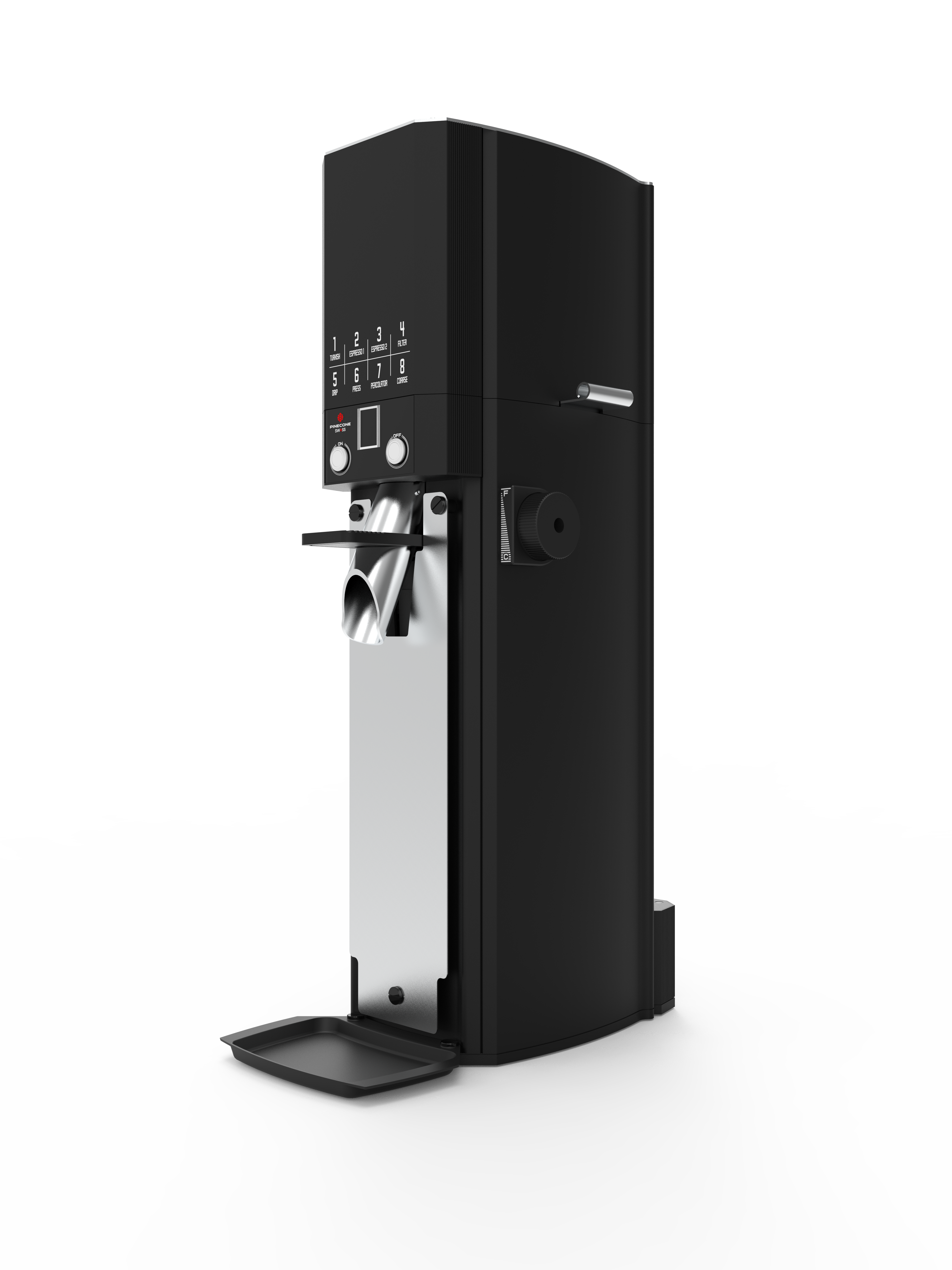
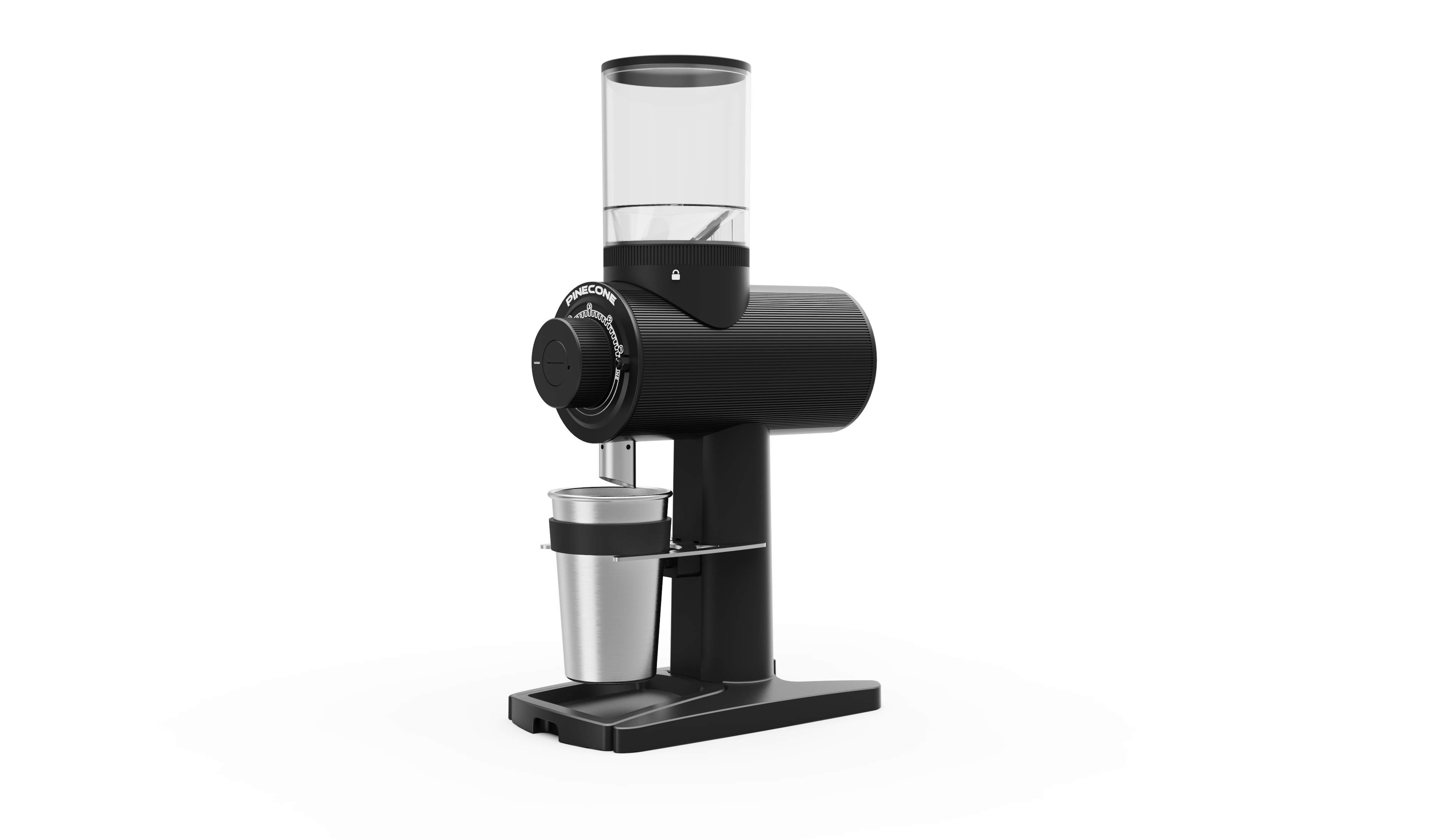
Burr grinders use two abrasive surfaces with a fixed gap between them. Beans are fed through the gap, and particles that are small enough to pass through emerge. The gap setting determines particle size; the gap consistency determines distribution uniformity. Burr grinders of any quality produce dramatically more uniform grounds than blade grinders. Quality burr grinders produce distributions tight enough for espresso-level control.
The performance hierarchy is clear: quality burr > entry burr > blade grinder, with no meaningful overlap.
Flat Burr vs. Conical Burr
Within burr grinders, the burr geometry shapes the grinding characteristics in ways that matter depending on your primary brewing method.
| Characteristic | Flat Burr | Conical Burr |
|---|---|---|
| Particle distribution | Very tight, bimodal in some cases | Slightly wider, more unimodal |
| Heat generation | Higher (more friction) | Lower |
| Static charge | More static | Less static |
| Noise level | Louder | Quieter |
| Retention (grounds left in grinder) | Low to medium | Low (single-dose designs) |
| Best application | Espresso, filter coffee | All-purpose, filter, light espresso |
| Typical price range for quality | $300–$1,000+ | $100–$600 home range |
Flat burr grinders excel at espresso because their tighter distribution enables precise extraction control. Conical burr grinders are more forgiving across methods and tend to be better choices for home brewers who switch between espresso and filter methods without wanting to recalibrate constantly.
Manual vs. Electric Grinders
Manual grinders use the same burr geometry as electric models but are hand-powered. The performance argument for quality hand grinders is stronger than most people expect.
A premium hand grinder like the Comandante C40 ($250) or the 1Zpresso J-Ultra ($280) will outperform many electric grinders at twice the price in grind consistency. The reasons are physics: hand grinding generates almost no heat, operates at slow RPM, and the single-gear mechanism has no motor imprecision. The tradeoff is time—grinding 20g for espresso takes 30–60 seconds of moderate effort.
Electric grinders add speed, motor-driven convenience, and programmable dosing at the cost of heat, noise, and price. For home use with one or two cups per session, a quality hand grinder is a legitimate high-performance choice. For households grinding 30–50g per session or multiple times daily, electric is practical.
The Grind Size Guide by Brewing Method
Every brewing method operates in a specific particle size range. Extract outside that range and you get predictable failures: over-extraction at fine sizes (bitterness, astringency), under-extraction at coarse sizes (sourness, weakness). The following are starting targets—final settings require adjustment based on your specific beans, roast level, and water:
| Brewing Method | Grind Size | Particle Analogy | Extraction Time |
|---|---|---|---|
| Turkish coffee (ibrik) | Extra fine | Flour | Seconds |
| Espresso | Very fine | Powdered sugar | 25–30 seconds |
| Moka pot | Fine-medium | Fine sand | 3–5 minutes |
| Pour-over (V60, Chemex) | Medium | Table salt | 2.5–3.5 minutes |
| Drip machine | Medium | Coarse sand | 4–6 minutes |
| AeroPress | Fine-medium to medium | Fine to table salt | 1–2 minutes |
| French press | Coarse | Sea salt | 4 minutes steep |
| Cold brew | Very coarse | Peppercorns | 12–24 hours |
Roast level interacts with grind: light roasts are denser and harder, requiring slightly finer grinding than dark roasts at equivalent settings. Always adjust grind when switching roast levels.
Grinder Buying Guide by Budget
The performance difference between price tiers is real but not linear. Entry-level burr grinders produce dramatically better results than blade grinders. Mid-range grinders improve on entry-level primarily in consistency and espresso capability. High-end grinders minimize fines (ultra-fine dust particles that cause over-extraction) and offer step-less micro-adjustment.
| Tier | Price Range | Best Options | Best For |
|---|---|---|---|
| Entry hand | $50–$100 | Hario Skerton Pro, Timemore C2 | Filter coffee, travel |
| Entry electric | $100–$200 | Baratza Encore, Capresso Infinity | Filter coffee, casual espresso |
| Mid-range hand | $200–$300 | Comandante C40, 1Zpresso JX Pro | Serious filter, light espresso |
| Mid-range electric | $200–$400 | Baratza Virtuoso+, Fellow Ode | Pour-over, batch brew |
| Espresso-dedicated mid | $300–$600 | Eureka Mignon Silenzio, Niche Zero | Home espresso focus |
| High-end versatile | $600–$1,000 | Niche Zero, Weber EG-1 | Both methods, precision |
| Professional home | $1,000+ | Eureka Atom 75, Kafatek Monolith | Competition-level home |
The Niche Zero ($700) and Baratza Encore ($170) bracket the practical consideration space for most home brewers. The Encore handles every filter method well and barely manages espresso. The Niche Zero handles everything with precision. Everything between is a function of your primary method and how deeply you want to optimize.
Key Features to Evaluate Before Buying
When reading grinder specifications and reviews, focus on these attributes:
Grind range: Does the grinder cover all the methods you plan to use? An espresso-only grinder will frustrate you at French press settings; a filter-only grinder cannot dial in espresso.
Step adjustment vs. stepless: Stepped grinders have discrete click positions (e.g., 40 settings from coarse to fine). Stepless grinders adjust continuously. Stepless is more precise for espresso dialing. Stepped grinders are easier to use consistently once you find your setting.
Single dosing capability: Modern home espresso practice favors grinding exactly the dose needed per shot from beans loaded directly into the hopper. Grinders with low retention (less than 0.5g retained between doses) enable this. High-retention grinders (2–5g retention) waste coffee when switching beans and require purging when changing grind settings.
Burr material: Steel burrs are harder and stay sharp longer. Ceramic burrs generate less heat but can chip if a foreign object (a pebble in green coffee, a stray piece of hardware) passes through. For home use, steel is the practical choice.
Maintenance Practices That Extend Grinder Life
A well-maintained burr grinder lasts 10–15 years. Neglected grinders accumulate oil buildup on burrs that goes rancid, affecting the flavor of fresh coffee, and develop alignment drift that broadens particle distribution.
Weekly: Brush the exit chute and inner burr housing with a stiff bristle brush. Blow out fine dust with a bulb blower.
Monthly: Run grinder-cleaning tablets (Grindz or equivalent) through to absorb residual oils. Follow with a small amount of actual coffee to clear the tablet residue.
Quarterly: Remove the upper burr and clean by hand with a stiff brush. Inspect for chipping or wear. Realign if the grinder has an alignment check procedure.
Annually or as needed: Replace burrs when the particle distribution noticeably widens. Burr lifespan depends on hardness and volume of use; most home burrs last 3–5 years of daily use.
Frequently Asked Questions
Is a $50 hand grinder good enough for specialty coffee?
Yes, for filter coffee. A quality entry-level hand grinder like the Timemore C2 or Hario Skerton Pro produces grounds uniform enough for pour-over, French press, and AeroPress at a level that reveals what specialty beans can taste like. For espresso, a $50 hand grinder will struggle with the fine adjustment precision required. Budget $200+ for hand grinders targeting espresso.
How often should I clean my burr grinder?
Light cleaning (exit chute brush) after every 5–7 uses. Tablet cleaning monthly. Burr removal and manual cleaning every 3 months for daily users. If you use oily dark roasts, increase frequency—dark roast oils coat burr surfaces and go rancid faster than light roast oils.
Can I use one grinder for both espresso and filter coffee?
Yes, with caveats. A versatile grinder like the Niche Zero or Baratza Sette 270 handles both well. Most dedicated espresso grinders struggle at coarse settings because they are optimized for a narrow fine range. Most filter grinders lack the fine adjustment precision needed for espresso dialing. If both methods matter, buy a grinder specifically designed for range or budget for two dedicated grinders.
What is "grinder retention" and why does it matter?
Retention is the amount of ground coffee that stays in the grinder between doses. High retention means your first few grams of any dose contain grounds from the previous session—which may be a different coffee, a different grind setting, or simply older and staler. Single-dose grinders minimize retention to below 0.5g. Commercial grinders often retain 5–10g, which is acceptable when you are running consistent doses all day but problematic for home users who switch coffees or grind only once per session.
Conclusion
The grinder is the most consequential purchase in any coffee setup. It determines the quality ceiling for every method you brew, and it is the one piece of equipment that no other variable can compensate for. The right choice depends on your primary brewing method, your budget, and how much precision you want to build into your daily routine.
For filter coffee, a Baratza Encore or quality hand grinder gives you everything you need. For espresso, budget for a dedicated espresso grinder before spending on a premium espresso machine. For both, a versatile mid-range option like the Niche Zero earns its price by eliminating the need for two dedicated grinders.
Browse our fresh-roasted specialty coffee—the beans that make precision grinding worth the investment.