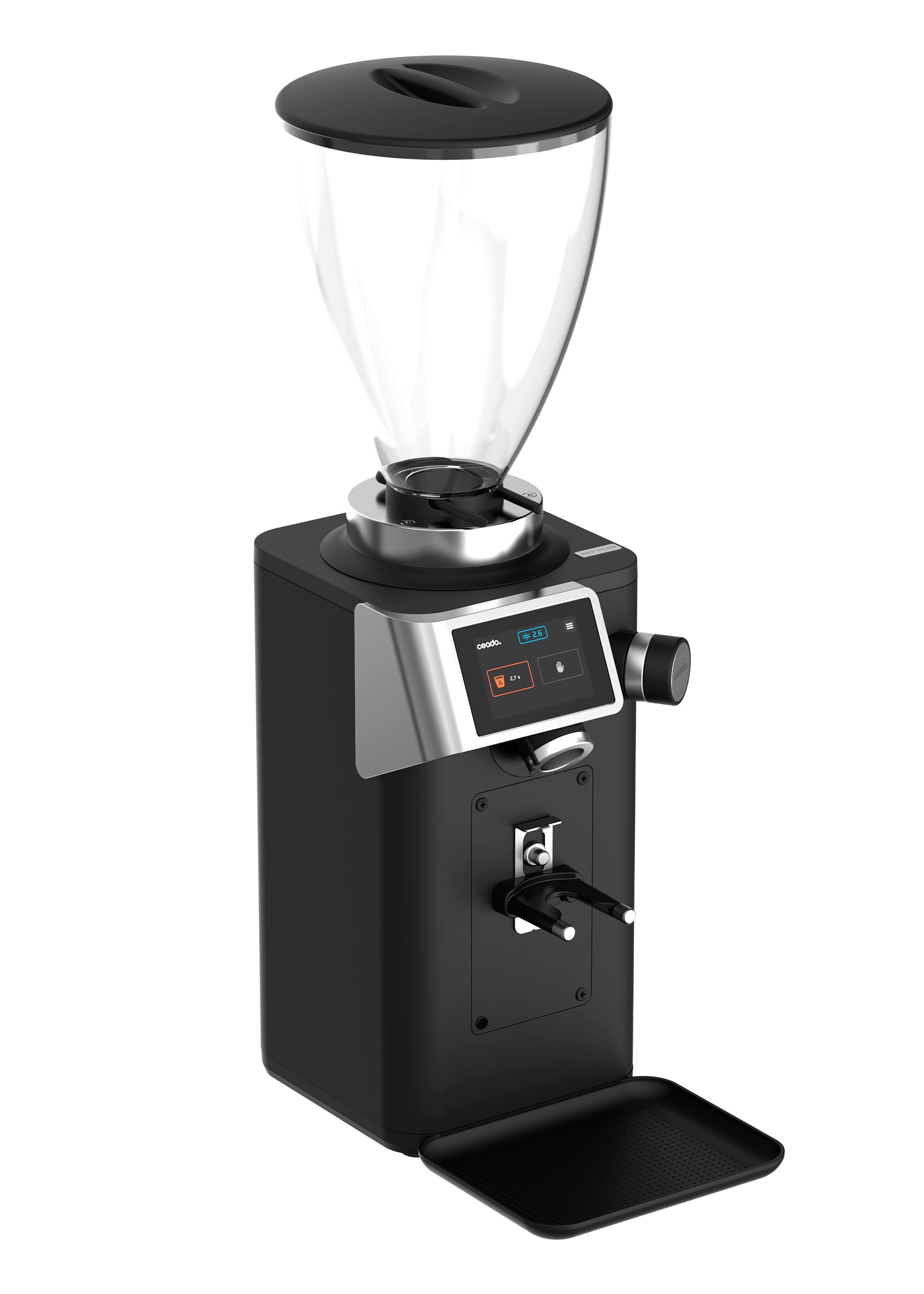
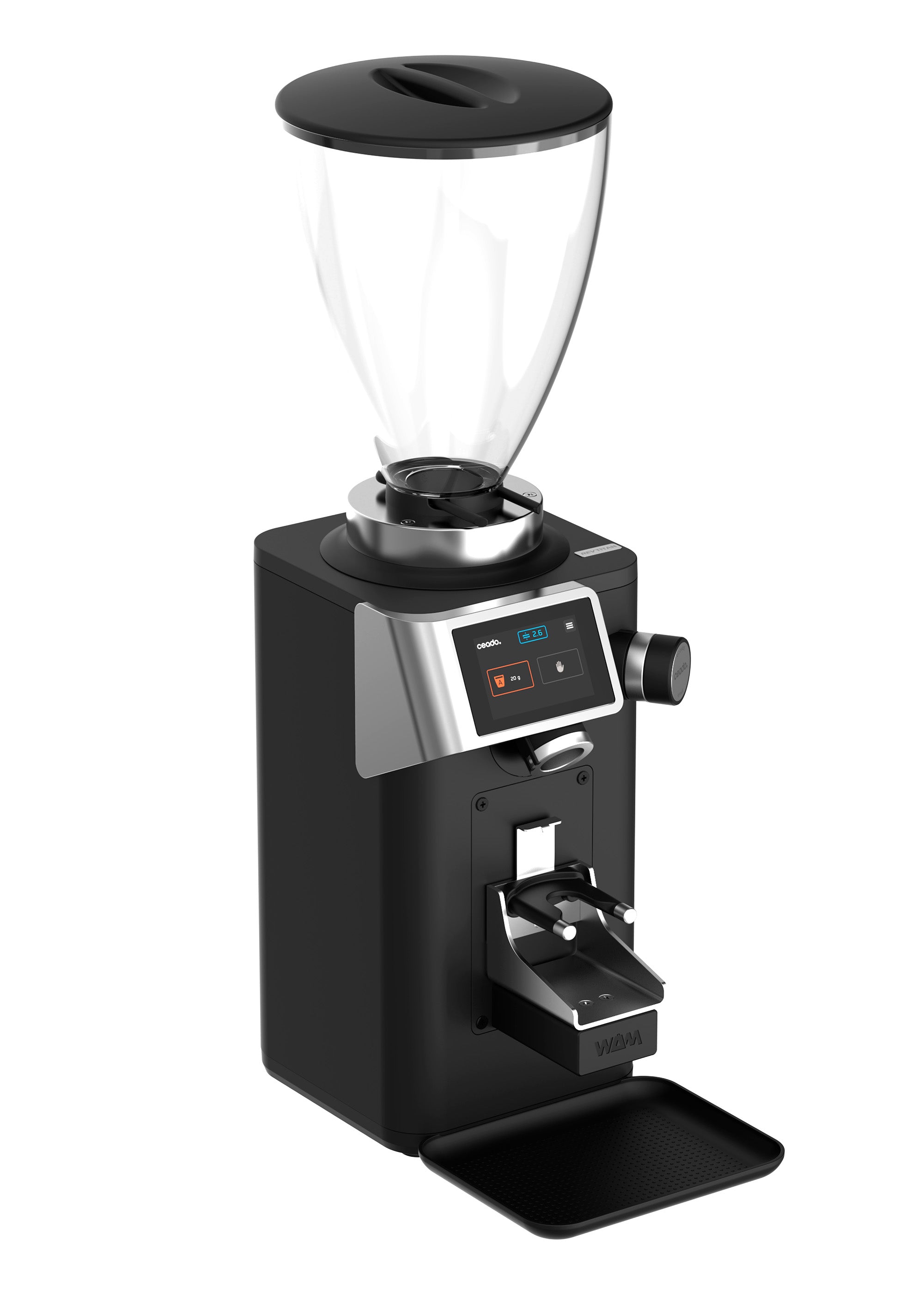
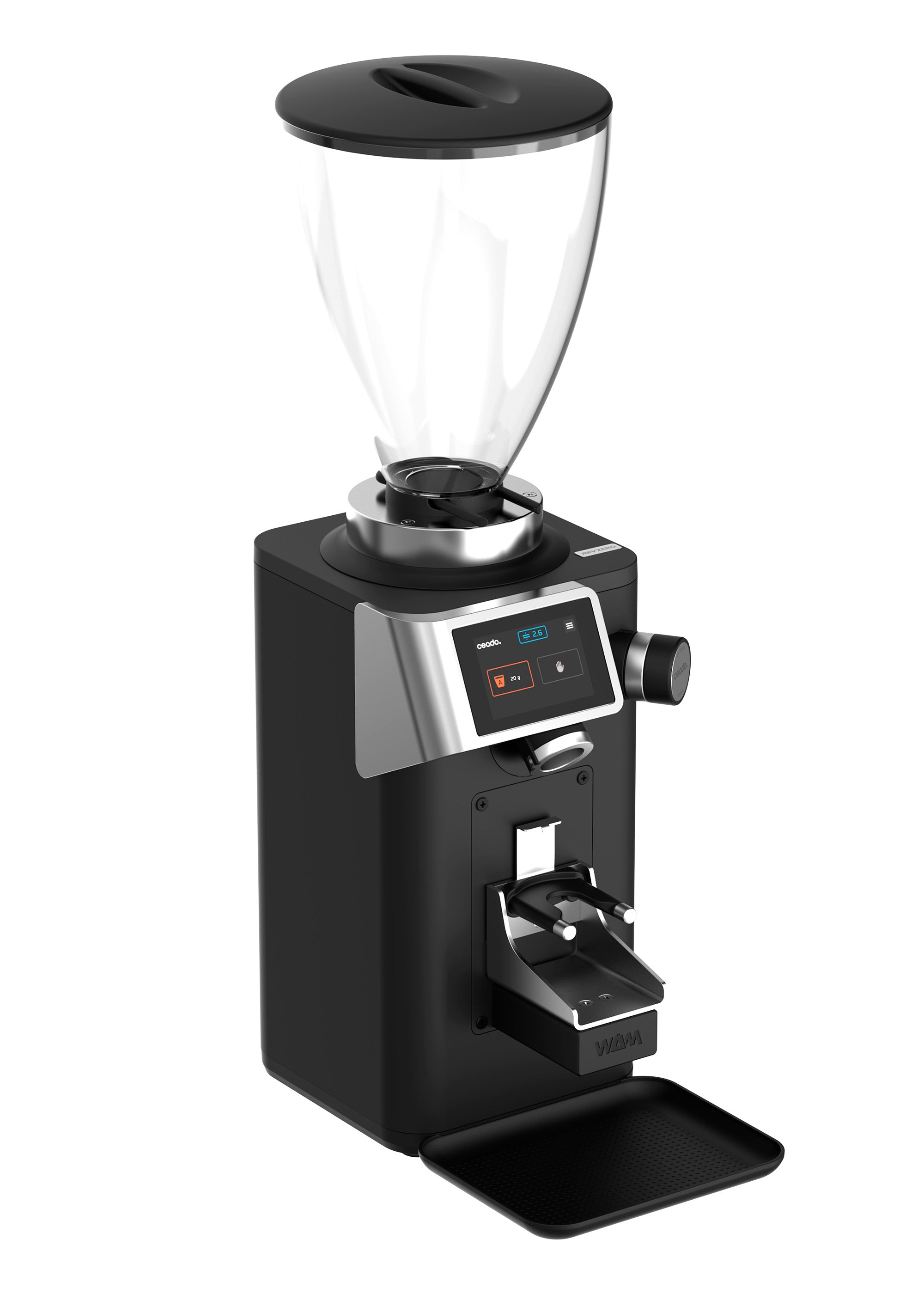
The Grinder Is Not Optional Equipment
Most people upgrading their home coffee setup spend their money on an espresso machine, a fancy kettle, or premium beans. The grinder is treated as a footnote — something to buy at whatever price is left in the budget. This logic is backwards. The grinder is the most consequential piece of equipment in any brew setup, and a poor grinder reliably produces poor coffee regardless of how good everything else is.
Here is why: every brewing method is an extraction process. Hot water dissolves soluble compounds out of ground coffee particles. The efficiency and evenness of that extraction depend entirely on the surface area and uniformity of the grounds. A grinder that produces inconsistent particle sizes — mixing fine powder with large chunks — makes even extraction physically impossible. Fine particles over-extract (bitter, harsh). Large particles under-extract (sour, weak). The resulting cup contains both defects simultaneously.
Blade vs. Burr: Why This Is Not a Close Call
Grinders split into two fundamental categories: blade grinders and burr grinders. The difference between them is not a matter of price preference — it is a matter of whether the device is capable of producing consistent particle sizes at all.
Blade grinders use a spinning metal blade to chop beans. Because the blade continues chopping everything in the chamber — large and small alike — the resulting grind is a mix of powder, medium chunks, and large pieces all in the same batch. Blade grinders cannot be set to a specific grind size and cannot produce the uniformity that consistent extraction requires. They are inexpensive and popular with casual users. They do not produce good coffee.
Burr grinders use two abrasive surfaces (burrs) separated by a precise gap. Beans feed between the burrs and are crushed to a uniform size determined by the gap setting. Because beans cannot pass through until they reach the target size, the output is far more consistent than anything a blade can produce. Burr grinders range from entry-level ($50–$100) to professional ($500+), but even an entry-level burr grinder outperforms any blade grinder on particle consistency.
Within burr grinders, there are two further sub-types:
Conical burr grinders use a cone-shaped inner burr rotating against a ring-shaped outer burr. They tend to run at lower RPM, generate less heat during grinding, and produce slightly bimodal particle distribution (more small fines alongside the target size). The bimodal distribution actually benefits espresso, where fines fill gaps in the puck and create the resistance needed for proper pressure-driven extraction. Conical burrs are the norm in home espresso grinders.
Flat burr grinders use two parallel, ring-shaped burrs. They produce more uniform, unimodal particle distribution — meaning less variation around the target size. Flat burrs excel for filter methods where clarity and uniformity translate directly to cup cleanliness. High-end flat burr grinders like the Mahlkonig EK43 are industry standards in specialty filter brewing.
Grind Size and Extraction: The Fundamental Relationship
Every brewing method requires a specific grind size because every method applies water to coffee differently. The grind size determines resistance to water flow, surface area available for dissolution, and the rate of extraction.
The underlying logic: longer contact time between water and coffee grounds requires coarser grinds to prevent over-extraction. Shorter contact time — or higher pressure — requires finer grinds to maximize extraction within the available window.
The practical grind size guide:
| Brewing Method | Grind Size | Visual Reference | Contact Time |
|---|---|---|---|
| Cold brew | Extra coarse | Coarse sea salt | 12–24 hours |
| French press | Coarse | Cracked black pepper | 4 minutes |
| Chemex | Medium-coarse | Raw sugar | 3.5–4.5 minutes |
| Drip / Batch brew | Medium | Table salt | 4–6 minutes |
| V60 / Cone pour-over | Medium-fine | Granulated sugar | 2.5–3.5 minutes |
| AeroPress (standard) | Medium | Table salt | 2–3 minutes |
| Moka pot | Fine | Caster sugar | 3–4 minutes |
| Espresso | Extra fine | Powdered sugar | 25–30 seconds |
Off-grind symptoms are diagnostic: if your espresso is bitter and chokes the machine, grind coarser. If it runs fast and tastes sour, grind finer. For filter methods, bitterness means grinding coarser or brewing at lower temperature; sourness or weakness means finer.
Why Freshness Is the Hidden Variable
The grinder's role is not only to produce correct particle sizes — it is to produce them immediately before brewing. The difference between fresh-ground and stale-ground coffee is not a matter of preference; it is a difference in the presence or absence of volatile aromatic compounds.
Ground coffee oxidizes rapidly. The compounds responsible for specialty coffee's most distinctive characteristics — the esters that produce fruit notes, the pyrazines that signal roast character, the thiols associated with fresh coffee aroma — are volatile. They bind to oxygen and degraded quickly once the cell walls protecting them are broken open by grinding.
Whole beans protect those compounds behind cell walls until the moment of grinding. This is why even a mediocre burr grinder used fresh produces a more aromatic, complex cup than a high-quality grinder used on pre-ground coffee bought a week ago. Freshness and grind quality compound each other — the maximum benefit comes from a quality burr grinder used on fresh beans immediately before brewing.
What Grinder Features Actually Matter
When evaluating grinders, the marketing language varies but the functionally meaningful features are straightforward:
Burr size: Larger burrs produce more uniform grinds and run at lower RPM for equivalent output. A 64mm flat burr grinder will generally outperform a 38mm conical at the same price point for filter clarity, though the conical may still be preferred for espresso.
Number of grind settings: For home use, 30–60 distinct steps is adequate for filter brewing. Espresso requires finer resolution — stepless adjustment or 60+ steps — because espresso extraction is highly sensitive to small grind changes.
RPM (motor speed): Lower RPM means less heat generation during grinding. Heat degradation of volatile compounds during grinding is real but modest at home-brewing volumes. It becomes more relevant in high-throughput commercial settings.
Retention: How much ground coffee stays trapped in the grinder's exit chute between uses. High-retention grinders waste coffee and — worse — blend stale grounds from the previous session into fresh ones. Single-dose-optimized grinders (Niche Zero, Lagom P64, Weber EG-1) minimize retention intentionally.
Noise and footprint: Not performance factors, but real practical considerations. Conical burr grinders tend to be quieter than flat burr grinders at comparable price points.
The table below summarizes how grinder choice maps to use case:
| Use Case | Grinder Type | Recommended Range | Key Feature |
|---|---|---|---|
| Filter / pour-over only | Flat burr | $150–$600+ | Uniform particle distribution |
| Espresso only | Conical burr | $200–$800+ | Fine stepless adjustment |
| Both espresso and filter | Conical or flat | $300–$1000+ | Wide grind range, low retention |
| Travel / camping | Hand grinder (conical) | $50–$200 | Portable, no electricity |
| Budget first upgrade | Entry conical burr | $50–$120 | Any burr over any blade |
Grinder Maintenance: What Actually Needs Doing
A grinder that is not maintained will drift. Coffee oil buildup on burrs acts as a lubricant that reduces the cutting efficiency of the burr edges, producing more fines and a less clean cut. Stale grounds trapped in the exit chute contaminate fresh batches.
Weekly: Brush out the exit chute and grounds bin with a stiff-bristled grinder brush. This takes 60 seconds.
Monthly: Run a dose of Grindz or similar enzyme-based grinder cleaning tablets through the grinder. These tablets absorb oils and dislodge fine particles stuck to the burrs without requiring disassembly.
Every 3–6 months (depending on volume): Remove the upper burr carrier (most home grinders make this straightforward with a quarter-turn or a few screws) and brush the burr surfaces directly. Inspect for wear. Replace burrs if the edges are visibly dull or coffee quality has declined despite correct technique.
Calibration: Many grinders drift off their zero (burr touch) point over time, meaning the "fine" setting becomes coarser without any deliberate adjustment. If you notice that your espresso suddenly runs faster or your filter coffee tastes weaker despite no recipe changes, recalibrate the zero point per your grinder's manual.
Frequently Asked Questions
Does an expensive grinder actually make a difference?
Yes, but with diminishing returns above a certain threshold. The biggest improvement comes from moving off a blade grinder to any burr grinder. The next meaningful jump is from an entry-level burr grinder to a mid-range model with more grind settings and better burr geometry. Beyond $300–$400 for home use, improvements are real but incremental — mostly in retention, noise, and edge-case precision for espresso dialing.
Should I grind espresso and filter with the same grinder?
You can if your grinder has a wide enough adjustment range, but switching between espresso and filter settings wastes coffee (purge grounds after adjusting), takes time, and requires you to return to a saved position. Many serious home brewers eventually own two grinders — one fixed on espresso, one on filter.
How do I know when to replace my burrs?
Most quality steel burrs have a rated lifespan of 500–1000 kg of coffee. Signs that burrs need replacement: grind time increases for the same output, the cup tastes flat despite fresh beans and correct parameters, and visible rounding or chipping of burr edges. Ceramic burrs last longer but chip rather than dull, and chipped ceramic can introduce ceramic particle contamination.
Is a hand grinder worth using?
For filter brewing and travel, yes. Hand grinders like the 1Zpresso JX-Pro or Comandante C40 use genuine burr assemblies (often comparable to entry-level electric grinders) and produce excellent consistency. For espresso, hand grinding is impractical because the fine grind required creates significant resistance and fatigue. For a budget-conscious filter-coffee drinker, a quality hand grinder is often the best value per cup quality.
Do I need to weigh my doses?
Yes, for consistency. Scooping by volume is imprecise because different coffees have different densities, and day-to-day variation in dose size changes extraction strength independently of grind size. A 0.1g-resolution kitchen scale is inexpensive and eliminates one variable from your brewing process.
Conclusion
The grinder is the bottleneck in every home coffee setup that neglects it. No brewing method, no kettle temperature control, and no premium coffee selection can compensate for inconsistent particle distribution. A quality burr grinder — even an entry-level one — unlocks the potential of every other element in your brewing ritual.
Buy fresh whole beans, grind them immediately before brewing, dial in your grind size for your chosen method, and maintain your burrs. That discipline, applied consistently, produces better coffee than any expensive equipment upgrade made without it. Browse DABOV's coffee beans for fresh-roasted single-origin lots worth grinding well.