What a Home Coffee Setup Actually Needs
Home coffee brewing fails at one of two points: gear that cannot perform, or gear that can perform but the buyer does not know how to use it. The second failure is more common. A $600 espresso machine operated without understanding of grind distribution produces worse espresso than a $40 Moka pot used correctly.
This guide covers what matters first — and what can wait. It is organized by priority rather than price, because the single most important thing you can add to any home setup is not the most expensive item in the category.
The non-negotiables are three items: a burr grinder, a scale, and a reliable heat source with temperature control. Everything else — the specific brewer, the kettle aesthetics, the storage containers — matters less. Master these three before adding complexity.
The Burr Grinder: Your Most Important Purchase
Blade grinders chop beans randomly. The result is a mix of fine dust and large chunks that extract at different rates simultaneously. Some particles over-extract and turn bitter, others under-extract and stay sour, and the cup tastes like both at once. This problem cannot be fixed by adjusting any other variable. It can only be fixed by fixing the grinder.
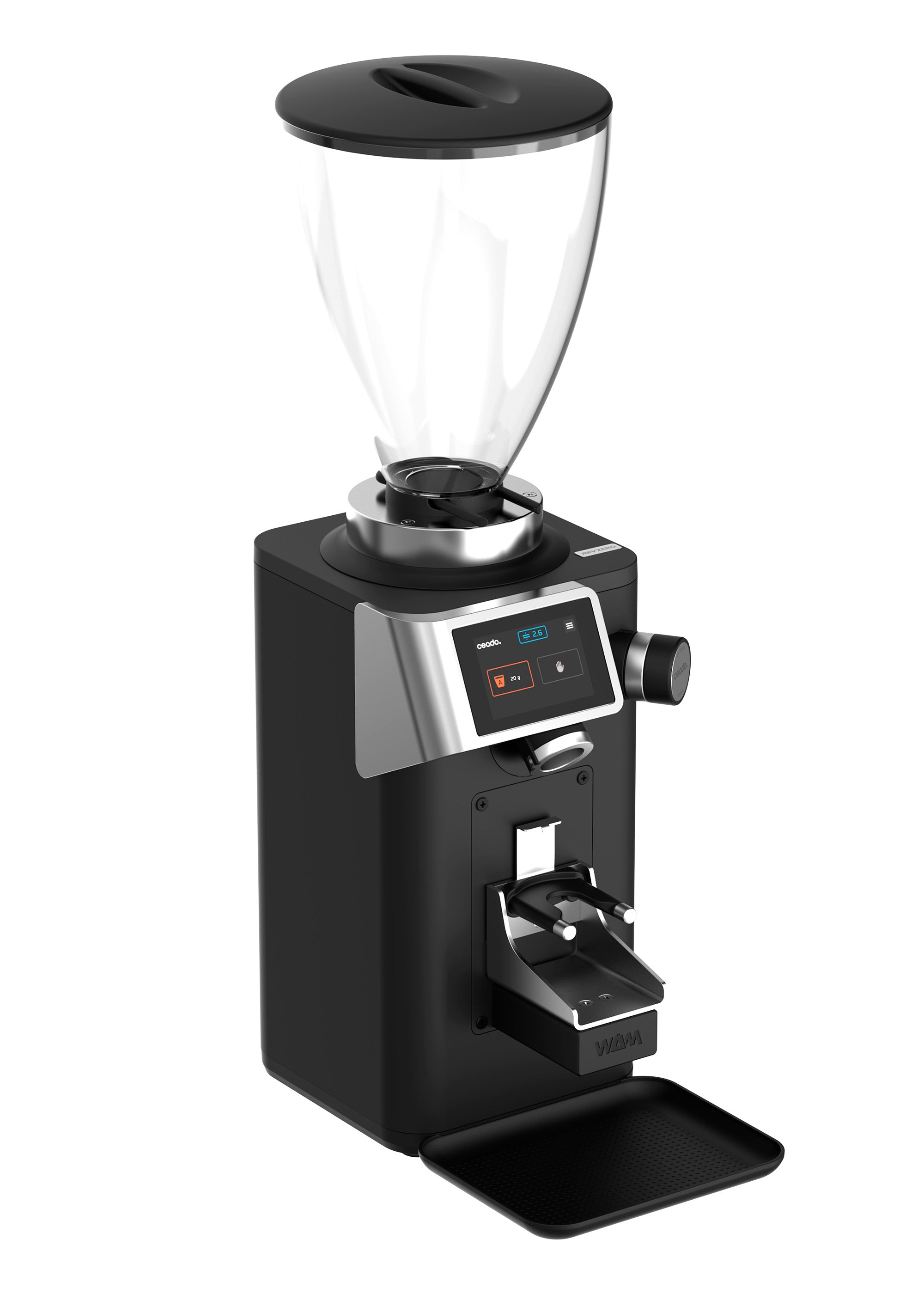
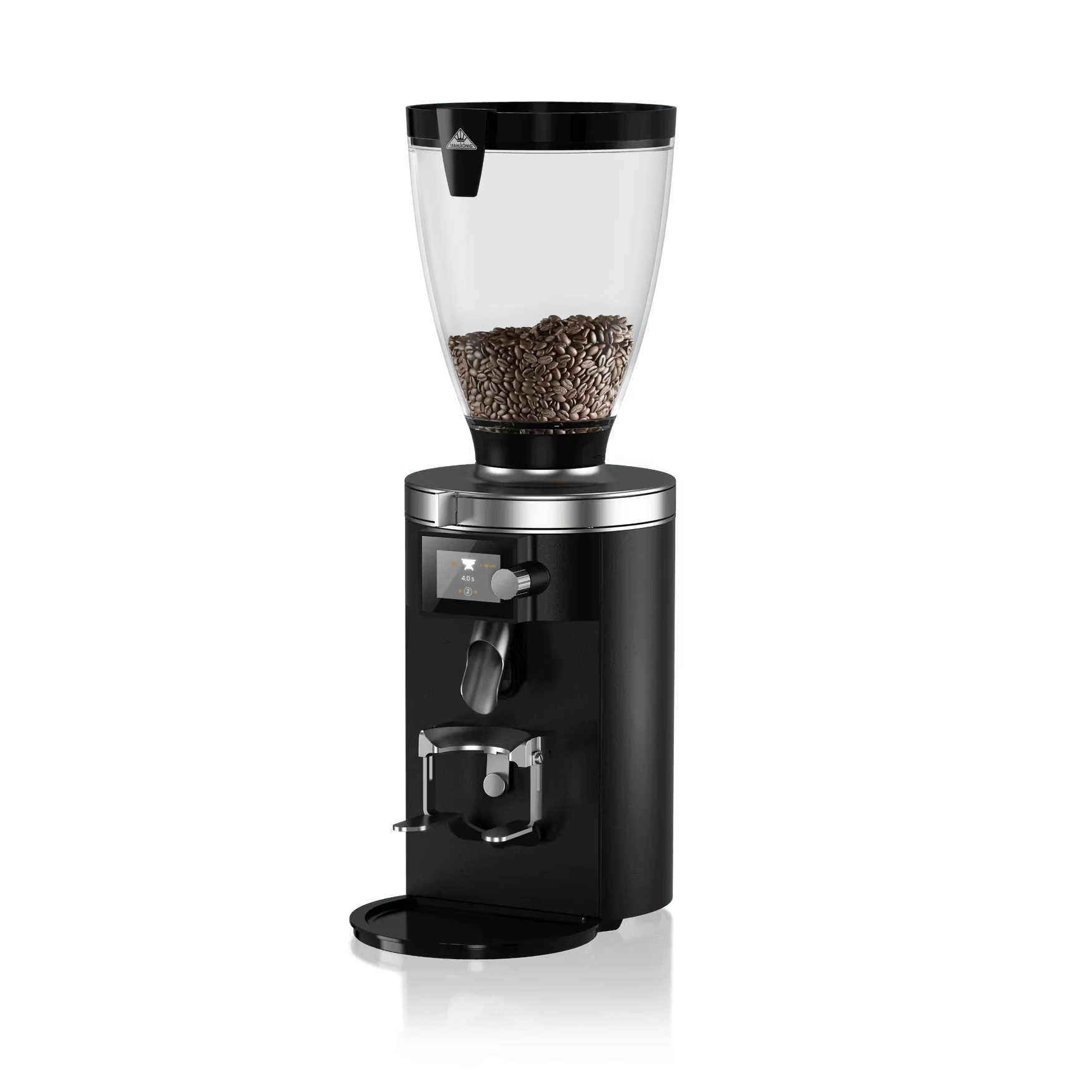
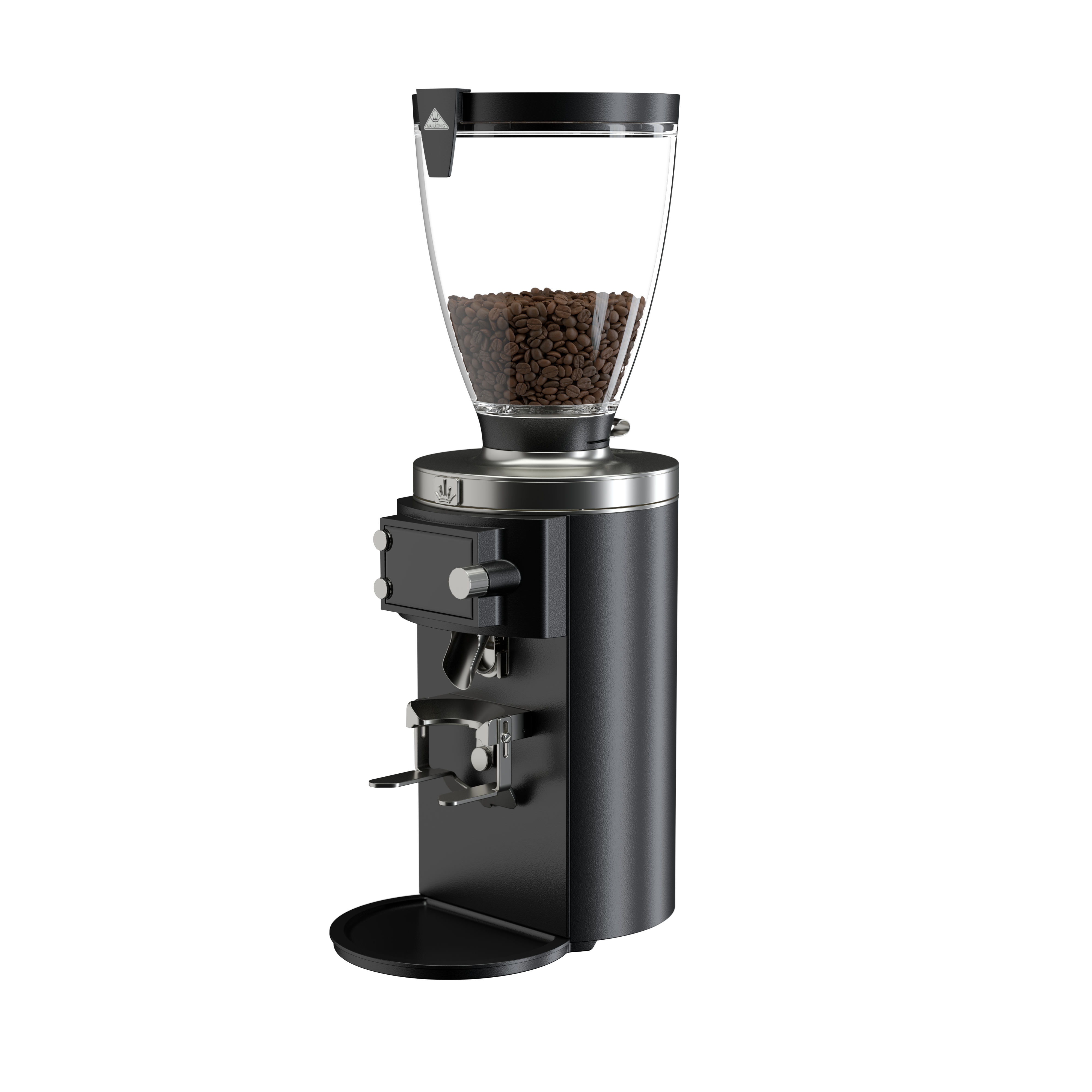
Burr grinders crush beans between two abrasive surfaces — either flat burrs or conical burrs — producing particles of consistent size. Consistent particle size means consistent extraction. This is the foundation of good coffee, and it is why professional coffee setups always prioritize grinder quality above machine cost.
Entry level: Baratza Encore ($169–$200)
40 stepped grind settings covering the full range from French press to espresso-adjacent. Stainless-steel conical burrs, replaceable grind chamber, and Baratza's exceptional customer service make this the benchmark entry purchase. It does not produce espresso-quality fine grinds consistently — for dedicated espresso, step up.
Mid-range: Baratza Virtuoso+ ($250–$270)
Adds a digital timer for weight-based dosing and higher-precision burrs. Noticeable improvement in grind consistency at fine settings. The first meaningful upgrade from the Encore.
Espresso-focused: Baratza Sette 270Wi ($370–$400)
Stepless grind adjustment with a built-in weight sensor that stops the grinder when the target dose is reached. Designed specifically for espresso workflow.
Manual option: Comandante C40 ($200–$230)
A hand grinder with exceptional particle consistency rivaling burr grinders twice its price. Produces a precision grind that many coffee professionals use for travel and competition. The red clix upgrade adds additional mid-range settings worth having.
The Scale: Precision Over Estimation
Coffee-to-water ratio is the most direct control over cup strength and character. The difference between 15g coffee per 250ml water and 18g per 250ml is significant and repeatable. Measuring by scoops introduces variability with every different-density coffee — light roasts are less dense than dark roasts, and the same scoop produces a different dose with different beans. A scale eliminates that variability entirely.
Two features matter: precision to 0.1g and a built-in timer. The timer tracks pour duration and total brew time for pour-over methods, where timing is as important as ratio.
Budget: Hario V60 Drip Scale ($45–$55) — 0.1g precision, built-in timer, compact footprint. The default choice for pour-over brewing.
Premium: Acaia Pearl ($140–$160) — faster response time, Bluetooth connectivity for recording and comparing pour profiles, higher durability. Worth the premium for serious pour-over practitioners who track sessions.
The Hario is sufficient for most home setups. The Acaia is for brewers who treat each cup as a data point.
The Kettle: Temperature Control and Pour Control
Two requirements define a good coffee kettle:
Temperature control — different coffees extract optimally at different temperatures. Light roasts need hotter water (200–205 degrees F) to dissolve their complex aromatics fully. Dark roasts tolerate and sometimes benefit from lower temperatures (185–195 degrees F). A kettle that only boils gives you one temperature option; a variable-temperature kettle gives you the full range.
Gooseneck spout — for pour-over brewing, the gooseneck allows precise, controlled water delivery directly to the grounds. A standard kettle spout produces an unpredictable flow that distributes water unevenly across the coffee bed, causing channeling and uneven extraction.
Fellow Stagg EKG ($160–$180) — the benchmark gooseneck kettle. Variable temperature in 1-degree increments, hold temperature function, fast heat time (90 seconds for 500ml). Standard equipment in specialty coffee shops and high-end home setups worldwide.
Bonavita 1L ($50–$70) — analog temperature dial, gooseneck spout, slower heat time but reliable performance. For brewers who set a target temperature and move on, the Bonavita is difficult to beat on value.
The Brewer: Matching Method to Goals
The choice of brewer determines the character of the cup. There is no universally best option — each method's tradeoffs suit different preferences and different coffees.
For clarity and single-cup brewing: Hario V60
The V60 is the most widely taught pour-over dripper in specialty coffee education. Its single spiral rib and large hole create a fast drawdown that rewards careful pour technique. Produces a clean, bright cup ideal for light-roast single-origins from East Africa or Central America.
For body and low-fuss brewing: French press (Bodum Chambord)
Simple to use, easy to clean, produces full-bodied coffee. Recommended as a starting point for beginners who do not yet want to invest in pour-over technique.
For versatility and portability: AeroPress
The most flexible brewer available. Short brew time, easy cleanup, adjustable in almost every dimension. The inverted method extends steep time and increases body. The AeroPress has a devoted following among specialty coffee practitioners who value experimentation.
For convenience and consistency: Technivorm Moccamaster KBG
For households that want excellent drip coffee without manual effort, the Technivorm Moccamaster is the standard. SCAA Golden Cup certified, reliable temperature, thermal carafe that holds coffee hot without a burning heating plate. One purchase that lasts decades.
| Brewer | Price | Best For | Technique Required | Output Per Session |
|---|---|---|---|---|
| Hario V60 (02) | $20–$35 | Light roasts, clarity | Medium | 1–2 cups |
| Kalita Wave 185 | $35–$50 | Balanced, forgiving | Low-Medium | 1–2 cups |
| Chemex (6-cup) | $40–$55 | Clean, delicate profiles | Medium | 3–5 cups |
| Bodum Chambord French Press | $30–$50 | Full body, beginners | Low | 2–4 cups |
| AeroPress | $35–$40 | Versatile, travel | Low-Medium | 1 cup |
| Technivorm Moccamaster KBG | $350–$400 | Convenient drip quality | Minimal | 5–10 cups |
| Breville Barista Express | $700–$750 | Home espresso | High | 1–2 shots |
Water: The Variable Most Commonly Ignored
Coffee is 98.5% water by weight. The mineral content of that water directly affects extraction chemistry. The SCA recommends water with a Total Dissolved Solids level of 75–175 ppm. Distilled water at 0 ppm under-extracts because minerals facilitate the dissolution of coffee compounds. Very hard water at 300+ ppm over-extracts and leaves scale deposits on heating elements, degrading machine performance over time.
In most North American cities, filtered tap water through a Brita or activated-carbon filter is adequate. In areas with very hard water, Third Wave Water mineral packs — pre-measured capsules that mix with distilled water to produce coffee-optimized mineral content at precisely 150 ppm TDS — solve the problem without guesswork.
Coffee Beans: Freshness Over Everything
Equipment quality is irrelevant if the beans are stale. Coffee develops complex aromatics during roasting that peak 5–10 days post-roast and begin declining by day 14–21. Supermarket beans typically have no roast date printed — only a "best by" date 12–18 months out, which tells you nothing about freshness.
Buy from local roasters or specialty online roasters who print roast dates. Use beans within 3 weeks of the roast date. Store in an airtight container with a one-way CO2 valve, away from light and heat. Fellow Atmos and Airscape containers are the most common choices in specialty coffee households.
Buy whole bean and grind immediately before brewing. Ground coffee loses 50–60% of its volatile aromatics within 15 minutes of grinding. The burr grinder you buy is not just equipment — it determines whether your beans taste like what they are supposed to taste like, or like a flat shadow of their actual character.
Building the Setup in Three Stages
Rather than buying everything at once, build in sequence matched to your growing skill:
Stage 1 — The Foundation ($200–$280)
Baratza Encore burr grinder + Hario V60 Drip Scale + AeroPress or French press. This setup produces excellent coffee and builds the fundamentals. Master grind adjustment and ratio precision before adding complexity.
Stage 2 — Precision Brewing ($350–$500 added)
Fellow Stagg EKG kettle + Hario V60 or Chemex + quality pour-over filters (Cafec Abaca or Hario Tabbed). Adds temperature control and the pour-over skill set. This is the setup most specialty coffee professionals use daily at home.
Stage 3 — Espresso or Volume ($500–$800 added)
Either Breville Barista Express for semi-automatic espresso or Technivorm Moccamaster KBG for high-volume quality drip. By Stage 3, your palate and technique are calibrated enough to justify the investment and actually perceive the difference.
Frequently Asked Questions
Is it worth buying a burr grinder before a good brewer?
Yes, unambiguously. A Baratza Encore paired with a $35 AeroPress produces better coffee than a $400 drip machine using pre-ground beans. The grinder is the critical variable — improve it first.
What is the correct coffee-to-water ratio?
The SCA Golden Ratio is 55g of coffee per liter of water, or roughly 1:18. Most specialty coffee recipes fall between 1:15 and 1:17 depending on roast level and method. Dark roasts often use a slightly lower ratio. Start at 1:16 and adjust to taste.
How should I store coffee beans?
In an airtight container with a one-way CO2 valve, away from light and heat. Do not refrigerate or freeze daily-use beans — temperature cycling introduces moisture. Freeze only large quantities intended for use in 6+ months, and allow them to fully reach room temperature before opening.
What is the bloom phase and is it essential?
The bloom is a 30–45 second pre-infusion of twice the coffee weight in water, allowing CO2 to degas before the main pour. It significantly improves extraction evenness for beans under 3 weeks post-roast. For older beans with less CO2, the effect is smaller but the habit is worth keeping.
How often should I clean my grinder?
Weekly for daily users. Stale coffee oils accumulate in the burr chamber and impart rancid flavors to fresh batches. Grinder cleaning pellets (Grindz or equivalent) run through on the finest setting remove oils without disassembly. Deep cleaning with a brush every month maintains performance and extends burr life.
Conclusion
A home coffee setup does not need to be expensive to be excellent. The combination of a burr grinder, a scale, and any capable brewer — even a $35 AeroPress — produces better coffee than most cafes serve, provided the beans are fresh and the technique is consistent.
Build in three stages: grinder and scale first, then a precision brewing setup, then espresso or high-volume drip when your palate can appreciate the difference. Each stage compounds on the last. Browse our roasted coffee selection — freshly roasted single-origins shipped close to peak — to give your new setup the beans it deserves.