Defining the Two Categories
Single-serve machines brew one cup at a time using pre-packaged pods or capsules. The most common systems are Keurig (K-Cup format), Nespresso (Originaline and Vertuo formats), and Dolce Gusto. The mechanism punctures the pod, forces pressurized hot water through the grounds, and dispenses directly into your cup. Brewing time: 30–60 seconds.
Traditional coffee makers is a broad category covering:
- Drip coffee machines — gravity-fed hot water over a basket of grounds, collecting in a carafe
- Espresso machines — pressurized water (9 bars) through finely ground, tamped coffee
- French press — immersion brewing with a metal plunger filter
- Pour-over drippers (Hario V60, Chemex, Kalita Wave) — manual control over water distribution
- Moka pots — stovetop steam pressure producing concentrated espresso-style coffee
These vary enormously in complexity, skill requirement, and cup character. What they share is the ability to use any ground coffee you choose.
Cost Analysis
The single most significant difference between the two formats is ongoing cost per cup.
| Brewing Method | Machine Cost | Cost Per Cup | Annual Cost (2 cups/day) |
|---|---|---|---|
| K-Cup pod system | $80–250 | $0.40–0.90 | $292–657 |
| Nespresso Originaline | $100–250 | $0.70–1.10 | $511–803 |
| Drip coffee machine | $30–300 | $0.08–0.20 | $58–146 |
| Espresso machine (home) | $200–2,000+ | $0.15–0.40 | $110–292 |
| French press | $25–80 | $0.05–0.15 | $36–110 |
| Pour-over (manual) | $15–60 | $0.05–0.15 | $36–110 |
Over five years of daily use, the difference between a pod system and a quality drip machine with bulk-purchased specialty coffee commonly exceeds $1,500 — easily enough to fund a mid-range espresso setup. The math is unambiguous for consistent daily drinkers: pods are premium-priced convenience.
Flavor Quality and Customization
What Single-Serve Machines Deliver
Consistency is the genuine strength of pod brewing. Each pod contains a measured dose, pre-ground at a specific particle size for that capsule's extraction profile. You get the same cup every time, with no skill requirement.
The flavor ceiling is lower than traditional methods. Pods are pre-ground and sealed (often weeks or months before use), meaning volatile aromatics have already off-gassed. The brewing water temperature in most single-serve machines is fixed or programmable within a narrow range. You cannot adjust grind size, dose, water temperature, or bloom time. If the pod tastes mediocre, there is nothing to adjust.
Nespresso Originaline capsules are an exception: many capsules are nitrogen-flushed and vacuum-sealed to a higher standard, and the 19-bar pressure (versus Keurig's near-ambient flow-through) produces genuine crema-bearing espresso-style shots. Specialty roasters including Blue Bottle and La Colombe offer Nespresso-compatible capsules, raising the quality ceiling somewhat. Still, no pod system allows fresh-grinding to order.
What Traditional Methods Deliver
Control is the core advantage. Grinding immediately before brewing retains volatile aromatics that disappear within fifteen to thirty minutes of grinding. Adjusting grind size by a single step changes extraction time and balance. Water temperature between 91–96°C (196–205°F) is the extraction window for most Arabica compounds; precise kettles and quality machines give you access to that precision.
"The best cup of coffee is the one brewed exactly the way you like it — which means it requires variables you can adjust." — James Hoffmann, The World Atlas of Coffee
Different methods also produce genuinely different cup profiles from identical beans:
| Brewing Method | Body | Clarity | Acidity Expression | Best for Roast Level |
|---|---|---|---|---|
| Pour-over V60 | Light–Medium | High | Bright, expressive | Light to medium |
| French press | Full | Low (oily) | Muted, round | Medium to dark |
| Drip machine | Medium | Medium | Moderate | All levels |
| AeroPress | Medium–Full | Medium–High | Variable | All levels |
| Espresso | Very full | Low (concentrated) | Intense | Medium to dark |
| Moka pot | Full | Low | Bitter-forward | Dark |
Maintenance Requirements
Single-Serve Machine Maintenance
Single-serve machines require less daily effort but have specific vulnerabilities. The needle that punctures pods accumulates coffee grounds inside its channel — most machines ship with a needle-cleaning tool, and this step is often skipped until the machine begins dispensing weak or partial cups. Water reservoirs breed mold and bacteria if not emptied and air-dried between uses. Descaling intervals are every two to three months for moderate-hardness water.
Traditional Machine Maintenance
Traditional machines require more daily attention but are generally more repairable. Drip machines need the carafe and basket washed after each use, the shower head checked monthly for mineral buildup, and the heating plate wiped while still warm. Descaling with a citric acid solution every four to eight weeks (depending on water hardness) keeps flow unrestricted.
Espresso machines are the most maintenance-intensive: daily backflush of the group head, weekly chemical backflush, monthly inspection of portafilter basket, gasket, and shower screen. Pumps and group head solenoids are user-serviceable on most prosumer machines with basic tools.
French presses and pour-overs are the simplest to maintain — rinse after use, occasional deep soak in baking soda solution, inspect the metal mesh filter for damage every few months.
Environmental Footprint
This is the clearest advantage of traditional brewing.
Standard K-Cups and Nespresso aluminum capsules generate solid waste with every cup. K-Cups are technically recyclable in some municipalities if disassembled (foil top, plastic body, paper filter, grounds separated), but the reality is most end up in landfill. Nespresso has operated a take-back recycling program since 1991 in participating countries — it processes the aluminum and composts the grounds, which is a meaningful improvement, but participation rates remain inconsistent.
Reusable pod options exist for both systems. They reduce waste significantly and allow any ground coffee, but they require rinsing between uses — partially defeating the zero-cleanup convenience.
Traditional coffee produces minimal non-compostable waste: paper filters (compostable), or no filter at all (metal or cloth). Coffee grounds go directly to compost or garden. The machine itself has a longer useful life because it can be repaired rather than replaced when components fail.
Capacity and Household Fit
Single-serve machines shine in two scenarios: single-person households with varied taste preferences, and offices where different users want different beverages without coordinating a shared brewing session. Brewing three to four pods in sequence takes five minutes and each person gets their preferred choice.
Traditional machines excel when multiple people drink coffee simultaneously, or when one person drinks three to five cups across a morning. A twelve-cup drip machine can brew a full carafe in eight to ten minutes. A quality drip machine with a thermal carafe maintains temperature without a warming plate — important because warming plates continue heating coffee and degrade flavor after thirty minutes.
| Use Case | Recommended Format |
|---|---|
| Single person, 1–2 cups per day | Single-serve or AeroPress |
| Single person, daily exploration of different coffees | Pour-over or AeroPress + quality grinder |
| Two to three people, varied preferences | Single-serve or quality drip |
| Two to three people, serious coffee interest | Espresso machine + drip |
| Four or more people, high volume | Large-capacity drip (8–12 cup) |
| Entertaining guests | Drip machine with thermal carafe |
The Quality Grinder Question
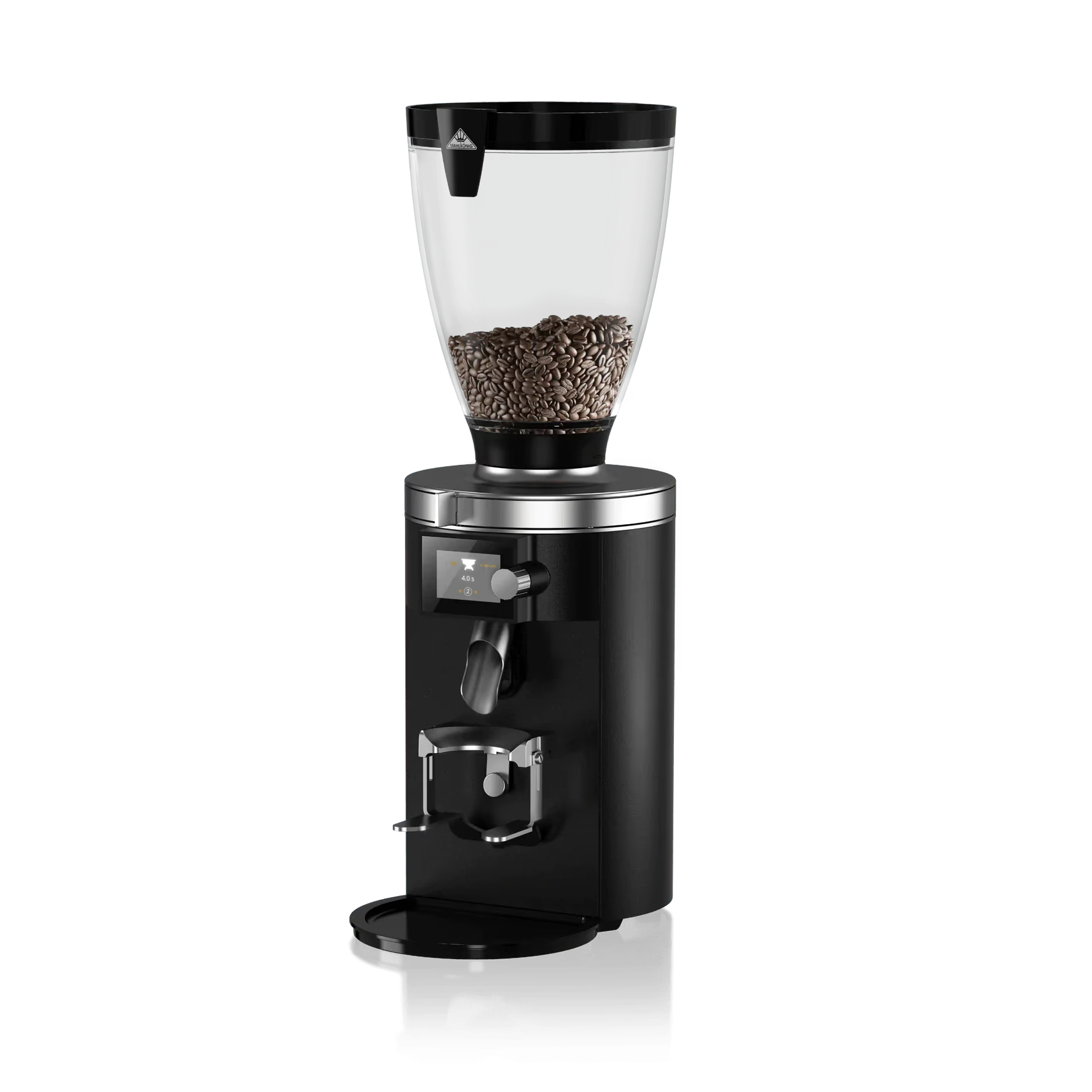
The most common scenario where traditional brewing underperforms is when paired with a blade grinder or pre-ground coffee. A blade grinder produces inconsistent particle sizes, causing simultaneous over- and under-extraction in a single brew — the resulting cup is bitter, astringent, and flat. Pre-ground coffee, even good pre-ground coffee, loses aromatic complexity within days of opening.
The minimum investment for traditional brewing to exceed single-serve quality is a burr grinder. Entry-level burr grinders (Baratza Encore, Fellow Ode, hand grinders like the Timemore Chestnut C2) start around $60–80 and last years. With a burr grinder and fresh specialty coffee, the quality difference over pods is substantial and immediate.
Without a burr grinder, a quality single-serve machine using premium capsules will often outperform a drip machine using inconsistently ground coffee.
Frequently Asked Questions
Do pod machines ever produce specialty-grade coffee?
Some premium Nespresso capsules from third-party specialty roasters approach the 80-point SCA threshold, particularly when measured immediately after brewing. Standard supermarket capsules for either Keurig or Nespresso rarely reach specialty quality. The fundamental limiting factor is that ground coffee in a sealed pod continues staling from the moment it's ground, and no capsule format can replicate the aroma and flavor of grinding seconds before brewing.
What is the best traditional machine for a beginner?
A quality automatic drip machine with a flat-bottom basket and a burr grinder is the most forgiving starting point. The Specialty Coffee Association certifies machines that reach and maintain proper brewing temperature (91–96°C) and achieve correct water distribution — certified machines from brands like Breville, OXO, and Moccamaster reliably produce consistent results with minimal skill. Pair with a mid-range burr grinder and you have a system that easily outperforms pod machines.
Are single-serve machines bad for the environment?
They carry a higher environmental cost per cup than traditional brewing primarily through packaging waste. However, the comparison isn't zero-sum — a household that switches from driving to a coffee shop daily to using a pod machine at home saves significant transportation emissions. The most environmentally efficient approach is a reusable-filter pour-over or French press; the least efficient per cup is a single-use pod machine without a recycling program.
Can I use specialty coffee in a pod machine?
You can use a reusable pod and fill it with any coffee you choose, effectively converting any single-serve machine into a basic drip machine with a small basket. The results are better than standard pods because the coffee is fresh-ground, but extraction is still limited by the fixed water temperature and flow rate of the machine. Results are inconsistent compared to a dedicated manual brewer.
Conclusion
There is no objectively better category — the right machine is the one that fits how you actually brew coffee. If you drink one or two cups in the morning with no time or interest to spare on technique, a quality single-serve machine solves the problem cleanly, even at higher per-cup cost. If flavor matters and you drink more than two cups daily, the math and the palate both favor traditional brewing with fresh-ground coffee. The middle ground is a quality automatic drip machine (SCA-certified) plus a burr grinder: it requires less than five minutes of active effort, costs significantly less per cup than pods over time, and produces a genuinely better cup. Browse our roasted coffee selection to find single-origin and blend options worth brewing by any method.