Grinder Types: Manual vs. Electric, Burr Styles
Manual vs. Electric Grinders
Manual grinders require you to turn a handle, grinding beans in bursts. They're portable, quiet, and cheap ($30–$80), making them popular for camping or office use. Conical burrs on manual grinders often grind slowly and generate minimal heat—good for preserving aromatics.
Downside: 30–45 seconds of arm work for 20g of coffee. Larger batches become tedious. Many home brewers start manual, then switch to electric after a week of wrist fatigue.
Electric grinders motor-spin burrs, grinding 20g in 8–15 seconds depending on fineness. You choose your duration by ear, or use pre-programmed timers on better models. Vastly more convenient for daily use.
Downside: Motors generate heat, potentially degrading volatile compounds during prolonged grinding (though modern DC motors minimize this). Electric grinders are louder (60–85 decibels; some claim 100+, though that's exaggerated).
Reality: For daily home brewing (1–3 cups), electric is the standard. Manual is a niche choice—great for travel, acceptable as a backup.
Burr Types and Their Impact
Conical burrs are cone-shaped, fitting inside a larger ring-shaped burr. Coffee enters the cone, gets crushed between the surfaces, and gravity pulls it outward toward the exit chute.
Strengths:
- Run at lower RPMs (typically 400–500 RPM), generating less friction heat
- Excellent grind consistency across a wide range of sizes
- Handle variations in bean density without choking
- Quieter operation
- More forgiving of inconsistent tamp pressure in espresso
Weaknesses:
- Slightly slower grinding (10–15 seconds vs. 8–12 for flat burrs)
- Minimal retention (good thing for most; bad if you like single-origin micro-lots where you want isolation between grinds)
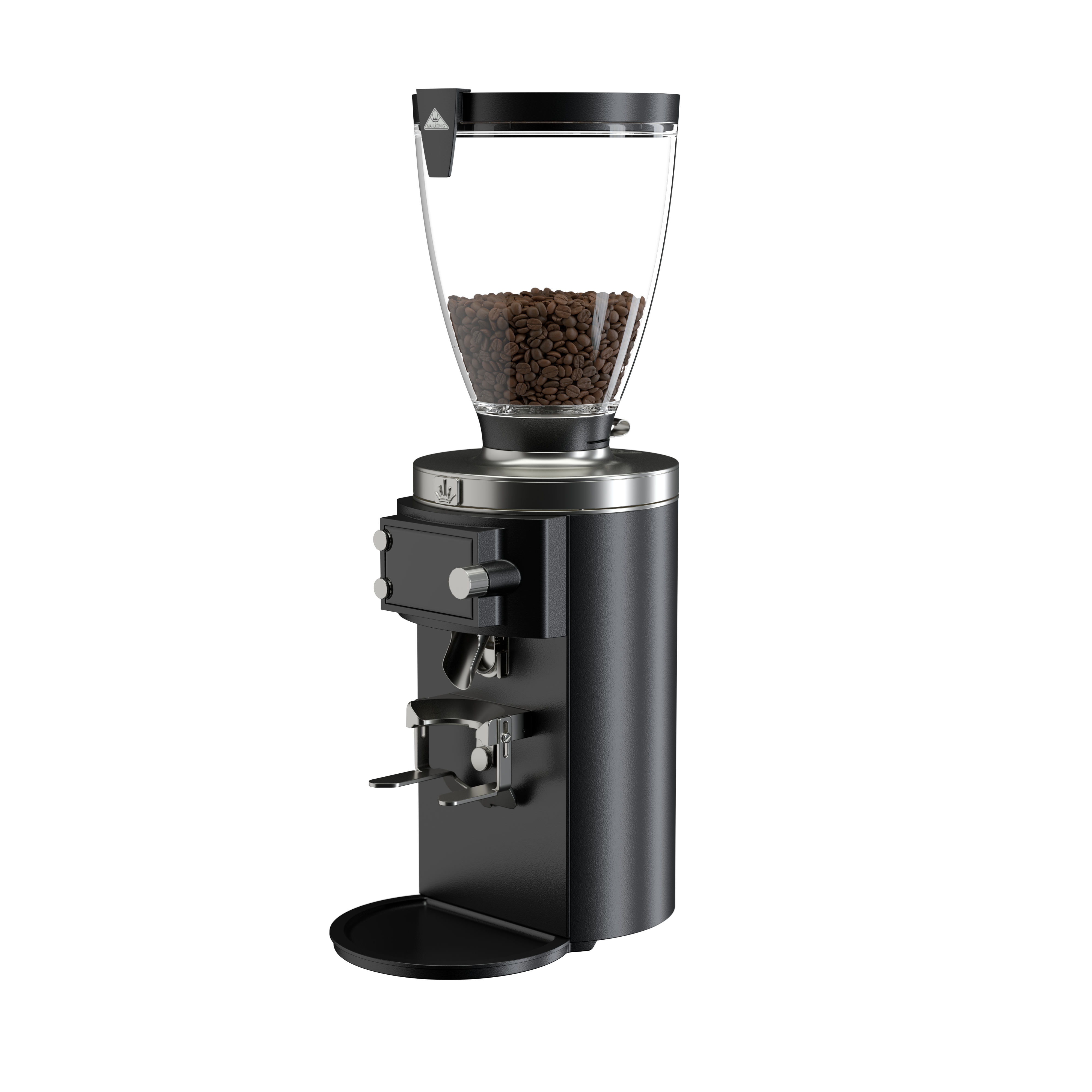
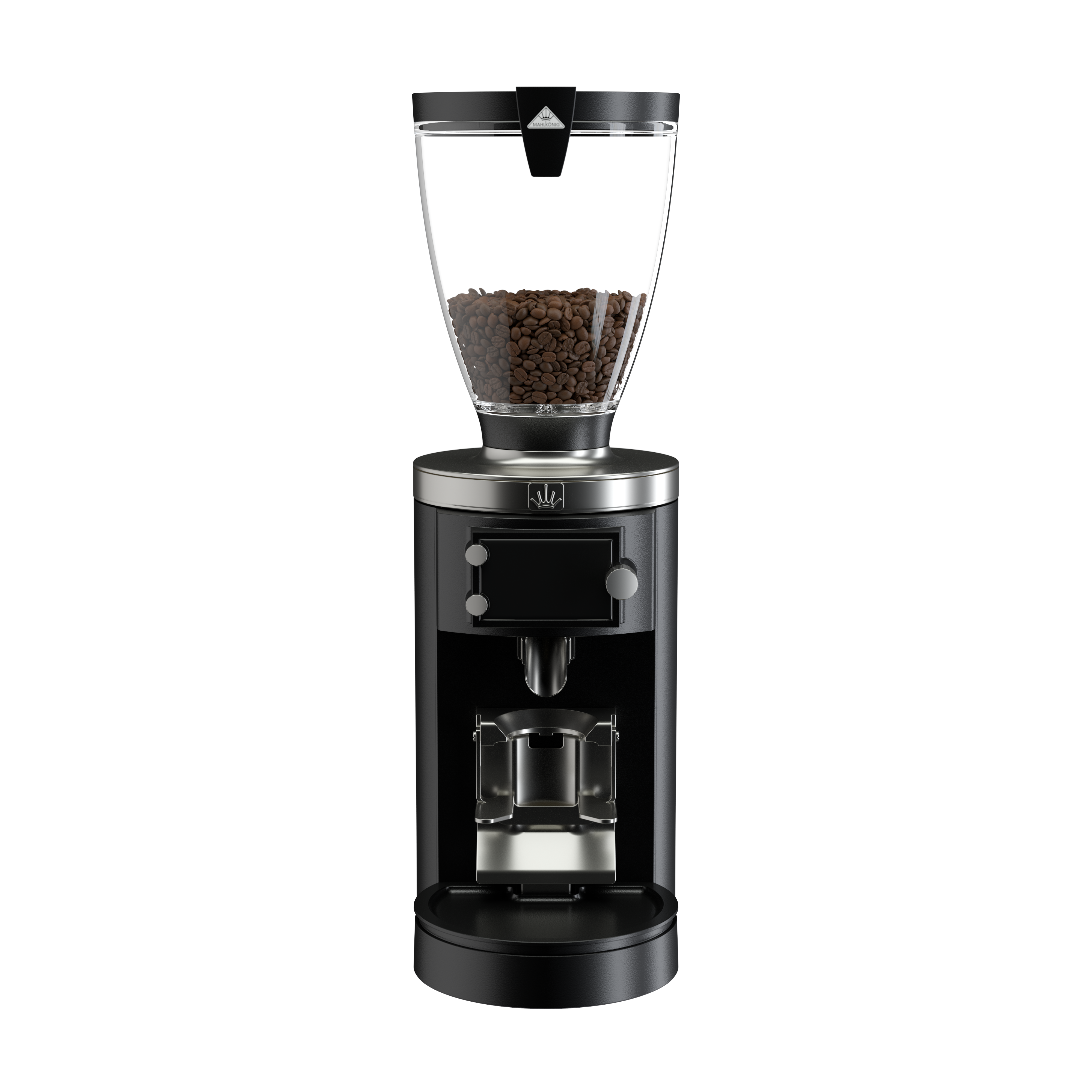
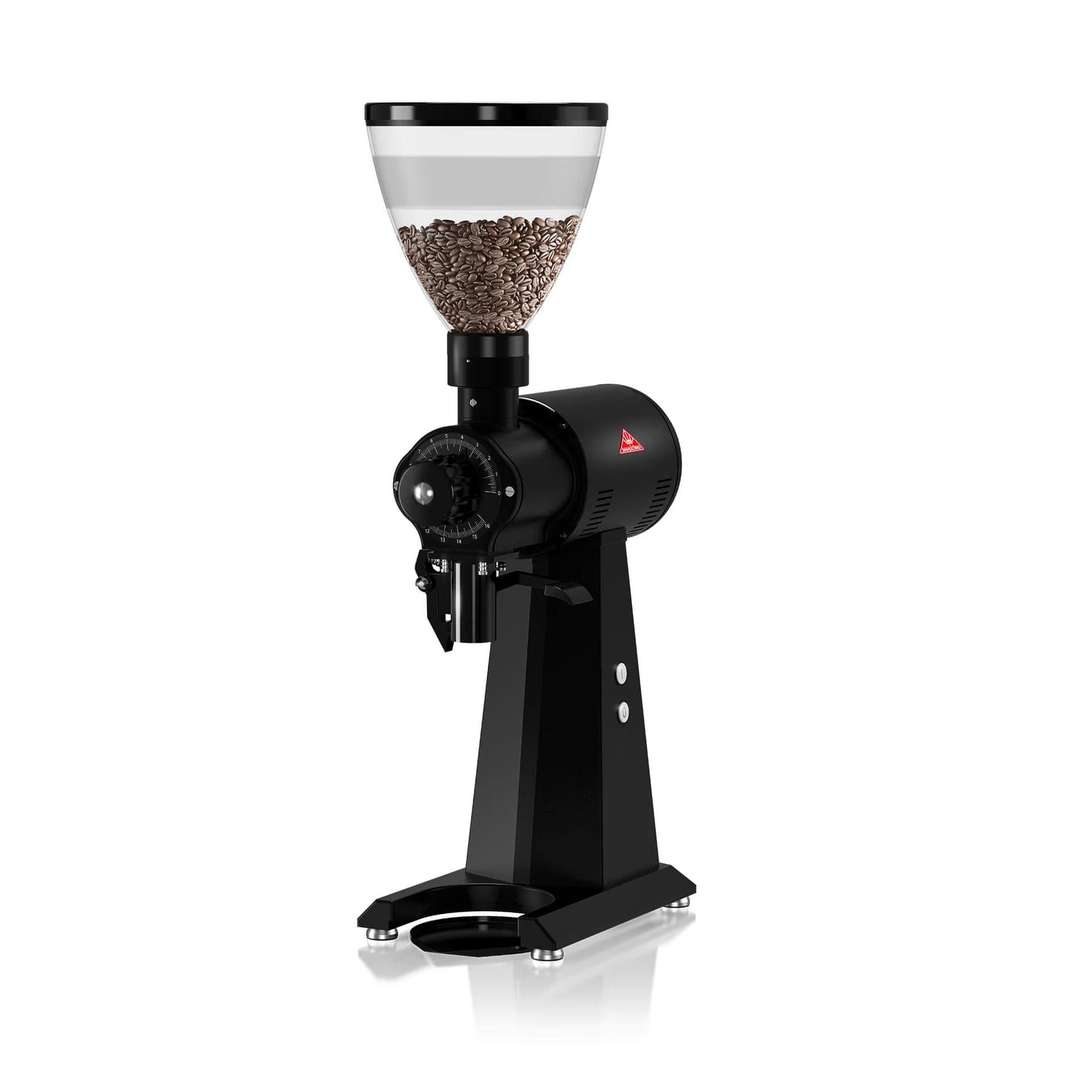
Flat burrs are two parallel rings with cutting edges facing each other. Beans are fed between them and crushed from the inside outward.
Strengths:
- Fast grinding (8–12 seconds for 20g)
- Ultra-consistent particle size, especially at fine settings (espresso, Turkish coffee)
- Low retention for switching between beans cleanly
- Preferred by specialty roasters and espresso bars
Weaknesses:
- Run at higher RPMs (900–1500+), generating more heat and noise
- Sensitive to tamp pressure variation; uneven tamps can cause extraction scatter
- More expensive (typically $250–$600 minimum for quality)
- Burrs dull slightly faster (though quality steel burrs last 2–3 years of daily use)
The practical takeaway: For drip, pour-over, and French press, conical burrs are excellent and quieter. For espresso or Turkish coffee, flat burrs offer the micro-adjustability and consistency needed to dial in shots precisely. Many successful espresso enthusiasts start with conical burrs and graduate to flat only after mastering the basics.
Grind Consistency and Uniformity: The Core Metric
All burr grinders produce a distribution of particle sizes (you can't get 100% uniformity). What matters is how wide that distribution is.
Why Uniformity Drives Extraction
Extraction—dissolving soluble compounds (sugars, acids, oils, caffeine) from the grounds—happens on a particle-by-particle basis. Imagine 100 particles of various sizes in hot water:
- Dust particles (0.5 mm) fully dissolve in 5 seconds.
- Fine particles (1 mm) fully extract in 15 seconds.
- Medium particles (2 mm) fully extract in 45 seconds.
- Coarse particles (3 mm) extract over 2+ minutes.
If your grind mix has all four, water tastes the dust (over-extracted, bitter), ignores most of the coarse (under-extracted, sour), and maybe balances the medium. The result is muddy, unbalanced coffee.
A uniform grind—all particles at 2 mm, for example—means they all extract at nearly the same rate. 30 seconds of brewing extracts them evenly. Flavor is clean, balanced, bright.
Measurable Indicators of Consistency
Better grinders publish particle size distribution data (% of particles in specific micron ranges). Mid-range grinders ($100–$200) typically show ±10–15% variance; premium grinders show ±5–8%.
For practical purposes, look for user reviews mentioning:
- "Espresso flows consistently across multiple shots without dialing"
- "Pour-over tastes clean, not muddy"
- "Switching beans requires <1 minute dialing"
These signals indicate real consistency without needing lab data.
Grind Range: Fine, Medium, Coarse
Different brewers demand different particle sizes. A grinder's "grind range" is the spectrum from finest to coarsest it can produce.
| Grind Size | Texture | Brewers | Extraction Time |
|---|---|---|---|
| Ultra-fine (powder) | Talcum powder consistency | Turkish/Ibrik, espresso | Immediate (10-30s) |
| Fine | Granulated sugar | Espresso, Moka pot, AeroPress | 25-45s |
| Medium-fine | Coarse sand | Pour-over, Chemex | 3-4 min |
| Medium | Table salt | Drip, Moka pot | 4-6 min |
| Medium-coarse | Sea salt chunks | Chemex, AeroPress | 4-5 min |
| Coarse | Rock salt | French press, cold brew | 4 min - 12+ hours |
Look for grinders with:
- 60+ distinct settings for fine-tuning between sizes
- Stepless (infinite) adjustment for espresso, where micro-changes matter (a quarter-turn at espresso fineness can swing extraction 15–20%)
- Labeled settings (number 10 = medium, 15 = medium-fine, etc.) so you can repeat your favorite brews
Capacity and Retention
Bean Hopper Capacity
The bean hopper (where you dump whole beans) typically holds 100–300g (3.5–10 oz). For home use:
- 100–150g hopper: Suitable if you grind 15–20g per brew. You refill 1–2x per week. Compact, good for small kitchens.
- 200–250g hopper: Standard home size. Refill weekly or less depending on daily consumption.
- 300g+ hopper: For households with 2+ coffee drinkers, or if you enjoy bulk grinding for French press.
Note: Beans in the hopper stay fresher when the hopper is full (less air contact). Many enthusiasts keep beans in sealed storage and fill the hopper 1–2 days at a time.
Retention: How Much Ground Coffee Stays in the Grinder
When you grind 20g of coffee, some sticks to the burrs and chute walls. "Retention" is that leftover amount.
High retention (>1g) = Yesterday's coffee mixes with today's new beans. For single-origin exploration, this is frustrating; Brazilian coffee residue taints your Ethiopian Yirgacheffe.
Low retention (<0.5g) = Each grind is clean. Popular for specialty coffee workflows where you're bouncing between origins.
Most home grinders retain 0.5–1.5g. Professional grinders (commercial espresso bars) target <0.2g. For home brewing, low retention is nice but not critical—it matters most if you're switching origins frequently.
Anti-static coatings or materials help grounds eject cleanly, reducing static cling and retention.
Build Quality, Durability, and Maintenance
Burr Materials: Ceramic vs. Steel
Ceramic burrs are extremely hard and dull slowly (thousands of pounds of beans before noticeable wear). They resist heat well and are quieter than steel.
Trade-off: Brittle. If a small stone sneaks into the hopper (rare, but happens), ceramic burrs can chip or crack. Replacement burrs cost $40–$80.
Steel burrs (specially hardened, not stainless steel) dull slightly faster than ceramic but are nearly impossible to damage short of a direct strike. Replacement burrs cost $30–$50.
Reality: For home use grinding 100–200 pounds annually, ceramic lasts 3–5+ years without noticeable performance loss. Steel lasts 4–7+ years. Both are excellent. Choose based on your risk tolerance for chips vs. slight dulling.
Motor Quality and Noise
Entry-level electric grinders use AC motors; they're cheap but loud (80–90 dB) and can wear out burrs unevenly through vibration.
Mid-range to premium grinders use brushed DC motors (about 70–80 dB), running smoother and more quietly. Some newer models use brushless DC motors, even quieter and longer-lasting.
For context: 70 dB is a normal conversation; 80 dB is a busy restaurant; 90 dB is a lawnmower. If you grind before 6 AM, quieter matters.
Design for Cleaning
Coffee oils are sticky. They build up on burrs and can turn rancid, off-flavoring future grinds. Clean your grinder:
- Weekly: Unplug, brush out loose grounds from the chute
- Monthly: Disassemble (if possible), brush burrs with a soft brush, reassemble
- Every 3 months: Run cleaning tablets (like Cafiza or Grindz) through the grinder to dissolve stuck oils
Look for grinders with:
- Quick-release burr assembly (opens in <1 minute)
- Exposed chute (accessible with a brush)
- Removable hopper (less fiddling)
Grinders requiring tools or full disassembly get cleaned less often, leading to staleness.
Price Tiers and What You Get
| Price | Typical Grinder | Best For | Pros | Cons |
|---|---|---|---|---|
| $20–$50 | Blade grinder | Coarse-only needs (cold brew) | Cheap, portable | Inconsistent particles, over-heats |
| $50–$100 | Entry burr (conical) | All brewing except espresso | Good consistency, quiet, affordable | Slightly slower, basic features |
| $100–$200 | Mid-range burr | Drip, pour-over, espresso dabbling | Excellent consistency, many settings, good build | Espresso-specific models get pricey |
| $200–$400 | Specialty burr (often flat) | Espresso-focused, serious enthusiasts | Fine consistency, stepless, premium build | Louder, more expensive, overkill for drip |
| $400+ | Commercial/professional | Roasteries, high-volume cafes | Industrial durability, fastest grinding | Overkill for home, very loud |
Real-world advice: A $100–$150 conical burr grinder outperforms a $40 blade grinder by an order of magnitude. Spending $300+ makes sense only if you're brewing espresso daily or experimenting with micro-adjustments.
Specific Features and Their Trade-offs
Noise Level
Quiet grinders (70–75 dB) typically use conical burrs, brushless motors, and/or premium sound-dampening materials. They cost $150–$250+.
Louder grinders (80–90 dB) are cheaper and often use flat burrs or AC motors. If early morning grinding bothers household members, prioritize quiet.
Dosing and Timer Functions
Timed grinding: Push a button, the grinder runs for your programmed duration (e.g., 12 seconds = 20g). Hands-free, repeatable. Good for daily routines.
Weight-based dosing: Rare at home scale; typically found on $400+ grinders with built-in scales. You set a target weight, the grinder stops when it's reached. Most precise.
Manual grinding (you stop by ear/feel): Most home grinders work this way. Requires practice but works fine once you internalize "this sound = 20g."
Stepless vs. Stepped Adjustment
Stepped (12–30 labeled settings): Easier to repeat. "I dialed to 15 last time, so dial to 15 again." Beginner-friendly.
Stepless (infinite adjustment): You turn a dial continuously. Espresso folks love this; a 1/16th turn matters. Harder to repeat without a notebook.
Many modern grinders offer both: labeled steps (for rough adjustment) + micro-adjustments between steps (for fine-tuning).
Evaluating Grinders: What Real Users Report
Red Flags in Reviews
- "Needs cleaning constantly" → High retention or poor burr assembly
- "Grinds uneven" → Worn burrs, QC issue, or wrong grind size for that method
- "Motor burned out after 6 months" → Cheap AC motor, overheating
- "Particles stick to everything" → High static cling; mediocre build quality
Green Flags
- "Still as consistent after 2 years as day one" → Quality burrs, good motor
- "Espresso stopped requiring dialing between shots" → Tight tolerance, good engineering
- "Switched from X to this, night and day difference" → Tangible improvement in consistency
Frequently Asked Questions
What's the best grinder for espresso on a budget?
Budget espresso requires a compromise. A $100 conical burr grinder can pull acceptable espresso (8–9/10 cups), but you'll dial-in frequently (temperature, tamping pressure change things). A $250–$300 flat burr grinder (like Baratza Sette or Eureka Specialita) cuts your dialing time in half and improves consistency. The sweet spot for home espresso is $200–$350 on the grinder alone.
How often should I replace burrs?
Quality ceramic burrs last 500–1000 pounds of coffee (2–5 years for home users). Steel burrs last 700–1500 pounds. You'll notice slowness before they stop working entirely. Most home users never replace burrs unless they damage them or want an upgrade.
Should I grind all my beans at once or grind fresh each time?
Grind fresh for optimal flavor (aromatic compounds degrade within hours of grinding). If grinding fresh is inconvenient, grind 2–3 days' worth in an airtight container. Store ground coffee in a cool, dark place, not on the counter near a window.
Is a grinder's motor size (in watts) important?
Not really. A 110-watt motor with quality burrs outperforms a 200-watt motor with cheap burrs. Wattage tells you the motor's power output, not its efficiency or the burrs' quality. Ignore specs; trust user reviews and testing.
Can I use one grinder for espresso and pour-over?
Yes, if it has sufficient range (fine to coarse) and stepless or fine-stepping adjustment. In practice, switching from espresso-fine (1.5 mm) to pour-over medium (2.5 mm) takes 30 seconds. Retention (leftover grounds from espresso) might slightly flavor your pour-over, but it's negligible. Many home brewers own one versatile grinder.
Conclusion: Choosing Your Grinder
Start with three questions:
What's your primary brewing method? Espresso → prioritize fineness range and stepless adjustment. Drip/pour-over → prioritize consistency and quiet operation. French press only → even a $50 grinder works (coarse is forgiving).
What's your budget and lifestyle? Under $100: Baratza Encore or Wilfa Svart (conical, 40 settings, excellent consistency). $100–$200: Encore Plus or Eureka Mignon (upgrading motor, quieter). $200+: Flat burr options like Baratza Sette (espresso) or Eureka Specialita.
How often do you grind? Daily? Buy electric. Weekly? Manual works. Grinding at weird hours? Prioritize quiet.
Your grinder is the foundation. Invest here, and better beans, better water, and better technique all compound. Cheap out on the grinder, and no amount of expensive coffee fixes it.