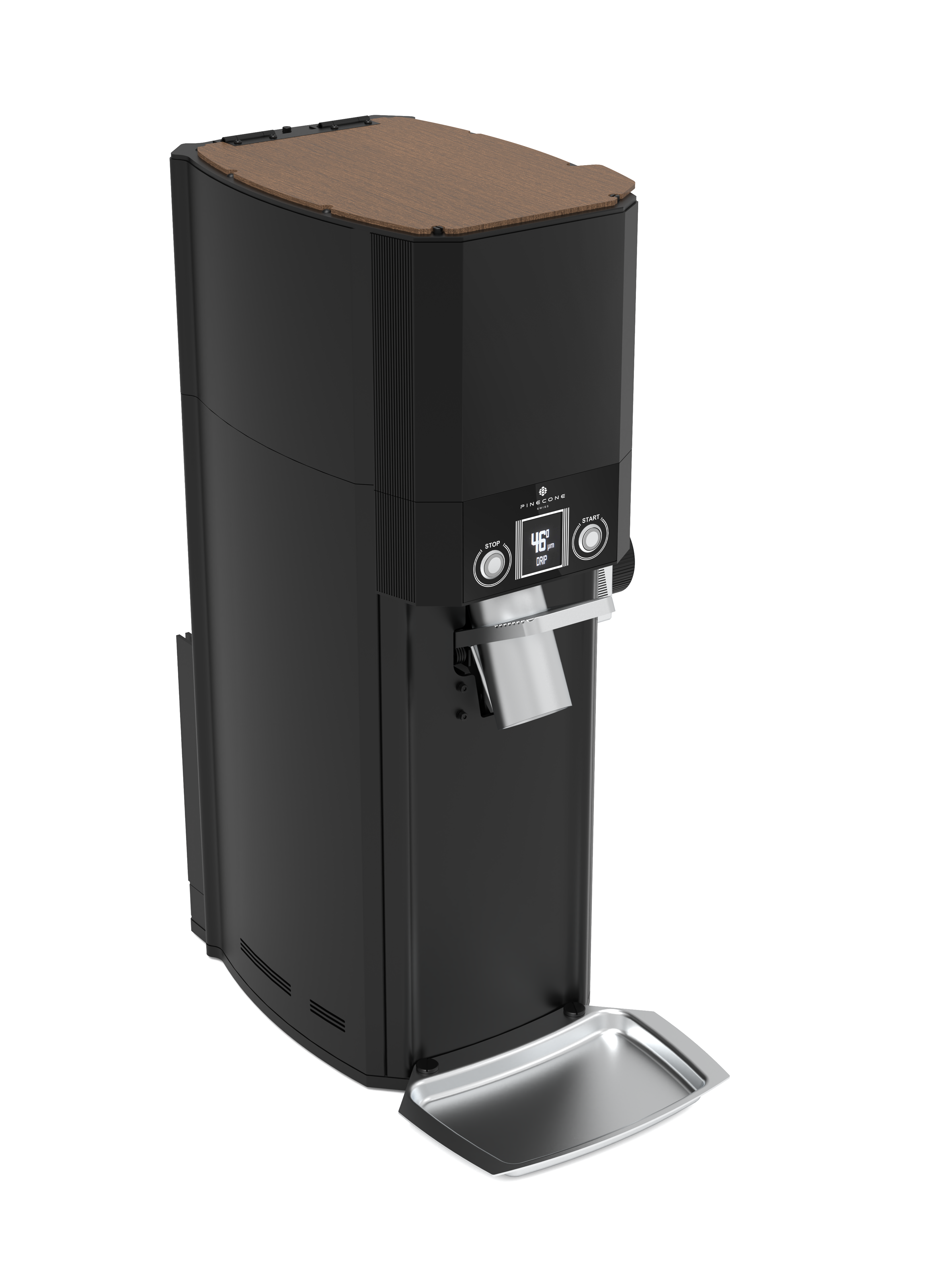
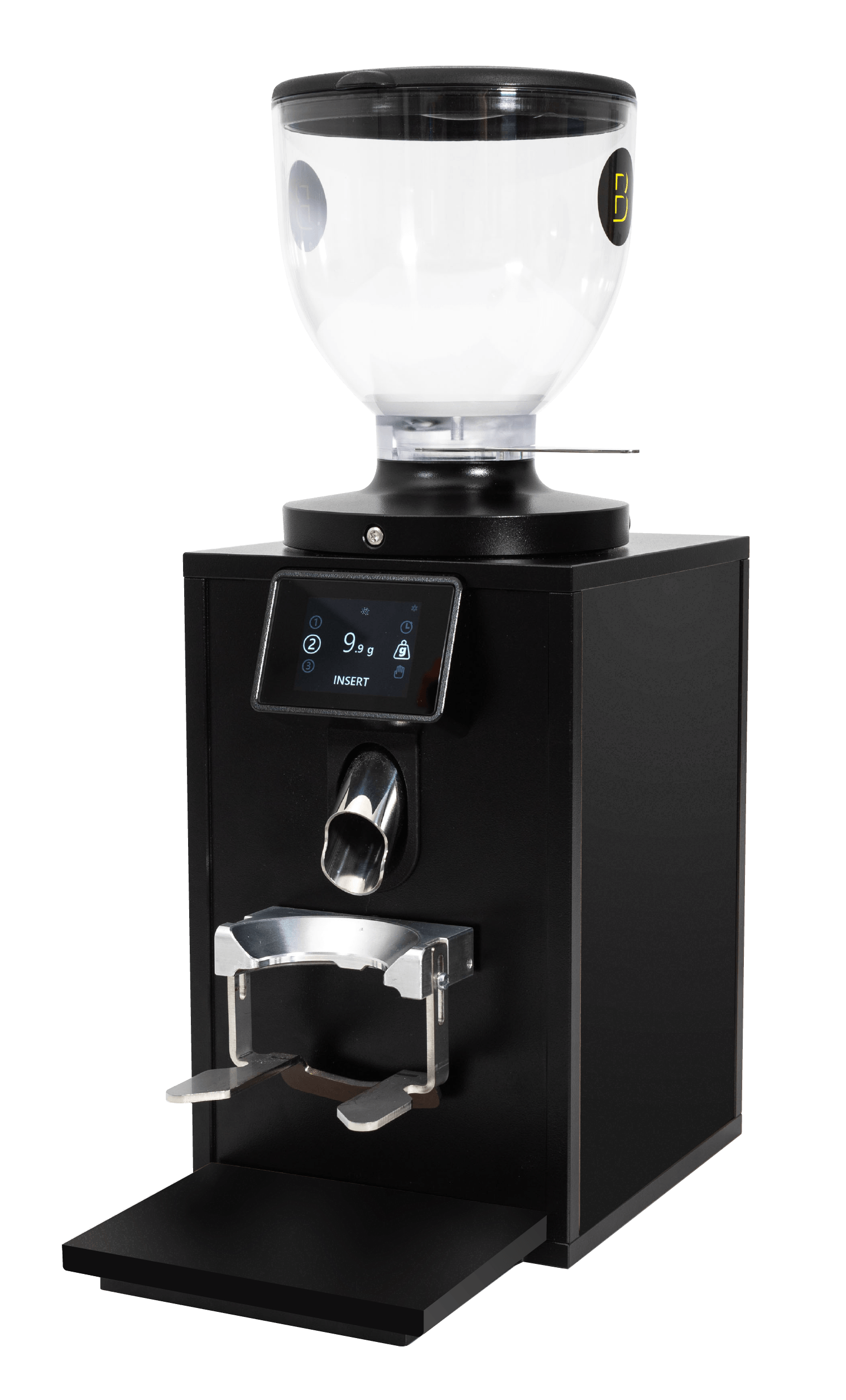
The Grinder: Your Most Important Investment
Why Grinder Quality Matters More Than Everything Else
A poor grinder ruins excellent beans. A great grinder reveals potential in mid-tier beans. This hierarchy means your grinder directly determines your coffee ceiling—no amount of technique or expensive beans compensates for inconsistent grinding.
Grinders accomplish two critical functions: (1) creating uniform particle size for consistent extraction, and (2) minimizing heat generation that degrades aromatics.
Blade grinders (the cheapest option, $20-50) pulse sharp blades, crushing beans inconsistently. Particle size varies wildly—some dust, some chunks. Extraction becomes unpredictable; espresso pulls inconsistently; pour-overs extract unevenly. The rapid blade friction also heats beans, degrading volatile aromatics.
Burr grinders (starting ~$50, quality options at $150-500+) use two surfaces (flat or conical burrs) to cut beans consistently. Uniform particle size = uniform extraction = predictable, repeatable results.
Burr Grinder Types and Trade-offs
Flat-Burr Grinders:
- Mechanism: Two rotating horizontal discs with cutting edges
- Strengths: Excellent uniformity; many have timer controls; last-longer-wear characteristics
- Weaknesses: Slower grinding; higher cost; can generate slightly more heat
- Best for: Espresso (where uniformity is critical); precision-focused home baristas
- Examples: Baratza Sette, Rancilio Rocky, Breville Smart Grinder Pro ($150-200+)
Conical-Burr Grinders:
- Mechanism: One rotating cone-shaped burr inside a stationary conical burr
- Strengths: Faster grinding; lower cost; minimal heat; easier cleanup
- Weaknesses: Slightly less uniformity than flat-burrs (usually imperceptible in practice)
- Best for: General-purpose grinding (espresso, pour-over, French press); value-conscious buyers
- Examples: Baratza Encore ($40, excellent entry), Capresso Infinity ($30), Wilfa Svart ($150, premium option)
Espresso Machines: Where to Invest
The Critical Feature: Temperature Stability
Espresso extraction demands precise temperature control. Professional espresso machines maintain group-head temperature within 1-2°F. Consumer machines vary widely.
Single-Boiler, Single-Temperature machines ($200-400):
- One boiler serves both brewing and steam functions
- Temperature compromises: optimized for steam (355°F), suboptimal for espresso (200°F ideal)
- Acceptable for occasional use; frustrating for daily espresso
Single-Boiler, Dual-Temperature machines (PID-controlled) ($400-800):
- Electronic PID (Proportional-Integral-Derivative) controller maintains precise brewing temperature
- Same boiler, but electronics switch temperature between brewing and steaming
- Much more consistent espresso than non-PID machines
- Acceptable for home daily espresso
- Examples: Gaggia Classic Pro (basic, $150-200 with PID modification), Rancilio Silvia with PID upgrade ($500-600 total)
Dual-Boiler machines ($800-1,500+):
- Separate boiler for brewing and steam simultaneously
- Constant brewing temperature, no compromise
- Professional-grade consistency at home
- Examples: Rocket Espresso, Lelit Victoria, Sage/Breville Barista Express Impress
Lever-Based machines ($400-1,500+):
- Manual pressure control via lever; no pump required
- Excellent temperature stability (simpler mechanics)
- Requires technique and strength; less forggiving than pump machines
- Examples: Flair, ROK, La Pavoni lever machines
What Actually Matters in Espresso Machine Selection
Thermostat/PID control: Non-negotiable for consistency. Machines without this produce variable shots.
Group head material and mass: Brass or copper groups (better heat retention) > aluminum (heats/cools faster, more temperature swing)
Portafilter quality: Affects seal and extraction distribution. Commercial-compatible portafilters ($50-150) are upgradeable on many machines.
Steam wand design: Dual-hole or vented wands easier to learn; single-hole wands require more technique.
Shot volume: Most espresso machines pull 1-2oz shots. Consistency in shot volume (within 0.5oz) matters more than exact volume.
What Doesn't Matter As Much
- Brand prestige: Name-brand Italian espresso machines command premiums for heritage, not necessarily performance. A $500 Gaggia with PID rivals $1,200+ machines
- Pump pressure: All espresso machines use 9 bars pressure (the standard). Higher isn't "better"
- Fancy electronics: Automatic milk frothers, touchscreens, and preset functions add cost without improving espresso quality
Supporting Equipment
Milk Frothing: Steam Wand Technique Over Equipment
Quality milk frothing requires:
- Proper steam wand technique (more important than equipment)
- Cold milk (fresh from refrigerator, not room temperature)
- Quality steam (sufficient boiler pressure, rapid pressure recovery)
Any machine with adequate steam will produce good milk if technique is right. $600 machines with poor technique produce worse milk than $1,200 machines with good technique.
Standalone milk frothers ($50-150) offer alternative: they heat and froth milk separately, eliminating steam wand technique requirements. Useful if you make many milk drinks and don't want to develop frothing skills.
Tamping and Distribution Tools
Quality tamper ($30-80): A flat-bottomed, appropriately weighted tamper (flat > conical for espresso) ensures consistent puck density. Essential but often overlooked.
WDT (Weiss Distribution Technique) tools ($10-30): A fine needle or special tool breaks up clumps in ground coffee before tamping, promoting even extraction. Dramatic improvement in shot consistency.
Tamping mat ($15-30): Protects counters and provides consistent tamping surface.
Water Filtration
Espresso machines have 0.3-0.5mm group-head holes that clog with mineral buildup. Mineral-heavy water (hard water) clogs machines, degrades temperature control, requires frequent descaling.
Good water filtration ($20-50 setup):
- Reduces mineral content
- Extends machine lifespan
- Improves temperature stability
- Prevents flavor corruption from hard minerals
Options include pitcher filters (Brita-style), under-sink reverse osmosis, or bottled water (convenient but wasteful).
Scales and Timers
Espresso scale ($60-150): Measures output shot weight, critical for recipe consistency. Espresso recipes work by input/output weight ratio: 18g input → 36g output at 28-30 seconds (standard 1:2 ratio). Scales enable this precision.
Shot timer ($20-80): Seconds matter in espresso timing. Automatic timers on machines help; standalone timers useful for manual pour-overs or lever machines.
The Complete Setup: Budget Scenarios
Budget-Conscious Setup (~$400-600 total)
Equipment:
- Conical-burr grinder (Baratza Encore, ~$40) + burr upgrade ($30) = $70
- Single-boiler PID espresso machine (Gaggia Classic Pro, ~$200)
- Basic tamper and mat (~$30)
- Water pitcher filter ($20)
- Scale ($50-80)
- Total: $470-600
Limitations: Gaggia Classic needs some modifications (pre-infusion, OPV adjustment) to pull consistently good shots. Single boiler means steam-after-shots workflow (steam → wait for cooling → brew). But fundamentally capable of excellent espresso with proper technique.
Mid-Range Setup (~$1,000-1,200)
Equipment:
- Flat-burr grinder (Rancilio Rocky or Baratza Sette, ~$150-200)
- Mid-range dual-temperature PID espresso machine (Rancilio Silvia with PID, ~$600 total)
- Quality tamper and WDT tools (~$60)
- Water filtration (~$40)
- Scale and timer (~$100-150)
- Total: ~$1,000-1,200
Advantages: Dual-temperature means no waiting between steam and espresso. Rancilio Silvia is legendary for reliability and upgrade-ability. This setup produces café-quality espresso consistently.
Premium Setup (~$1,500-2,000)
Equipment:
- Premium burr grinder (Wilfa Svart or Niche Zero, ~$200-300)
- Dual-boiler espresso machine (Rocket Espresso or Lelit, ~$1,000-1,500)
- Premium accessories (~$200)
- Total: ~$1,500-2,000
Advantages: Dual-boiler = simultaneous espresso and steam without temperature compromise. Premium grinders offer micro-adjustment capability and durability. This setup rivals many commercial coffee bars.
Frequently Asked Questions
Is PID essential for home espresso?
No, but it's the single-largest performance upgrade available under $1,000. Machines without PID produce acceptable espresso for occasional drinkers but frustrate daily users. If budget-limited, prioritize PID over group-head material or brand prestige.
Should I buy superautomatic machines that froth milk automatically?
No. Automation reduces user control and usually produces mediocre milk. Learning frothing technique (2-3 hours of practice) enables better milk drinks than machines costing 2-3x more. Exception: if you never want milk drinks, automatics simplify espresso-only workflow.
What's the best all-around entry-level machine?
Gaggia Classic Pro (
$200 new) is objectively the best value: buy used for $100-120, add $30 PID modification, $50 group-head gasket + seals, and you have a $180-200 machine that produces excellent espresso. Alternatively, Breville Barista Express ($400) bundles mediocre grinder + adequate espresso machine in one unit—acceptable but each component is compromised.
Conclusion
Home espresso equipment rewards knowledge more than budget. A $400 setup with proper technique and understanding beats a $2,000 setup operated carelessly. Invest in grinder quality first, temperature stability second, and skills/knowledge third. Brand prestige matters far less than understanding which features actually improve your cup. Start with entry-level PID machines ($150-200 used), develop technique, and upgrade grinders and machines as your skills warrant. Quality espresso at home is achievable at any budget with right priorities.