The Standard That Defines the Category
Specialty coffee is not a marketing label. It is a scored classification: the Specialty Coffee Association (SCA) defines specialty coffee as green coffee that scores 80 points or above on a 100-point sensory evaluation conducted by a certified Q Grader. Coffee scoring below 80 is commercial-grade, regardless of the branding on the package.
That scoring threshold filters out the majority of global coffee production. In 2022, the SCA estimated that fewer than 5% of all coffee traded globally qualified as specialty grade. Every point above 80 represents a meaningful sensory difference — flavor clarity, sweetness, acidity structure, absence of defects.
This distinction matters because it answers the primary question: not "is specialty worth it?" but "what are you actually paying for?"
1. Superior and Measurably Distinct Flavor
The most immediate reason to choose specialty coffee is taste — and the difference is not subtle. Commercial coffee prioritizes roast uniformity and shelf stability over flavor nuance. Specialty coffee prioritizes the opposite: the inherent character of the origin, the cultivar, and the processing method.
A washed Yirgacheffe from Ethiopia produces a cup with jasmine florals, bergamot citrus, and a tea-like body. A natural-processed Sidama from the same country produces something more like a blueberry reduction — intensely fruited, wine-adjacent, with a heavy sweetness. A Colombian Huila washed Caturra might give you caramel, red apple, and bright malic acidity. None of these characteristics survive dark roasting or commodity blending.
The SCA's scoring categories — fragrance, flavor, aftertaste, acidity, body, balance, uniformity, clean cup, sweetness, overall — are measuring real chemical compounds. The berry notes in a natural Ethiopian come from ethyl acetate and isoamyl acetate produced during fermentation. The floral character comes from linalool and geraniol — volatile compounds present in high-altitude Arabica that degrade rapidly with heat. A light-to-medium roast preserves them; a dark roast destroys them.
2. Traceability — You Know Where Your Coffee Came From
Commercial coffee typically reads "100% Arabica" or "Premium Blend" on the label. There is no information about country of origin, farm, altitude, processing method, or harvest year because the blend changes to match price and availability.
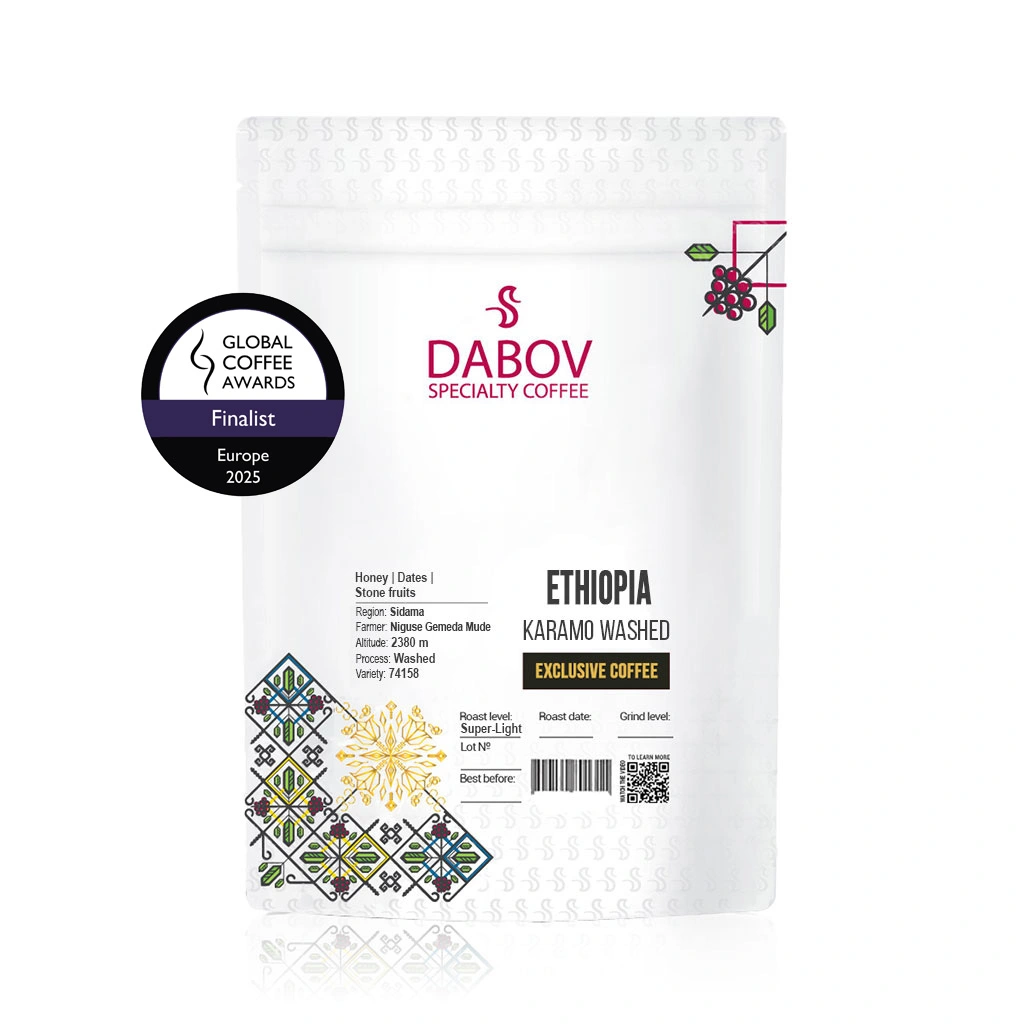
Specialty coffee labels tell a different story: farm name or cooperative, municipality and region, cultivar (Caturra, Bourbon, Geisha, SL28), altitude in meters above sea level, processing method (washed, natural, honey), and the date of export or roast. This is not luxury packaging — it is the audit trail that allows quality verification.
Traceability protects both the consumer and the farmer. When a roaster can identify the specific lot that produced an extraordinary cup, they can return to that producer and pay a premium for more of it. This is the mechanism by which quality is rewarded in the specialty supply chain, which does not exist in commodity markets.
"Transparency in pricing and sourcing is not idealism. It is the only mechanism that incentivizes farmers to invest in quality rather than volume." — Tim Wendelboe, Norwegian World Barista Champion
3. Freshness — Roast Dates vs. Best-By Dates
Commercial coffee is typically roasted months before sale. Roasters in commodity markets aim for 12–18 month shelf life with addition of nitrogen flushing or desiccant packets. The assumption is that you cannot taste the difference between three months post-roast and twelve months post-roast if the package is sealed.
You can.
Coffee peaks in flavor between 5 and 30 days after roasting. The volatile aromatic compounds that produce complexity — the same linalool and ethyl acetate that make a natural Ethiopian smell like ripe berries — are gone or significantly diminished by 60 days post-roast, sealed or not. By 90 days, what remains is a blunt, one-dimensional flavor profile dominated by roasted bitterness.
Specialty roasters print roast dates, not best-by dates, because the relevant information is freshness, not a compliance date. Buy from roasters who roast weekly and ship to order. Consume within 4 weeks of the roast date for filter coffee, within 3 weeks for espresso.
4. Ethical and Direct Trade Relationships
The commodity coffee price is set by the C-market (ICE Futures) and has historically been volatile to the point of forcing small-scale farmers below the cost of production in low-price years. In 2001, the C-market crashed to $0.41 per pound — the lowest real-dollar price in 100 years — and entire farming communities in Central America abandoned coffee production. Farmers could not afford to harvest their own crop.
Specialty coffee operates differently. Most specialty roasters pay above the C-market by design, many by 50–100% above the commodity floor. Direct trade relationships — where the roaster negotiates price directly with the producer rather than through multiple broker layers — allow even higher premiums for documented exceptional quality. Some relationships in the specialty world trade at 4–5x the commodity price for competition-grade lots.
This price differential is not philanthropy. It reflects the real cost of producing specialty-grade coffee: selective hand-picking, meticulous processing, quality control at every stage. Commodity picking is mechanized and strips everything from the branch. Specialty picking requires workers to return to the same trees multiple times per season, harvesting only ripe cherries at peak brix.
5. Processing Diversity and Flavor Intentionality
Commercial coffee uses washed processing almost universally at scale, because it is the most efficient method for drying large volumes consistently. Specialty coffee uses washed, natural, honey, anaerobic, and experimental fermentation methods — and the choice of processing is an intentional flavor decision.
| Processing Method | What It Does | Typical Flavor Profile |
|---|---|---|
| Washed (wet) | Pulp removed before drying; fermentation tank strips mucilage | Clean, high clarity, acidity-forward |
| Natural (dry) | Whole cherry dries on raised beds; ferments slowly in the fruit | Fruity, wine-adjacent, heavy body |
| Honey (pulped natural) | Pulp removed but mucilage remains during drying | Between washed and natural; sweetness and body |
| Anaerobic | Sealed tank fermentation before pulping | Intense, tropical fruit, sometimes funky |
| Experimental (e.g. carbonic maceration) | CO2 environment during fermentation | Complex, novel flavor compounds |
A skilled producer chooses processing based on the bean's inherent character, the altitude and microclimate of the farm, and the market demand. A washed Geisha at 2,200 meters above sea level produces a delicate, floral expression; the same Geisha processed natural produces a completely different — and for many palates, equally fascinating — result.
6. Cultivar Diversity
Commercial coffee is dominated by Robusta and Catuai/Catimor hybrids selected for yield, disease resistance, and mechanical harvestability. Specialty coffee has actively preserved and revived heirloom varieties that produce extraordinary cups at low yields.
Geisha (or Gesha): Originally from the Gori Gesha forest in Ethiopia, brought to Panama in the 1950s and largely forgotten until a 2004 Best of Panama cupping revealed its extraordinary floral complexity. It now sells for $800+ per pound at auction for exceptional lots.
SL28 and SL34: Kenyan cultivars developed by Scott Laboratories in the 1930s for drought resistance. Produce the distinctive blackcurrant, wine-like acidity associated with Kenyan AA.
Bourbon: A natural mutation from the island of Reunion (formerly Bourbon). Sweeter and more complex than Typica, but lower yield and high disease susceptibility make it uncommon at commodity scale.
Laurina: A low-caffeine natural mutant of Bourbon, with roughly 50% less caffeine than standard Arabica. Extremely rare; found on specific farms in El Salvador and Honduras.
Commercial production has largely eliminated these cultivars because they cannot compete economically with high-yield disease-resistant hybrids. Specialty demand is the only economic incentive keeping them in production.
7. Roast Integrity — Light and Medium Roasts That Reveal Origin
Specialty coffee is typically roasted lighter than commercial coffee — not because dark roast is wrong, but because dark roasting is the only technique that covers defects and homogenizes poor-quality beans into an acceptable cup. When beans are good enough to taste on their own, you do not need to hide them.
A light-roast specialty coffee will be denser and harder to extract than a commercial dark roast, requiring a slightly higher brew temperature, a slightly finer grind, and a slightly longer brew time. The effort is worth it: the light roast preserves the origin character, cultivar personality, and processing complexity that the bean spent months developing.
8. Health and Purity Considerations
Specialty coffee's quality standards indirectly produce a cleaner cup from a purity standpoint. SCA specialty grading explicitly limits defect counts: a specialty-grade green coffee cannot contain any Category 1 defects (full blacks, sour beans, fungus-damaged beans) and is allowed fewer than five Category 2 defects per 350g sample.
Category 1 defects — particularly moldy and overfermented beans — contain ochratoxin A and other mycotoxins. The SCA limit excludes these contaminated beans from the specialty grade by definition. Commercial coffee has less stringent defect limits, and some commercial roasters blend defected lots into the mix precisely because dark roasting masks the off-flavors.
Beyond defect control, the freshness advantage also matters for antioxidant content. Chlorogenic acids — the main antioxidants in coffee — degrade during extended storage. A 90-day-old commercial roast has measurably lower chlorogenic acid content than a 10-day-old specialty roast from the same Arabica cultivar.
9. Community and Knowledge Access
The specialty coffee community has produced more free educational content in the last decade than the entire history of coffee publishing before it. James Hoffmann's YouTube channel, the Barista Hustle resource library, the SCA's freely accessible brewing standards — all of this knowledge is oriented toward helping drinkers extract more quality from their cups.
Specialty cafes and roasters function as education points. A skilled specialty barista will explain the origin story of the coffee on bar, demonstrate the difference between a washed and natural Ethiopian on the same equipment, and guide you toward a brewing method that suits your taste. This is categorically different from the experience at a commercial chain, where consistency is achieved by limiting variability — including the barista's knowledge.
10. Long-Term Value for Serious Coffee Drinkers
Specialty coffee costs more per gram than commercial. It is worth calculating whether that premium is actually expensive relative to what you get.
A 250g bag of commercial ground coffee at $8 produces approximately 16 cups at a 15g dose. Cost per cup: $0.50. A 250g bag of specialty whole bean at $20 produces the same 16 cups with a vastly superior sensory experience. Cost per cup: $1.25. Against a $4–6 cafe visit, the specialty home-brewing cost is still 70–80% cheaper.
The calculation changes further when you consider that specialty beans, brewed properly with a good grinder, produce a cup that many former cafe visitors are content to drink at home. The economic argument for specialty coffee is strong for habitual coffee drinkers — it replaces frequent cafe visits at a fraction of the price per cup, while delivering higher quality than the typical commercial cafe brew.
Specialty vs. Commercial Coffee: A Comparison
| Attribute | Specialty Coffee | Commercial Coffee |
|---|---|---|
| SCA Score | 80–100 | Below 80 |
| Defect limits | Very strict (0 Cat-1 defects) | Less stringent |
| Origin traceability | Farm, cultivar, processing, altitude | Typically absent |
| Roast date transparency | Standard practice | Rare |
| Processing diversity | Washed, natural, honey, anaerobic | Primarily washed |
| Price premium over commodity | 50–400% | Commodity floor |
| Freshness window | 5–30 days post-roast | Designed for 12–18 months |
| Cultivar diversity | Heirloom and rare varieties | High-yield commercial hybrids |
Frequently Asked Questions
How do I know if a coffee is genuinely specialty grade?
Look for a roast date (not just a best-by date), specific origin information (country, region, farm or cooperative), cultivar name, processing method, and altitude. If any of these are missing, the coffee is likely commercial grade regardless of the label. A Q-grade score on the bag is the strongest confirmation, though most roasters do not print this directly.
Is specialty coffee always more acidic?
Specialty coffee is often described as having higher acidity, but this refers to perceived brightness — a desirable, fruit-like quality — not chemical pH. Many washed specialty coffees have a pH near 5.0, similar to commercial coffee. The difference is structural: specialty acidity has definition and character (citric, malic, phosphoric); commercial acidity tends to be flat and harsh (acetic from over-fermentation or cheap robusta).
Can I make specialty coffee with a basic drip machine?
Yes, with caveats. A drip machine must reach 90–96°C (195–205°F) brew temperature and use a flat-bottom basket or showerhead that distributes water evenly across the grounds. The Technivorm Moccamaster and Bonavita BV1900TS both meet SCA brewing standards. A cheap drip machine that peaks at 85°C will under-extract specialty coffee no matter how good the beans are.
What is the minimum budget to start drinking specialty coffee at home?
A 250g bag of entry-level specialty coffee costs $14–$18. Add a Hario Skerton Pro hand grinder ($65) and a basic pour-over set (V60 + filters + any kettle, $30). Total first investment: roughly $110–$120, producing 16 cups of genuinely specialty-grade coffee. That is a lower cost-per-cup than a daily cafe visit within 2–3 weeks.
Conclusion
Specialty coffee's advantages are not matters of preference — they are measurable, systematic, and rooted in chemistry. The flavor difference is real and documented by the same sensory science that defines the category. The ethical sourcing advantage is real and reflected in prices paid to producers. The freshness advantage is real and visible in the roast date on every bag. The health and purity advantage is real and encoded in the SCA defect standards.
The strongest argument for specialty coffee is not any one of these reasons in isolation. It is that all of them reinforce each other: a farmer motivated by quality pricing grows better beans; better beans reward light roasting; light roasting preserves freshness and sensory complexity; freshness produces a cup worth learning to brew properly. The entire chain is oriented toward the cup. Browse our specialty coffee beans to start with something worth that chain.