The Architecture of the Coffee Supply Chain
Coffee moves through five to seven hands between the farm and the cafe. Each stage adds cost and, ideally, value. Understanding who does what and where money changes hands is the foundation for anyone trying to source intelligently or understand specialty pricing.
Farmers and Cooperatives
Roughly 80% of the world's coffee comes from smallholdings of two hectares or fewer. A single farmer's output rarely justifies a dedicated export container. Cooperatives solve this by aggregating cherries or parchment from hundreds of members, centralizing wet-milling and dry-milling, and presenting consolidated lots to exporters. The cooperative model also provides smallholders access to quality infrastructure and, in well-run cases, year-end profit distributions based on coffee quality.
Exporters
Exporters operate in producing countries. They grade, sort, and bag green coffee for international shipment. They handle phytosanitary certificates, customs documentation, and the logistics of container loading. Many exporters finance farmers through pre-harvest cash advances, recouped at delivery — a critical function in countries where bank credit is scarce. Exporters take on price risk: if they contract coffee at a fixed price and the market falls before shipment, the margin evaporates.
Importers
Importers receive containers in consuming countries and sell green coffee to roasters. They manage warehousing, carry inventory risk, arrange quality control, and often maintain the lending relationships that fund purchases months before roasters need the coffee. Large commodity traders — Olam, ECOM, Louis Dreyfus — move millions of bags per year and hedge extensively on the futures market. Specialty importers — Cafe Imports, Mercanta, Cofinet — work smaller volumes at higher prices and emphasize traceability.
The C-Price and How Coffee Is Priced
What the C-Price Is
The Coffee "C" contract — traded on the Intercontinental Exchange (ICE) in New York — sets the benchmark price for washed Arabica coffee. Contracts are denominated in US cents per pound and represent 37,500 pounds (one container-friendly 250-bag lot) of qualifying Arabica grades from eligible origins.
The C-price is a futures price: contracts expire in March, May, July, September, and December. Producers, exporters, and roasters use the futures market to hedge — locking in prices months or years ahead of physical delivery. Speculators who never intend to take delivery of coffee also trade these contracts, providing liquidity but also adding volatility disconnected from supply and demand fundamentals.
Differentials
Physical coffee trades at a differential relative to the C-price: a positive differential for high-quality or in-demand origins, a negative differential for lower-grade or oversupplied ones. A Colombian Huila lot might trade at C+30 (30 US cents per pound above the C-price). An Indonesian commercial grade might trade at C-10. Differentials shift with origin reputation, crop year quality, and specific market demand.
Specialty Pricing
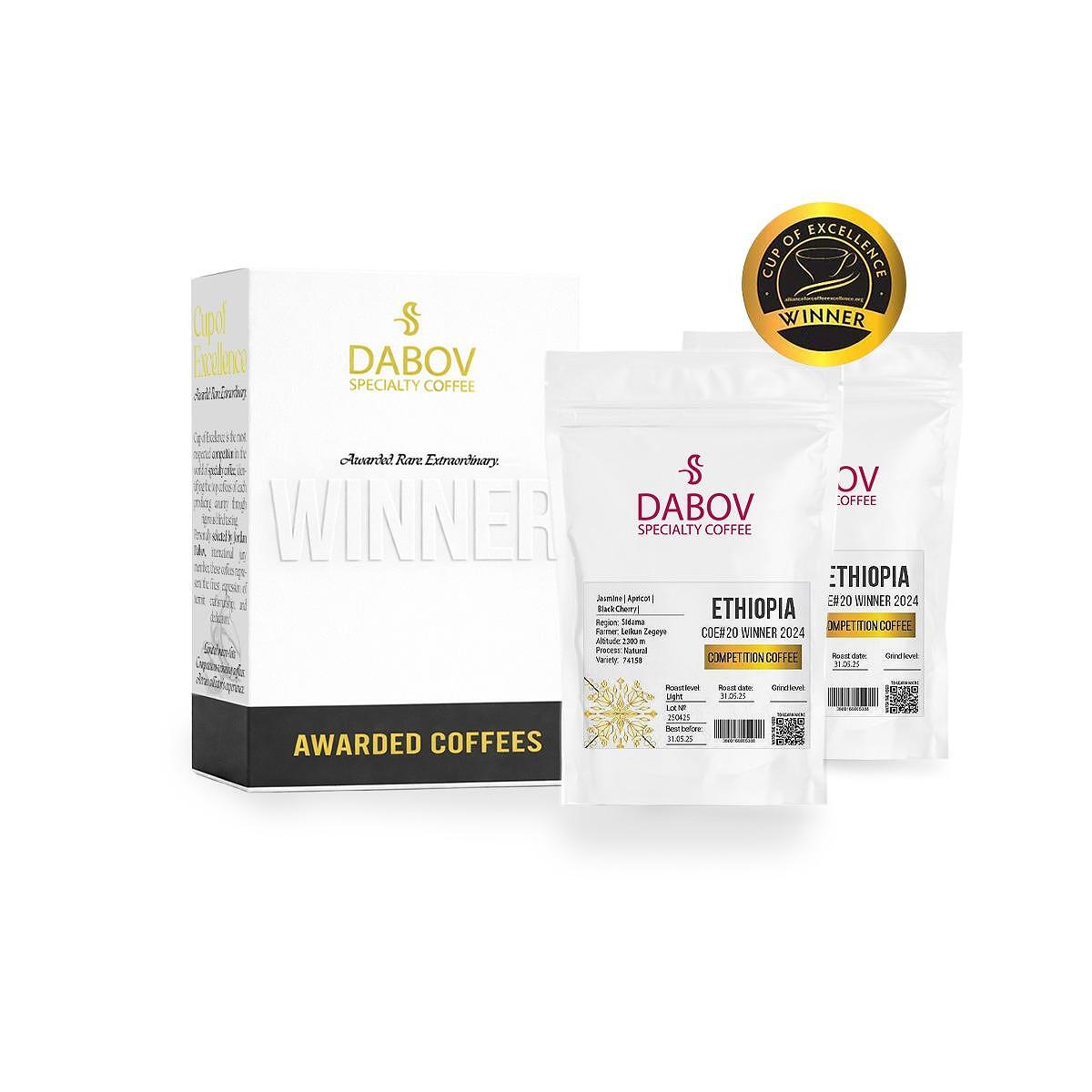
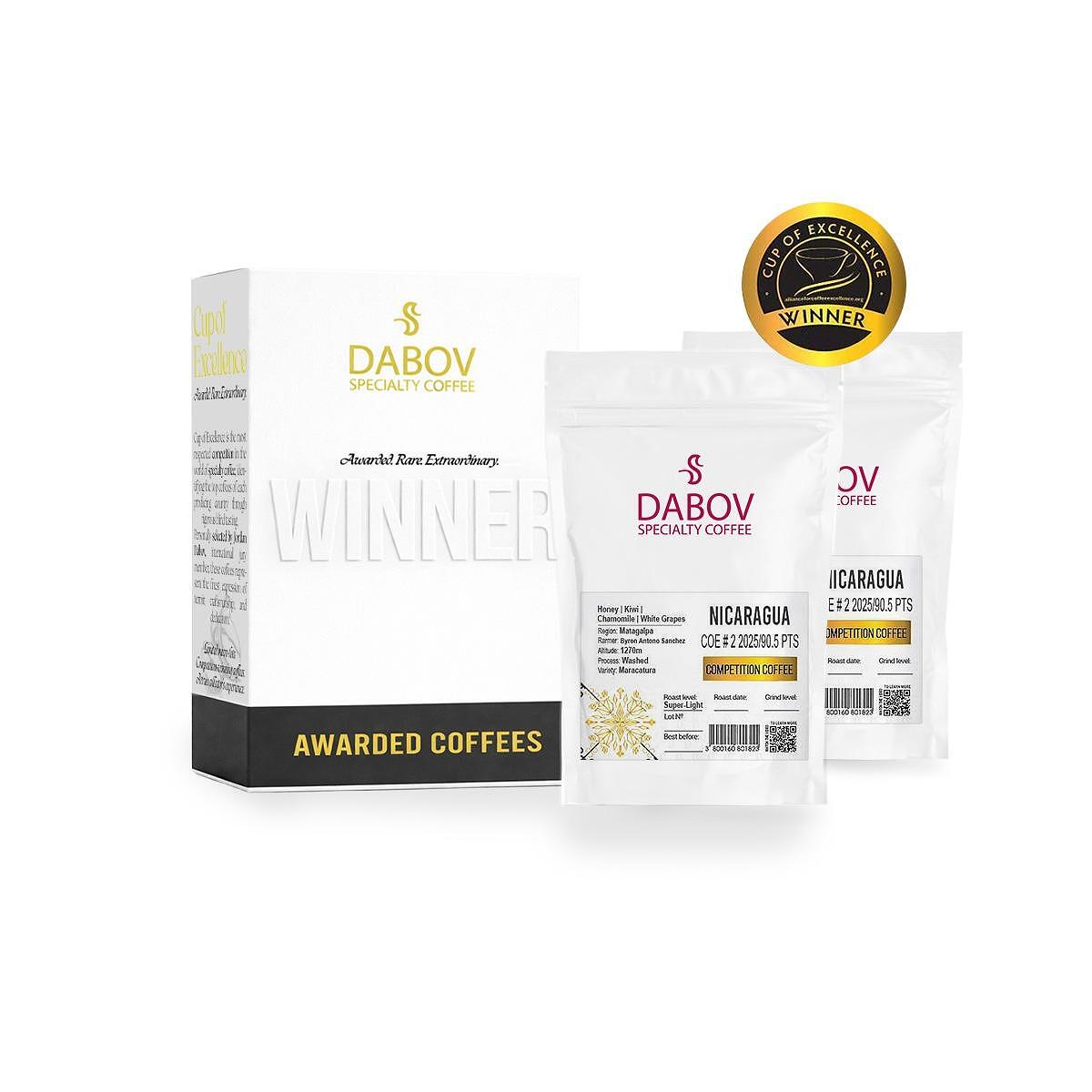
Specialty coffee bypasses the C-price mechanism in one of two ways. Cup of Excellence (CoE) auctions — operating in more than 20 countries — present lots scored 86+ by international judging panels and sell them online to the highest bidder. These coffees can sell at $20 to $50 per pound green or more. Direct trade relationships between roasters and farms may also operate on cost-of-production-plus-margin formulas entirely independent of the C-price.
What Drives Coffee Price Volatility
Coffee is one of the most volatile commodities traded on global exchanges. A 30 to 40% price swing within a single year is normal rather than exceptional. The variables that drive these swings are worth understanding.
| Factor | Mechanism | Typical Impact |
|---|---|---|
| Brazil crop size | Biennial bearing cycle; drought or frost can wipe 15–25% of world supply | High — drives C-price moves immediately |
| Vietnam Robusta harvest | Major supplier to blends and instant; rains or drought shift supply | Moderate — affects Robusta spread |
| Coffee leaf rust outbreaks | Destroys harvest in affected regions; Central America 2012–13 cost 30% of regional output | High regionally, moderate globally |
| El Niño / La Niña | Disrupts rainfall in Brazil, Colombia, Vietnam simultaneously | High — cross-origin correlation |
| Currency fluctuations | BRL/USD moves change Brazilian export competitiveness directly | Moderate-high; Brazil is 35% of world supply |
| Hedge fund positioning | Non-commercial traders can move the futures market 10–15% on sentiment alone | High short-term, mean-reverts over weeks |
| Shipping costs | Container shortages (as in 2021) added $2,000–5,000 per container to landed cost | Moderate |
For roasters sourcing green coffee, price risk management typically involves buying forward — contracting coffee months before it's needed at a negotiated price. A roaster that contracts 60% of its next quarter's needs in advance and buys the rest at spot is significantly less exposed to a C-price spike than one that buys entirely at spot.
Direct Trade and Specialty Sourcing Models
What Direct Trade Actually Means
Direct trade has no formal certification body and no legal definition. In its strong form, it means a roaster buys directly from a specific farm or cooperative without passing through an importer, handles logistics itself, pays a price negotiated farm-side (typically well above the C-price), and maintains a multi-year relationship with the producer. In its weaker form, the term sometimes describes buying through an importer who identifies the farm on paperwork.
The meaningful distinctions are: Does the roaster know the farm's GPS coordinates? Does the producer know the roaster's name? Has the roaster visited? Is the price paid documented and above the cost of production? Strong direct trade relationships typically answer yes to all four.
Cup of Excellence as a Discovery Mechanism
For roasters without the bandwidth to visit origins, Cup of Excellence provides a credible quality verification and auction platform. Lots are cupped blind by national and international panels; only those scoring 86+ proceed to auction. The winning producer's name, farm location, varietal, and processing method are fully disclosed. CoE lots often represent a roaster's first encounter with a specific farm, sometimes leading to direct purchases in subsequent years.
Fair Trade and Certification Trade-Offs
Fair Trade certification guarantees a minimum floor price ($1.40 per pound as of 2023 for conventional Arabica, $1.80 for organic) and requires compliance with labor and environmental standards. For commodity-grade coffee in a low C-price environment, Fair Trade can meaningfully improve farmer income. For specialty-grade coffee, the floor price is typically irrelevant — specialty lots trade above it anyway — and the certification cost can burden small farms without commensurate benefit.
Critics of Fair Trade argue that the certification system disproportionately benefits cooperative administrators and consuming-country marketing over individual farmers. Supporters counter that the floor price and premium structure provide genuine protection during market downturns. Both positions contain truth. A roaster paying $6 per pound directly to a farm while publishing the purchase price provides more economic transparency than Fair Trade certification alone, but without the independently audited labor standards Fair Trade requires.
The Arabica–Robusta Divide
Coffee trades in two separate but linked markets. Arabica (C-contract, New York) and Robusta (LIFFE contract, London) have historically traded at a significant spread, with Arabica at a premium reflecting its perceived quality advantage. That spread has compressed and sometimes reversed in periods of Arabica oversupply or Robusta shortages.
| Attribute | Arabica (C. arabica) | Robusta (C. canephora) |
|---|---|---|
| Caffeine content | 1.2–1.5% | 2.2–2.7% |
| Growing altitude | 600–2,200 m | 0–800 m |
| Disease resistance | Lower; susceptible to leaf rust | Higher |
| Flavor character | Complex, fruity, sweet, low body | Strong, bitter, earthy, full body |
| Typical use | Specialty, filter, espresso | Blends, instant, robusta espresso |
| Top producers | Brazil, Colombia, Ethiopia, Honduras | Vietnam, Indonesia, Uganda, Côte d'Ivoire |
| C-price relationship | Traded directly on C-contract | Traded on London LIFFE, separate contract |
For specialty roasters, the Arabica market is the relevant one. But even specialty-focused buyers need to watch Robusta pricing because large commercial roasters use Robusta as a price-driven substitute for Arabica in blends — when Robusta is cheap relative to Arabica, commercial roasters substitute aggressively, reducing Arabica demand and dragging C-prices down.
Social and Ethical Dimensions
The coffee trade's ethical landscape is not simple. The commodity pricing system can leave farmers earning below the cost of production in low-price years, a structural problem that certifications address imperfectly. Women perform 70% of coffee's farm labor in many producing countries but control far fewer land titles and receive a smaller share of premium income.
Several meaningful structural shifts are visible in the specialty segment. Gender-equity programs — Grounds for Health, Women in Coffee, origin-specific initiatives from roasters like Equal Exchange — are attempting to shift asset ownership and income within producing households. Transparency reporting, where roasters publicly disclose the price paid per pound at the farm gate, allows buyers to evaluate claims. A small number of roasters now share cost-of-production analyses with the farmers they source from, enabling genuine joint pricing rather than buyer-dictated rates.
The challenges are not disappearing. Climate change is reducing viable Arabica-growing land — studies suggest 50% of current coffee-growing areas could be climatically unsuitable by 2050 under high-emissions scenarios. Producers are responding with altitude migration, varietal diversification, and agroforestry. These adaptations cost money that most smallholders do not have without external support.
Frequently Asked Questions
What is the C-price and why does it matter to coffee drinkers?
The C-price is the New York futures exchange benchmark for washed Arabica coffee, denominated in US cents per pound. It matters to consumers because it sets the floor for most commercial coffee purchases. When the C-price falls below $1 per pound — as it did in 2018–2019 — producers can lose money on every bag sold, creating long-term supply risk. When it spikes above $2.50 (as in 2021–2022), roasters face margin pressure they typically pass on in retail pricing.
How do I know if my coffee roaster is actually paying fair prices to farmers?
Look for roasters that publish the farm-gate price paid per pound on their packaging or website. Terms like "direct trade" without accompanying price data mean little. Cup of Excellence auction lots have publicly available final prices. Certifications like Fair Trade provide a guaranteed floor; Direct Trade claims require disclosure to be meaningful. The most reliable signals are: specific farm name listed, multi-year sourcing relationship documented, price paid disclosed.
Does specialty coffee insulate farmers from C-price volatility?
Partially. Lots scoring above 84 on the SCA scale trade at differentials that can insulate from C-price collapses — a Colombian lot at C+150 is not threatened by the C-price hitting $1.20. But even specialty farmers face price pressure when C-price spikes, because buyers working with fixed budgets must renegotiate differentials or reduce volumes. The key protection is long-term relationships with disclosed pricing — which takes years to establish and requires deliberate effort from roasters.
Conclusion
The global coffee trade is not a simple market. It is a system of overlapping pricing mechanisms, quality ladders, logistical dependencies, and ethical dimensions that interact continuously. The C-price sets the commodity floor; differentials reflect quality and origin reputation; specialty auctions and direct trade create alternative pricing altogether. Farmers bear the most price risk with the least hedging capacity. Roasters who understand the system can make sourcing choices that are both economically rational and genuinely supportive of the producers they depend on.
For consumers, the implication is concrete: the information on a coffee bag — origin, farm name, process, price paid — is not decoration. It is evidence of where the coffee sat in this system and how fairly it moved through it. Browse our roasted coffee selection for single-origin lots with full sourcing transparency.