Why Maintenance Is a Flavor Issue, Not Just a Durability Issue
Coffee equipment fails in two directions: mechanically, when a part breaks, and sensorially, when accumulated residue degrades the cup quality long before anything stops working. Most home brewers never experience mechanical failure — their equipment lasts years. Nearly all experience sensory failure regularly without recognizing it.
Stale coffee oils oxidize to rancidity within 24–48 hours at room temperature. A portafilter basket rinsed but never scrubbed accumulates a thin film of these oils; a group head gasket develops pitting that traps extraction residue. The resulting flavor — often described as "sour," "muddy," or inexplicably flat — is not the bean's fault. It is the equipment's. A daily rinse is not maintenance. Maintenance means removing every surface that contacts coffee and cleaning it thoroughly on a schedule calibrated to use frequency.
Espresso Machines: Daily, Weekly, and Monthly Protocols
Espresso machines are the highest-maintenance item in a home coffee setup. They operate under pressure, involve multiple metal and rubber contact surfaces, and accumulate mineral scale in their boilers at rates determined by local water hardness.
Daily Maintenance
- After every session: Purge steam wands immediately after use with a dry cloth wipe to prevent milk protein buildup. Milk residue bakes onto stainless steel within minutes of contact; a 30-second wipe while the wand is still hot prevents hours of soaking.
- Backflush (single-boiler machines with 3-way valves): Insert a blind basket, add a small dose of espresso cleaner (Cafiza, Pallo, or equivalent), and run the pump for 10 seconds on / 10 seconds off for five cycles. This flushes accumulated coffee oils from the group head and solenoid valve.
- Rinse portafilter and basket: Remove the basket from the portafilter and rinse both under hot water. Do not leave coffee grounds in the basket overnight.
Weekly Maintenance
- Soak the portafilter basket and group head screen in a solution of espresso cleaner (1 tablet or 1 teaspoon powder per liter of hot water) for 20 minutes. Scrub with a soft brush and rinse thoroughly.
- Inspect group head gasket for cracking or flattening. A gasket that has started to deform will cause the portafilter to seat improperly, producing inconsistent pressure and channeling.
- Wipe exterior surfaces of the machine, particularly around the drip tray and boiler vents where steam condensation accumulates.
Monthly Maintenance
- Descale the boiler using a manufacturer-approved descaler (citric acid solution at 10–15g/L is effective and safe for most boilers). Follow the machine's descaling sequence — most involve cycling the solution through the boiler and steam wand, then flushing with multiple boiler-volumes of fresh water.
- Replace group head gasket annually or when visible deformation appears.
- Check water reservoir (if present) for biofilm buildup. A diluted white vinegar rinse removes mineral film; follow with two full rinse cycles.
Grinders: The Most Neglected Machine in the Lineup
Grinder neglect is nearly universal among home brewers and produces one of the clearest sensory effects. Stale grinder retention — old grounds trapped in the grinding chamber and chute — contaminates fresh doses with rancid coffee. High-oil dark-roasted coffees coat burrs with a sticky film that alters particle size distribution over time.
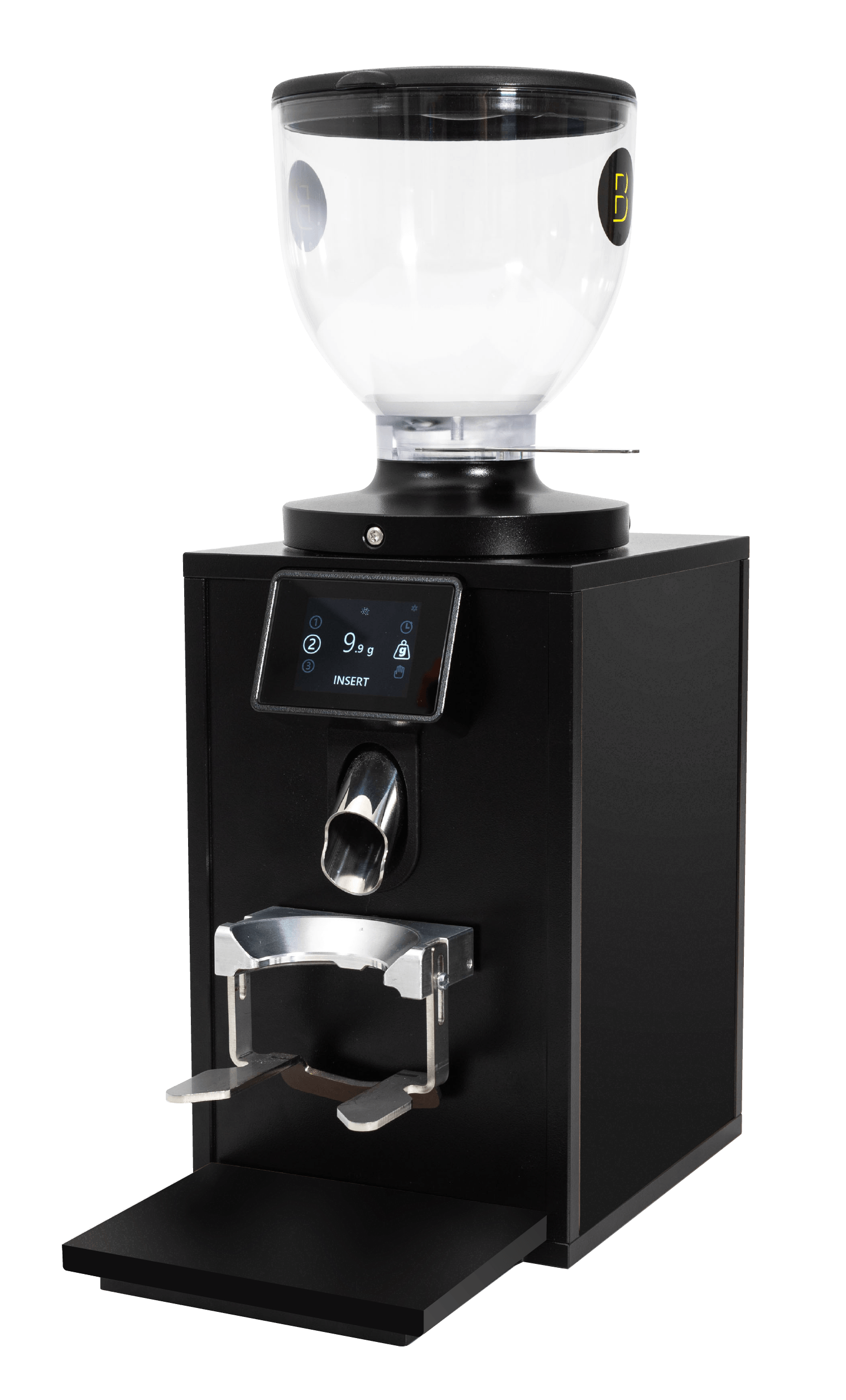
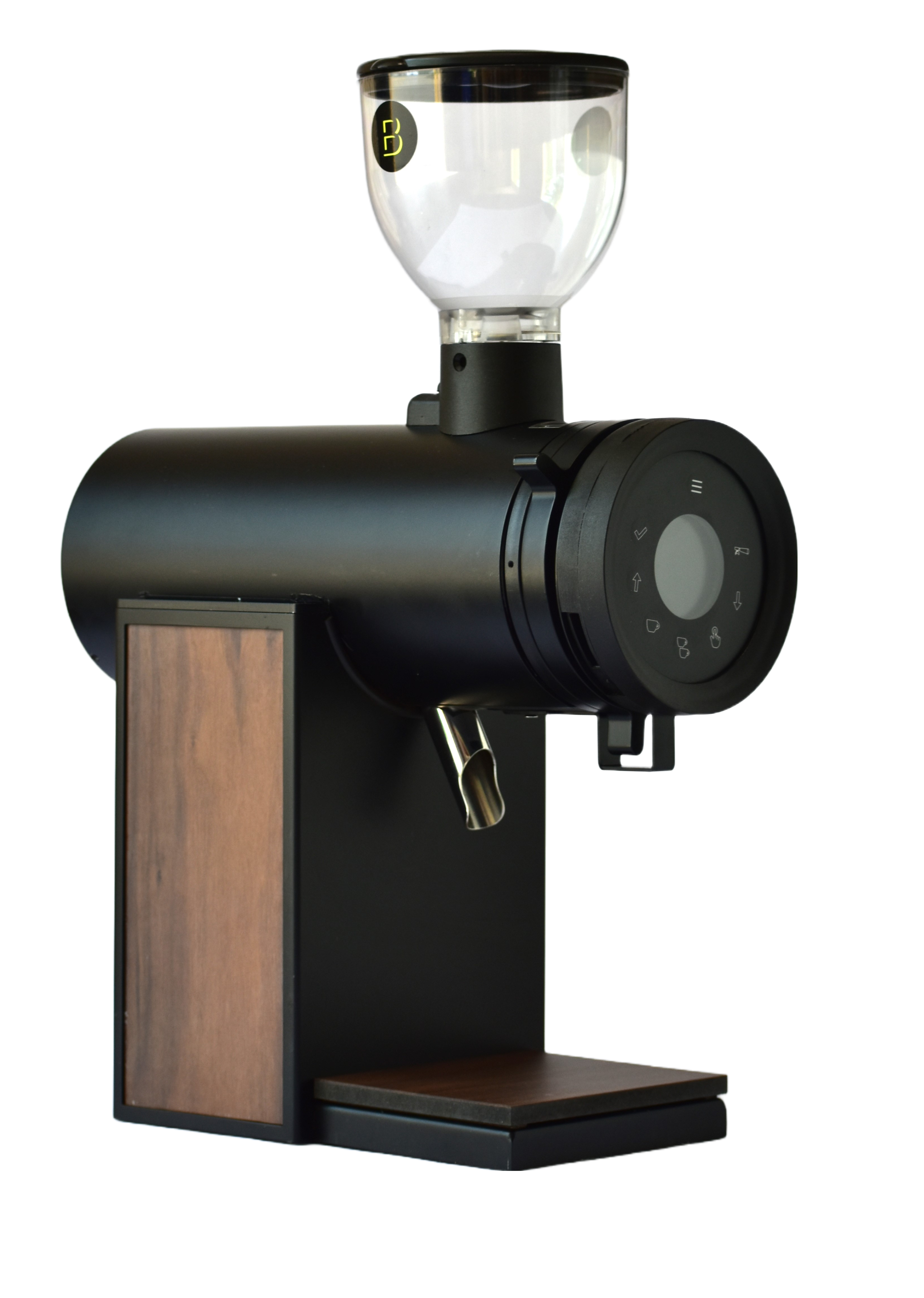
Flat Burr Grinders
- After each use: Purge 3–5 grams of fresh coffee through the grinder to push out retained grounds from the previous grind. This is faster than a brush and more effective.
- Weekly: Remove the top burr (usually a quarter-turn counterclockwise on most prosumer flat burr grinders) and brush the burr faces and chamber with a dedicated grinder brush. Compressed air works if available.
- Monthly: Inspect burr alignment. Even on premium grinders, burrs can drift slightly. A misalignment test — grinding at the finest setting with the motor off, listening for burr contact — indicates whether realignment is needed.
- Every 6–12 months or at 500 lbs of coffee: Consider burr replacement. Burr sharpness degrades gradually; the effect is a slower grind at the same setting and increased fines production. Some manufacturers publish recommended replacement intervals by coffee volume.
Conical Burr Grinders
Similar protocols apply. The inner cone burr typically requires a flathead screwdriver to remove. Inspect the inner burr for coffee oil buildup in the cutting channels — this is where conical burrs accumulate debris that a simple purge doesn't clear.
Blade Grinders (Not Recommended, but Common)
Blade grinders cannot be disassembled for cleaning. The safest method is grinding a tablespoon of plain white rice to breaking effect, discarding the dust, then wiping the interior with a dry cloth. This does not remove coffee oil film from the spinning blade — another reason blade grinders are inherently inferior to burr designs.
Drip Coffee Makers: Scale and Shower Head Clogs
Automatic drip machines fail in two ways: mineral scale blocking the shower head and flow tube, and stale coffee oil on the carafe and basket.
Weekly
- Wash the carafe with dish soap (not just a rinse — soap breaks down coffee oils that water alone won't touch). Wash the filter basket the same way.
- Wipe the hot plate with a damp cloth while still warm to prevent burned-on coffee stain.
Monthly
- Descale: Run a 50/50 white vinegar solution through a full brew cycle, then run two full cycles of plain water. For machines with a descaling indicator, follow the manufacturer's sequence. Vinegar effectively dissolves calcium carbonate scale at concentrations of 5% acetic acid.
- Check shower head: On many drip machines, the shower head (the plate with holes that distributes water over the grounds) is removable. Remove and soak in vinegar solution for 20 minutes if scale deposits are visible.
Pour-Over Equipment: Chemex, V60, Kalita Wave
Pour-over equipment looks simple but accumulates coffee oils on glass, ceramic, and stainless surfaces just as readily as more complex machines.
- After each brew: Rinse thoroughly with hot water immediately after use. Paper filter disposal is not maintenance — the vessel itself carries residue.
- Weekly: Wash with dish soap and a soft brush, paying attention to the interior walls where a brown film accumulates above the waterline. On a Chemex, use the Chemex cleaning brush (designed for the narrow waist) rather than improvising — a dish cloth doesn't reach the lower chamber.
- Monthly: For glass Chemex and V60 carafes with visible brown staining, soak in a solution of Bar Keepers Friend (oxalic acid) or baking soda for 30 minutes, then rinse thoroughly.
Scales and Kettles
Scales require minimal maintenance — wipe the platform after each use and store without objects on the platform (which compresses load cells over time). Recalibrate annually using a known-weight object. Most 0.1g-resolution brewing scales drift by 0.3–0.5g annually.
Precision kettles with PID temperature control collect scale on the interior heating element. Descale quarterly using a citric acid solution (1 tablespoon per liter of water); fill to half, run to temperature, let sit for 20 minutes, then rinse with two full boiling cycles of fresh water. Do not use white vinegar in a PID kettle — the acetic acid can degrade some temperature sensors.
Water Quality: The Multiplier for All Equipment
Hard water accelerates scale buildup in every piece of heated equipment. Water above 250 ppm TDS (total dissolved solids) will scale a boiler noticeably within a month of regular use. Soft water below 50 ppm is corrosive to some boiler metals and produces over-extracted, sour-tasting coffee.
The SCA recommends brewing water between 75 and 250 ppm TDS, with a pH of 6.5–7.0 and zero chlorine. If your tap water falls outside this range, a targeted filtration solution is a legitimate equipment investment:
| Water Condition | Effect on Equipment | Recommended Solution |
|---|---|---|
| Very hard (>300 ppm) | Rapid scale buildup | Inline scale filter or mineral dilution |
| Very soft (<50 ppm) | Corrosive to boiler metals, flat taste | Add mineral concentrate (Third Wave Water) |
| High chlorine | Off-flavors, rubber seal degradation | Activated carbon filter |
| High iron/manganese | Metallic off-flavors | Sediment + carbon filter |
Maintenance Schedule at a Glance
| Equipment | After Each Use | Weekly | Monthly | Annually |
|---|---|---|---|---|
| Espresso machine | Backflush, wipe steam wand | Soak basket + screen | Descale boiler | Replace group gasket |
| Flat burr grinder | Purge 3–5g | Brush burrs | Check alignment | Consider burr swap |
| Drip machine | Rinse carafe | Soap-wash carafe + basket | Descale with vinegar | — |
| Pour-over (glass) | Hot-water rinse | Soap wash | Oxalic acid soak if stained | — |
| PID kettle | Wipe exterior | — | Citric acid descale | — |
| Digital scale | Wipe platform | — | — | Recalibrate |
Frequently Asked Questions
How often should I replace espresso machine group head gaskets?
Annually is a reasonable default for home machines used daily. The gasket is a consumable — silicone or rubber that compresses and deforms over time. Signs that replacement is overdue include the portafilter seating inconsistently, pressure escaping at the group head during extraction, or visible cracking on the gasket surface.
Can I use vinegar to descale an espresso machine boiler?
Check your machine's manual before using vinegar. Many manufacturers — including Breville, De'Longhi, and La Marzocco — explicitly recommend against vinegar in their boilers because acetic acid can degrade brass fittings and some seals over time. Purpose-made citric acid or commercial descaler solutions (Dezcal, Urnex) are safer choices.
How do I know if my grinder burrs need replacing?
Key signs include: grind time increasing noticeably at the same setting, a higher-than-usual proportion of fines (the coffee looks more powdery), or cup quality declining despite no change in recipe. Burr wear is gradual — it rarely produces a sudden cliff but a sustained plateau of diminishing quality.
Why does my coffee taste sour right after descaling?
Descaler residue. Even a small amount of citric acid or commercial descaling agent produces sourness that mimics under-extraction. Always run 2–3 full rinse cycles of fresh water through the machine after any descaling procedure before brewing coffee.
Conclusion
Coffee equipment maintenance is not a ritual for perfectionists — it is the baseline requirement for consistent extraction quality. Neglected burrs, scaled boilers, and rancid oil residue on contact surfaces degrade every cup regardless of bean quality or brew skill. The protocols above are calibrated to use frequency and water quality rather than arbitrary calendar schedules. Applied consistently, they extend equipment lifespan, maintain extraction predictability, and keep the sensory baseline honest. The next time a shot tastes inexplicably flat or a pour-over produces unexpected bitterness, clean the equipment before adjusting the recipe. Browse our roasting equipment section for precision tools that reward proper maintenance with years of reliable performance.