The Precision Tools That Changed Home Brewing
The first wave of coffee technology was analog — a thermometer, a kitchen scale, a timer. These simple instruments made a measurable difference because they replaced guesswork with measurement. The second wave is digital and networked, and the gap it closes is not between good and bad but between reproducible and irreproducible.
Digital Scales and the Extraction Yield Revolution
Brewing by weight rather than volume became standard practice in specialty coffee after the Specialty Coffee Association formalized brew ratio guidelines. A digital scale accurate to 0.1 g transforms a pour-over from a vague ritual ("fill to the line") into a controlled experiment. When combined with a built-in timer — now standard on scales like the Acaia Pearl and Brewista — the brewer can track flow rate in real time and adjust the pour accordingly.
The practical impact is repeatability. Once a brewer logs a recipe that produces a 20.5% extraction yield and a TDS (total dissolved solids) reading of 1.35%, they can reproduce it on day 300 with the same confidence as day one. Without a scale, that is simply not possible.
Burr Grinders: Variable Grind Conicity and RPM
Grind consistency has always been the ceiling on extraction quality. Blade grinders produce a bimodal particle distribution — a mix of boulders and fines — that creates uneven extraction channels in the brew bed. High-quality flat or conical burr grinders produce a far narrower distribution, which is why the upgrade from blade to burr is the single highest-leverage equipment change a home brewer can make.
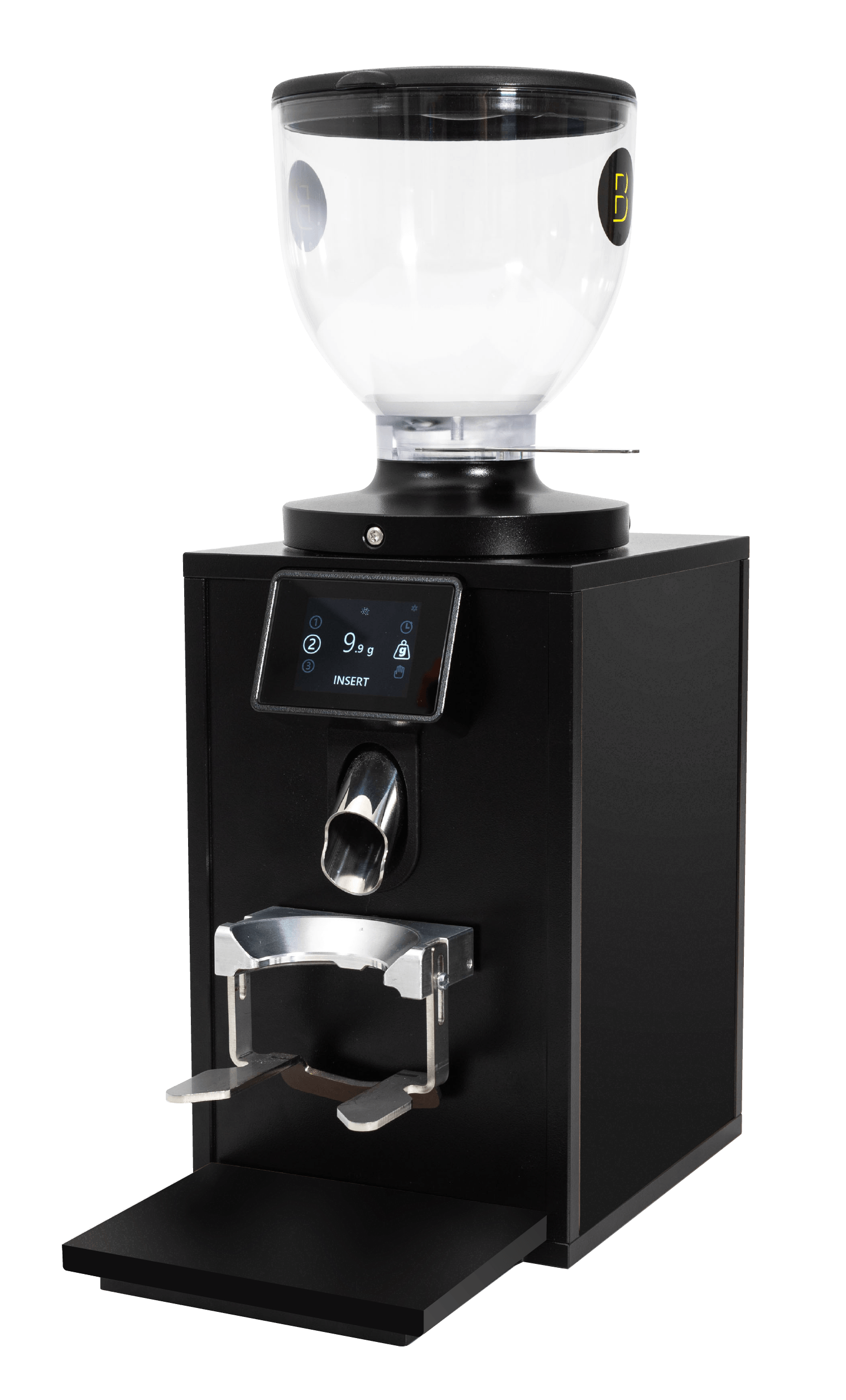
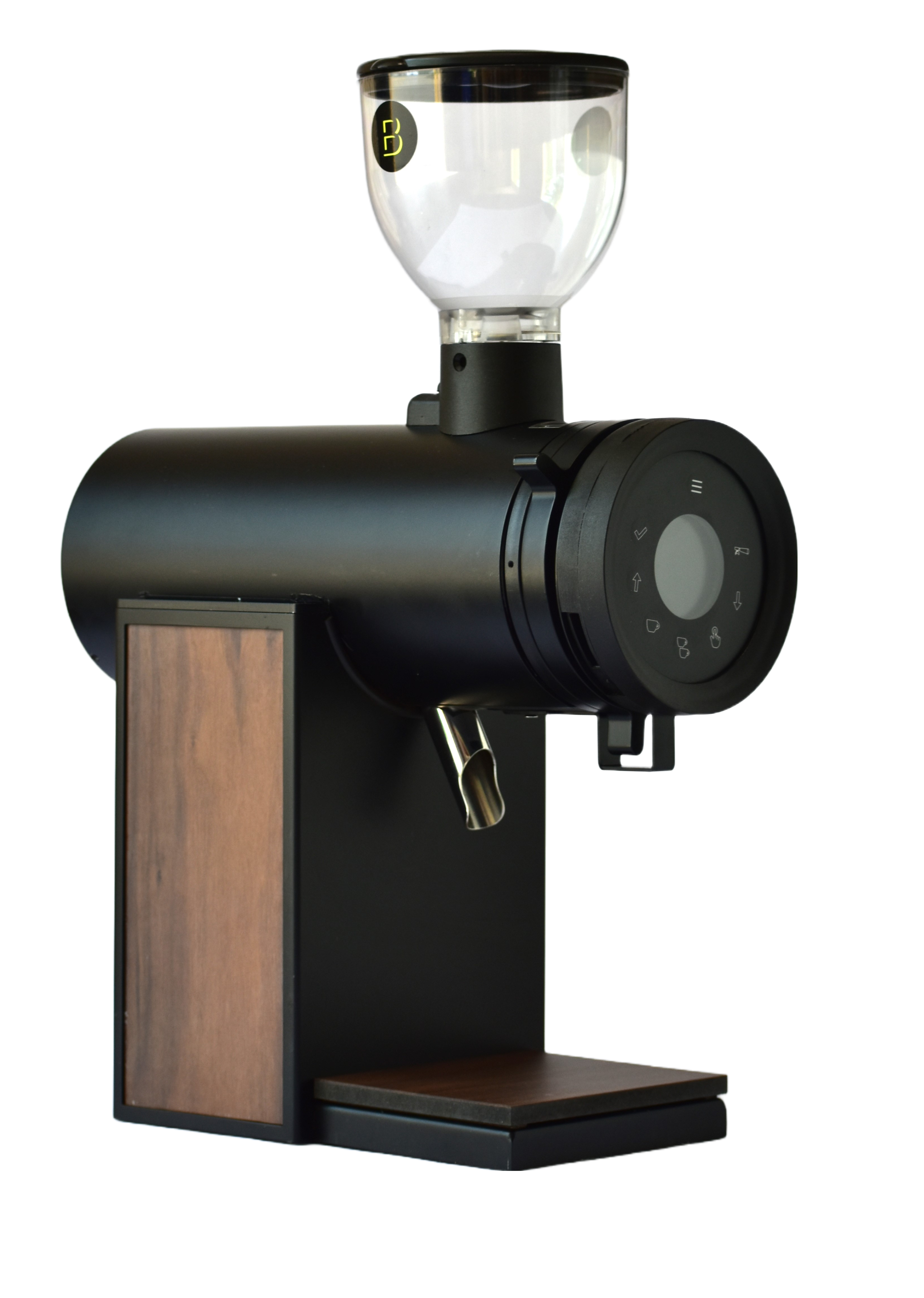
Technology has pushed burr grinders further. Low-RPM motors (300–400 RPM versus the 1200–1500 RPM of older models) reduce friction heat during grinding, which matters for volatile aromatic compounds. Single-dose hoppers with alignment rings minimize retention — the old grinds hiding in the throat of the machine that contaminate the next dose. Stepless adjustment collars allow grind changes in sub-micron increments rather than the coarse steps of a traditional numbered dial.
Temperature Control: PID Controllers and Smart Kettles
Water temperature is the second lever after grind. The Maillard reaction products that give coffee its roasted complexity begin dissolving more aggressively above 93°C (199°F); at below 88°C (190°F), light-roasted coffees remain stubbornly under-extracted. A PID controller — a feedback loop device that compares actual boiler temperature to a set target and corrects continuously — holds espresso machine boilers within ±0.3°C of the target. Manual temperature surfing, the technique once required on single-boiler machines, becomes unnecessary.
Precision gooseneck kettles bring the same logic to pour-over. Models from Fellow and Brewista maintain temperature within ±1°C of the set point throughout a pour, removing the variable of heat loss from a standard kettle as it sits on the counter. This matters especially for light-roasted single origins, which have a narrow temperature window for balanced extraction.
Smart Coffee Makers and App Integration
The connected home appliance market reached coffee in earnest around 2018. App-controlled espresso machines (Breville Barista Touch, De'Longhi Dinamica Plus, Jura E8) allow users to adjust brew parameters from a smartphone and receive maintenance alerts. The value proposition depends heavily on the user: for someone learning espresso, being able to compare parameter sets across sessions in a logged history accelerates the feedback loop considerably.
More meaningfully, some machines now offer shot profiling — the ability to program pressure and flow rate curves across the extraction timeline rather than applying a fixed 9-bar extraction from start to finish. Pre-infusion at 4 bar, a ramp to 9 bar at the 8-second mark, followed by a pressure decline at the tail end can extend sweetness and reduce harshness on medium-roasted coffees. These profiles, once available only on commercial La Marzocco and Synesso machines, are now accessible on prosumer equipment like the Decent Espresso DE1PRO.
AI and Roast Profiling Technology
Coffee roasting is the highest-stakes technological frontier in specialty coffee right now. The roasting process unfolds across roughly 10–14 minutes, with critical events — first crack, the Maillard window, development time — that are sensitive to ambient temperature, bean moisture, and batch size. Small-batch roasters running 1–5 kg drum machines have traditionally relied on manual probe readings and sensory cues.
AI-assisted roasting platforms (Cropster, Artisan, RoastWorld) capture temperature probe data at 1-second intervals, model the rate of rise (RoR) curve in real time, and compare the current roast to a target profile imported from a previous session. Cropster's ML model can flag when the current RoR trajectory will miss the target development temperature by more than 2°C and suggest a gas adjustment. This does not remove the roaster's skill — it amplifies it by surfacing deviations before they become uncorrectable.
Subscription Platforms and Traceability Technology
Technology has also changed how specialty coffee reaches the consumer. Direct-trade roasters sourcing from specific farms — a particular lot from a Yirgacheffe cooperative, a washed Caturra from a single producer in Huila — face a traceability problem: how do they document the chain of custody in a way that resonates with consumers?
Blockchain-based traceability platforms, most prominently Farmer Connect's Thank My Farmer (used by Jacobs Douwe Egberts and Nespresso), create an immutable ledger of each lot's journey from farm gate to roaster. A QR code on the bag links to GPS coordinates of the source farm, payment records, and certification status. For specialty-coffee consumers willing to pay premium prices, this documentation reinforces the value story.
Subscription algorithms present a different application. Services like Trade Coffee and Onyx Coffee Lab's subscription use flavor-preference questionnaires and purchase history to match roasters with buyers. The underlying recommendation logic is essentially collaborative filtering — the same approach Netflix uses — applied to cupping notes and roast level preferences.
Equipment Comparison: Manual vs. Tech-Enhanced Brewing
| Method | Key Technology | Temperature Control | Repeatability | Cost Range |
|---|---|---|---|---|
| Pour-over (manual) | Analog scale, timer | Kettle thermometer | Moderate | $30–$200 |
| Pour-over (tech-enhanced) | Bluetooth scale, PID kettle | ±1°C digital | High | $150–$600 |
| Espresso (entry) | Fixed-pressure pump | ±3–5°C thermal block | Low–Moderate | $200–$600 |
| Espresso (prosumer) | PID + shot profiling | ±0.3°C | Very High | $800–$3,000 |
| Automatic drip | Basic thermostat | ±5–8°C | Moderate | $30–$300 |
| Automatic drip (SCA-certified) | PID-controlled brew head | ±2°C | High | $150–$400 |
| AeroPress (manual) | None | Depends on kettle | Moderate | $35–$50 |
| AeroPress + smart kettle | PID gooseneck kettle | ±1°C | High | $185–$250 |
The pattern is consistent: adding a PID controller and a precise scale upgrades any brew method's repeatability by one tier while adding $100–$400 to the equipment cost. For most home brewers, the highest-value intervention is a burr grinder first, then a Bluetooth scale, then a temperature-controlled kettle — in that order.
Water Quality and TDS Management
Water is 98.7% of every cup of brewed coffee, yet it remains the least-discussed variable in home brewing. The SCA recommends water with a total dissolved solids reading of 75–250 ppm, a pH between 6.5 and 7.0, and zero detectable chlorine or chloramine. Municipal tap water in many cities falls outside these parameters — either too hard (over 300 ppm, which dulls extraction) or too soft (under 50 ppm, which leads to over-extraction and sourness).
Third Wave Water and Lotus Water offer mineral concentrate packets formulated to produce SCA-ideal water when added to distilled or reverse-osmosis water. A TDS meter (handheld refractometer type, around $20–$80) lets the brewer verify that the prepared water hits the target range before brewing.
Sustainability and the Technology Layer
Environmental accountability in coffee supply chains increasingly depends on data. Life cycle assessment (LCA) tools allow roasters to quantify the carbon footprint of a given lot — from farm inputs through shipping, roasting energy, and packaging. These numbers are increasingly published on retail bags, mirroring the nutrition-facts movement in food.
At the brewing level, smart machines can track energy consumption per cycle and surface it to the user. Machines with insulated boilers and auto-shutoff protocols consume 30–40% less energy than older thermal-block designs running continuous heating cycles. For high-frequency home users (3+ cups per day), this adds up to a meaningful annual difference.
Frequently Asked Questions
Do I need a smart coffee maker to brew great coffee?
No. Excellent coffee is achievable with a simple ceramic dripper, a consistent burr grinder, and a kitchen scale. Smart connectivity adds logging convenience and remote control; it does not replace the fundamentals of dose, grind, temperature, and time.
What is the single best technology upgrade for home brewing?
A quality burr grinder delivers more improvement per dollar than any other upgrade — including a more expensive brewer or a smarter kettle. Grind consistency sets the ceiling for everything downstream.
How accurate does a scale need to be for pour-over?
For most brew ratios, 0.1-gram resolution is sufficient. Scales accurate only to 1 gram introduce enough variation (±3–5% at a 15 g dose) to produce noticeably inconsistent results across sessions.
Can AI roasting software replace an experienced roaster?
Not yet. Current platforms flag anomalies and compare against target profiles, but they do not make real-time gas adjustments autonomously. The roaster's sensory judgment during first crack and the Maillard window remains the decisive factor in quality outcomes.
Is blockchain traceability meaningful for specialty coffee consumers?
It depends on implementation. Platforms that link to verified payment records and farm GPS data offer real transparency. Platforms that simply issue a badge without auditable data behind it are largely marketing. Look for traceability tied to Fairtrade International or SCA certification documentation.
Conclusion
Technology has raised the floor on home coffee brewing dramatically. A $200 burr grinder, a $60 Bluetooth scale, and a $100 temperature-controlled kettle now give any motivated home brewer the precision that specialty cafés had to invest thousands to achieve in 2010. The ceiling has moved too — AI roast profiling, shot pressure curves, and blockchain traceability are real capabilities that serious roasters and prosumer espresso enthusiasts can access today.
The risk is treating technology as a substitute for understanding. A PID-controlled machine still produces poor espresso if the grind is wrong or the dose is off. The best use of these tools is not to automate the human judgment out of brewing but to compress the feedback loop — to make each failure visible, measurable, and correctable faster than intuition alone allows. Browse our roasted coffee selection for single-origin lots paired with recommended brew parameters.