Why Maintenance Shapes Flavor
Coffee oils are volatile. Within 24–48 hours of brewing, residual oils oxidize and turn bitter — and that bitterness transfers directly into your next cup. Scale deposits from calcium and magnesium in tap water restrict water flow and create hot spots on heating elements, pushing extraction temperatures outside the 93–96°C (199–205°F) window where most compounds extract cleanly. The combination degrades every variable you carefully control: ratio, grind size, water temperature.
Beyond flavor, neglect accelerates wear. A pump fighting restricted flow draws more current, generates more heat, and fails earlier. A portafilter basket clogged with oils distributes water unevenly, creating channeling regardless of your puck preparation.
The maintenance schedule below is organized by time horizon. Daily tasks take under five minutes; monthly tasks rarely exceed thirty.
The Maintenance Schedule at a Glance
| Task | Frequency | Time Required | Equipment Type |
|---|---|---|---|
| Rinse portafilter and basket | After each use | 1 min | Espresso machine |
| Purge steam wand | After each use | 30 sec | Espresso machine |
| Rinse carafe and filter basket | After each use | 2 min | Drip brewer |
| Wipe grinder chute and hopper lid | Daily | 1 min | All grinders |
| Backflush with water | Daily (home espresso) | 3 min | Espresso machine |
| Full chemical backflush | Weekly | 10 min | Espresso machine |
| Descale drip brewer | Every 4–8 weeks | 20 min | Drip brewer |
| Deep clean French press | Weekly | 5 min | French press |
| Replace water filter cartridge | Every 60–90 days | 3 min | Any with built-in filter |
| Clean grinder burrs | Every 2–4 weeks | 10–15 min | All grinders |
| Inspect group head gasket | Monthly | 2 min | Espresso machine |
| Lubricate grinder adjustment ring | Every 6 months | 5 min | Burr grinders |
Daily Coffee Machine Care
Espresso Machine Post-Session Routine
Every shot leaves coffee fats in the group head, shower screen, and portafilter. Let them sit overnight and they congeal into a film that ruins the next morning's extraction.
The minimum daily routine: rinse the portafilter and basket under hot water immediately after the final shot. Wipe the shower screen with a damp cloth. Purge the steam wand — run steam for three to five seconds, then wipe immediately with a dedicated wet cloth. Purging prevents milk solids from drying inside the tip and blocking steam holes.
For home machines used once or twice daily, a plain-water backflush through the group head takes three minutes and removes coffee fines that accumulate behind the shower screen. Insert a blind basket, press the brew button for ten seconds, release, repeat four or five times.
Drip Brewer and Pour-Over Daily Care
For drip machines: empty the carafe, rinse with hot water, and wash the filter basket with dish soap. Leave the lid off the water reservoir when not brewing — allowing it to air-dry prevents mold growth. Wipe the warming plate while still slightly warm; dried coffee burns onto heating surfaces and eventually imparts scorched notes.
For pour-over: rinse the dripper and decanter with hot water immediately after use. Weekly, soak the dripper for fifteen minutes in a solution of one teaspoon baking soda per 500ml warm water, then rinse.
Grinder Hygiene
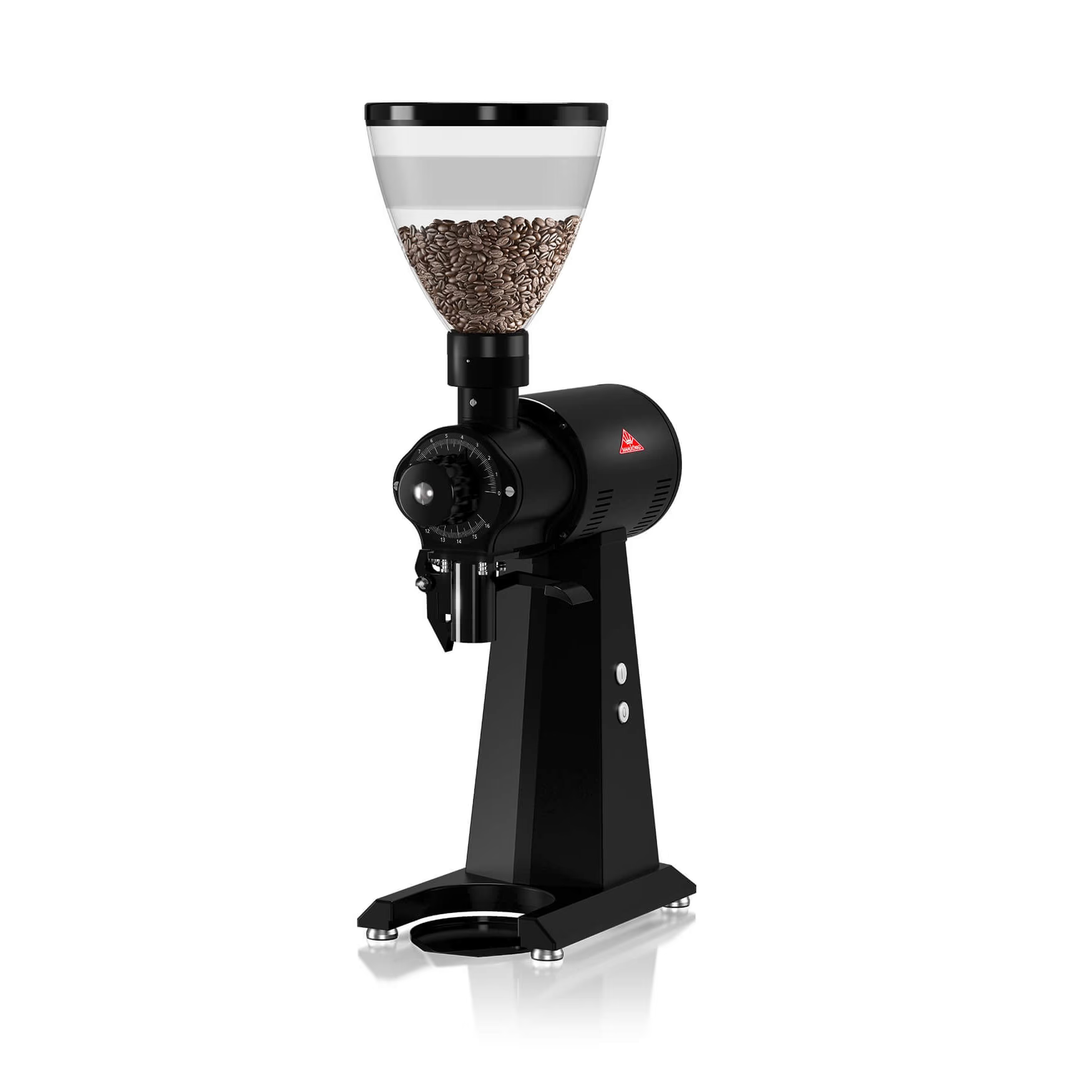
A quick daily wipe of the chute exit and hopper prevents ground accumulation from becoming a source of stale fines in fresh extractions. Use a pastry brush rather than a damp cloth — moisture inside a grinder triggers rust on steel burrs.
Weekly Maintenance Checklist
Chemical Backflush for Espresso Machines
Once a week (for daily-use home machines), run a chemical backflush using espresso machine cleaner — products based on sodium hydroxide or sodium percarbonate. Dose according to product instructions, typically one tablet or one gram of powder per blind filter basket.
Backflush cycle: brew button on for ten seconds, off for five seconds. Repeat six to eight times. This sequence creates pressure pulses that dislodge coffee oils from the solenoid valve and group head internals. Rinse with three or four plain-water backflush cycles immediately after.
Descaling Drip Brewers and Pod Machines
Scale formation rate depends on water hardness. With moderately hard water (100–150 ppm), descale every six to eight weeks. With hard water (above 200 ppm), descale monthly.
Descaling options compared:
| Descaler Type | Effectiveness | Machine Safety | Cost per Use | Notes |
|---|---|---|---|---|
| Commercial descaler (citric acid) | High | Excellent | $0.50–2.00 | Biodegradable, no residual odor |
| White vinegar (1:1 dilution) | Moderate | Good | Under $0.20 | Odor lingers; requires extra rinse cycles |
| Commercial descaler (phosphoric acid) | High | Good | $1.00–3.00 | Avoid on aluminum components |
| Descaling tablets | High | Excellent | $0.75–2.50 | Convenient dosing, formulated for machines |
Process for drip brewers: fill reservoir with descaling solution, run a half-cycle, pause for fifteen minutes to let solution soak, complete the cycle. Run two full cycles of clean water before brewing. Check the carafe for residual odor — if detectable, run one more rinse cycle.
Never use descaling solution in machines with built-in burr grinders. The solution can strip protective coatings and migrate into grinding chambers.
Grinder Burr Cleaning
Coffee oils accumulate on burr faces and between teeth, eventually imparting rancidity to every grind. Weekly for high-use grinders; every two to three weeks for light home use.
For flat burr grinders: remove the upper burr per the manufacturer's procedure, brush away grounds with a stiff-bristled pastry brush, wipe the burr face with a dry cloth. Never use water on steel burrs — even a trace of moisture causes surface rust that grinds into your coffee.
For conical burr grinders: many designs allow burr removal; consult your manual. If the burrs are not user-removable, use grinder cleaning tablets (products like Grindz) — run them through on your normal grind setting, then purge with a small dose of old coffee.
Monthly and Seasonal Deep Maintenance
Espresso Machine Monthly Inspection
Pull the shower screen: remove the screw (or twist-lock depending on machine), soak the screen in a small cup of espresso machine cleaner solution for ten minutes. Inspect for holes or warping — an uneven screen creates uneven saturation across the puck.
Check the group head gasket. Press a dry finger around the perimeter: it should feel firm and even, with no crumbling or hard flat sections. Gaskets last twelve to eighteen months with proper care; a leaking gasket loses pressure and destroys extraction consistency. Replacements typically cost under $10 and require a standard flathead screwdriver.
Water Filter Replacement
Built-in water filters in espresso machines (common on brands like Breville, De'Longhi, Jura) need replacement every 60–90 days, or after filtering approximately 180–200 liters. Overdue filters let more hardness minerals through while potentially adding an earthy taste from a saturated media bed.
Always flush 500ml of water through a new filter before first use — the initial flush removes carbon fines that can cloud your water.
Seasonal Grinder Burr Assessment
Replace flat burrs after 200–400 kg of coffee (manufacturer specifications vary); conical burrs after 500–1000 kg. Signs of worn burrs: increased fines in your grind output even at coarse settings, inconsistent shot times despite identical dose and tamp, a "fluffy" look to the ground coffee rather than dense even particles.
Burr alignment — how precisely the two burrs face each other — is worth checking once a year. Misaligned burrs produce a bimodal grind distribution (particles either too fine or too coarse) that no dialing-in can fully correct.
Water Quality: The Hidden Variable
The SCA's water standards exist for a reason. Outside 75–250 ppm TDS, extraction chemistry breaks down. Below 75 ppm (distilled or RO water), the low mineral content strips compounds too aggressively, producing flat, thin coffee. Above 250 ppm, over-saturation blocks extraction of high-molecular-weight aroma compounds, leaving coffee smelling muted.
Testing your tap water with a TDS meter ($15–25) takes sixty seconds. If hardness exceeds 150 ppm, install an inline softening filter or use a 50/50 blend of filtered and tap water. Third Wave Water mineral packets are a reliable option for people using distilled or RO water — they're formulated to hit the SCA target profile precisely.
Troubleshooting Common Maintenance Failures
| Symptom | Most Likely Cause | Fix |
|---|---|---|
| Espresso tastes increasingly bitter week-on-week | Oil buildup in group head | Chemical backflush; check frequency |
| Drip coffee tastes flat or metallic | Scale on heating element | Descale immediately |
| Grinder produces excessive fines | Worn or misaligned burrs | Inspect and replace if needed |
| Steam wand splutters unevenly | Blocked steam tip holes | Soak tip in hot water + espresso cleaner |
| Machine temperature inconsistent | Scale on thermoblock | Descale; check water filter |
| Off-odor from water reservoir | Bacterial/mold growth | Deep clean with diluted white vinegar; air-dry after use |
Frequently Asked Questions
How often should I descale an espresso machine?
Every one to three months for home use, depending on water hardness. Machines used multiple times daily in hard-water areas need monthly descaling. Most modern machines have a descaling indicator, but treat it as a maximum interval, not a target — descaling before the light triggers is always better than waiting.
Can I use vinegar instead of a commercial descaler?
Yes, with caveats. White vinegar (1:1 with water) dissolves calcium scale effectively, but it requires additional rinse cycles to eliminate odor, and the acetic acid can degrade rubber gaskets with repeated use. For machines with rubber internal seals, a commercial citric acid descaler is gentler and leaves no residual taste.
How do I know if my grinder burrs need replacing?
Worn burrs produce an unusually high proportion of fine dust even at coarse settings. Shot times become unpredictable despite consistent dose and grind. The ground coffee looks fluffy rather than dense. If you've had the grinder more than three to five years with daily use, a burr replacement is likely overdue regardless of visible wear.
Does cleaning affect espresso machine calibration?
A chemical backflush can temporarily affect shot timing by a second or two as residual cleaner traces flush out. Run two or three shots after any cleaning session before pulling a measured extraction for dialing in.
Why does my coffee taste worse right after descaling?
Descaling agents strip oils from internal surfaces, releasing compounds that temporarily affect taste. Run two full rinse cycles rather than one, then brew and discard the first full serving. The taste should normalize within two to three brews.
Conclusion
Equipment maintenance is the least glamorous part of the coffee process, but it determines whether every other investment — expensive beans, precise brewing ratios, calibrated extraction — actually delivers. A rancid film in the group head undermines a perfect dose. Scale on a heating element defeats accurate water temperature. None of this is difficult to prevent; it requires only consistency. Build the daily two-minute rinse into your brewing ritual, set a calendar reminder for monthly burr inspection, and descale before the machine asks rather than after. Browse our roasted coffee selection knowing that with clean equipment, you'll taste everything it has to offer.