Why Coffee Oils Are the Primary Enemy
Every brewing session deposits something on your equipment. Coffee beans contain 12–16% lipids by dry weight. During extraction, these lipids emulsify and disperse into the brew water — and coat every surface they contact. At room temperature, coffee oils oxidize within hours. After 24 hours, rancid coffee oil on a portafilter basket or group head gasket begins contributing bitter, soapy, and stale flavors to subsequent shots, regardless of how fresh and well-roasted the beans in the hopper are.
Mineral scale (calcium carbonate from hard water) is the second enemy. It coats boiler elements, narrows water pathways, and insulates heating elements — reducing thermal efficiency and increasing the energy required to hold brew temperature. Scale buildup in the boiler of an espresso machine will eventually crack the boiler if severe enough, and is the most common cause of premature machine failure.
Milk residue is the third target. Milk proteins denature immediately on contact with steam wand surfaces. Dried milk residue inside the steam tip blocks steam holes, reduces steam power, and — left for more than 48 hours — becomes a substrate for bacterial growth.
The Complete Maintenance Schedule
This table is your master reference. Frequency is based on average home use (1–3 brewing sessions per day for espresso machines; 1–2 brews per day for other methods).
| Task | Espresso Machine | Drip/Pour-Over | French Press | Grinder | Frequency |
|---|---|---|---|---|---|
| Wipe steam wand | Yes | — | — | — | After every use |
| Rinse portafilter + basket | Yes | — | — | — | After every use |
| Purge group head | Yes | — | — | — | After every use |
| Rinse carafe / brewer body | — | Yes | Yes | — | After every use |
| Backflush with water only | Yes | — | — | — | Daily |
| Brush grinder burrs | — | — | — | Yes | Daily (light) |
| Deep clean portafilter in Cafiza | Yes | — | — | — | Weekly |
| Backflush with Cafiza tablet | Yes | — | — | — | Weekly |
| Descale drip machine | — | Yes | — | — | Monthly |
| Run Grindz through grinder | — | — | — | Yes | Monthly |
| Descale espresso machine (Dezcal) | Yes | — | — | — | Every 2–3 months |
| Replace water filter cartridge | Yes | Yes | — | — | Every 2–3 months |
| Inspect/replace group head gasket | Yes | — | — | — | Annually or as needed |
| Replace burrs | — | — | — | Yes | Every 2–3 years |
Daily Protocols
After Every Espresso Shot
Three steps take 60 seconds and prevent 90% of flavor degradation.
Steam wand: Immediately after steaming, open steam briefly to purge residual milk from the tip. Wipe the wand with a dedicated damp cloth — not the same cloth used for the portafilter, which carries coffee oils. Purge again after wiping to clear any cloth fibers from the holes. Milk dried on the steam tip blocks the holes and reduces steam velocity, which degrades milk texture quality on subsequent drinks.
Portafilter and basket: Knock out the spent puck immediately. Rinse the portafilter basket under hot running water, rubbing with your finger to dislodge grounds from the basket holes. Dry briefly and lock back into the group head — this keeps the group head temperature stable.
Group head purge: Run 2–3 seconds of water through the group head (with portafilter removed) before locking in for the next shot. This flushes fresh water through the shower screen and group head gasket, removing loose grounds and refreshing the temperature.
Daily Grinder Care
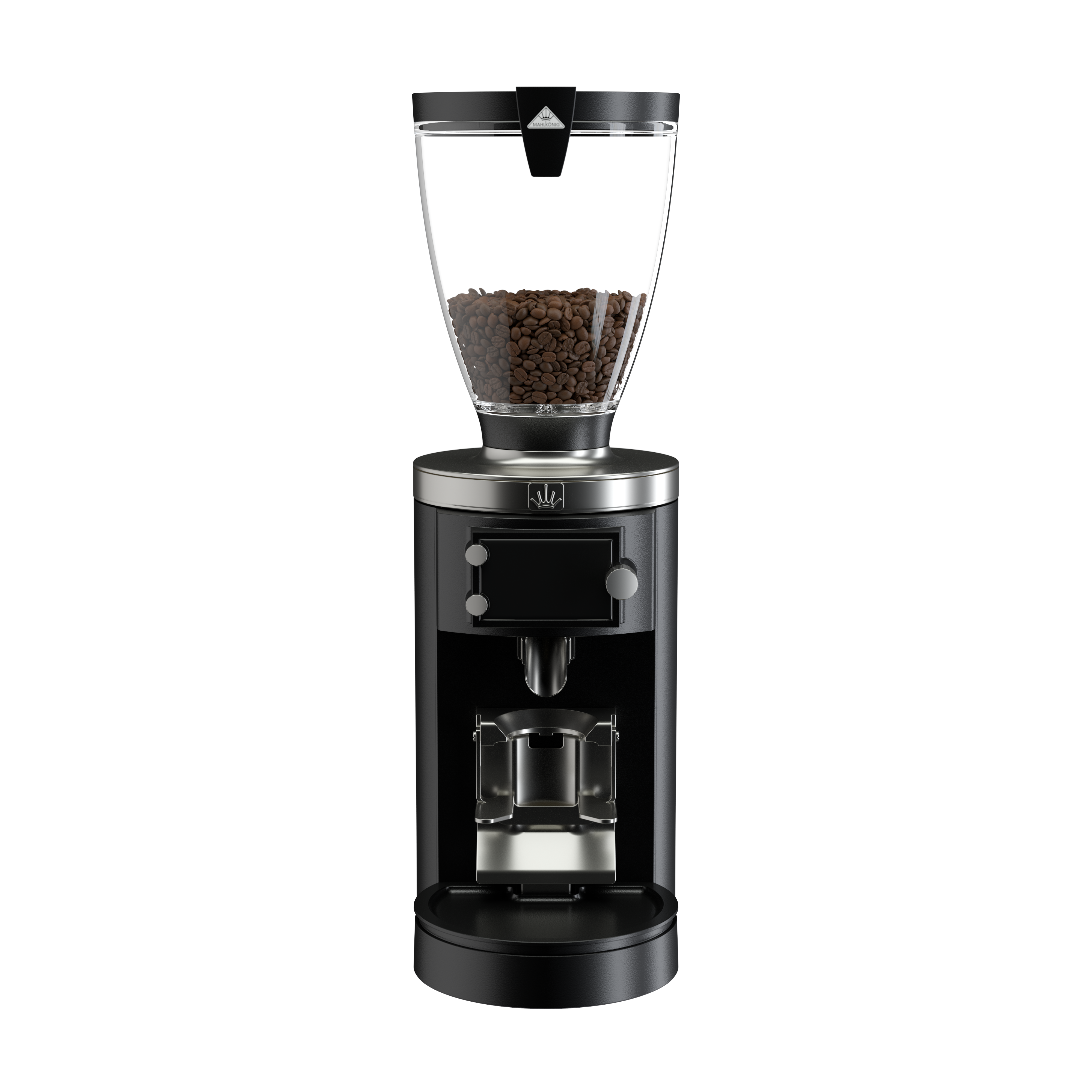
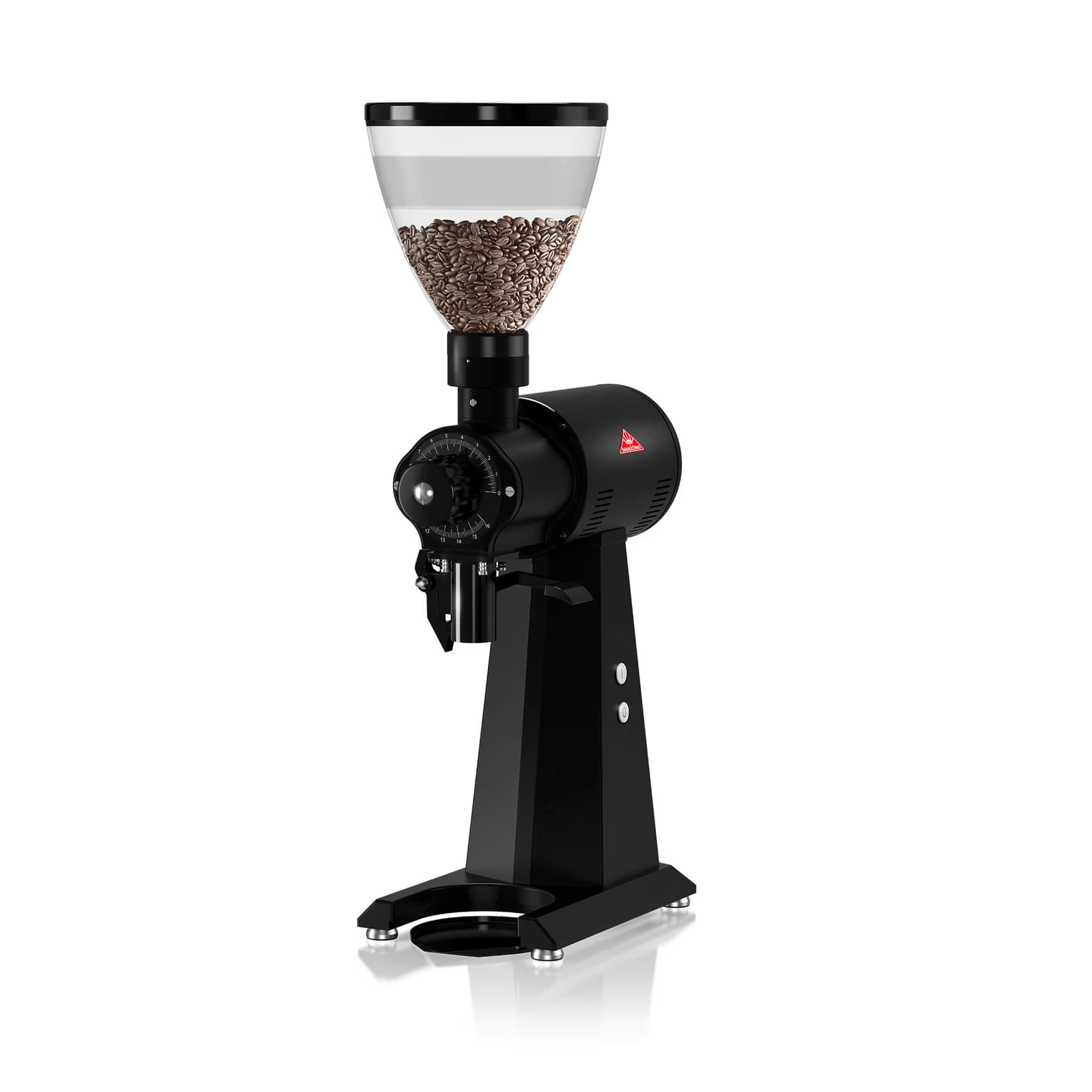
After the last grind session, brush the grinder's bean chute and doser (if present) with a dry grinder brush. On a conical burr grinder, residual grounds sit in the grind path; without brushing, they go stale overnight and introduce old-coffee flavor to the first dose of the next morning. On a flat burr single-dose grinder, residual is usually under 1g, but brushing is still good practice.
Do not use water or damp cloths inside the grinder. Moisture and coffee oils combine to form a coating that eventually hardens and requires a complete burr disassembly to remove.
Weekly Protocols
Espresso Machine: Backflush with Cafiza
Backflushing with water alone (daily) removes loose grounds. Backflushing with Cafiza (Urnex's coffee equipment cleaner, available in powder and tablet form) dissolves the coffee oils that water alone cannot remove.
Cafiza backflush procedure:
- Insert the blind basket (solid, no holes) into the portafilter
- Add one Cafiza tablet or 1/2 teaspoon of Cafiza powder to the basket
- Lock portafilter into group head
- Run the pump for 10 seconds, then stop — let sit 10 seconds
- Repeat the run-stop cycle 5 times
- Remove portafilter, discard the dirty brown water from the basket
- Rinse the blind basket and portafilter under hot water
- Relock the empty portafilter (no Cafiza) and run 10-second pump cycles 5 times to rinse
- Run a blank shot through the group head to clear residual cleaner
The water released during backflushing will be dark brown to black — that is coffee oil and Cafiza detergent combined. This is correct. Pale water indicates either insufficient Cafiza or a very clean machine.
Portafilter and Basket Soak
Once weekly, soak the portafilter basket and portafilter body (without any rubber seals removed) in a solution of hot water and Cafiza powder — 1 teaspoon per 500ml of water, 15–20 minutes. This removes the coffee oil layer that builds up even with daily rinsing, particularly at the junction between the basket and portafilter body where grounds lodge.
After soaking, scrub with a stiff nylon brush (not metal, which will scratch basket holes). Rinse thoroughly under hot water. The basket holes should be visibly clear with consistent openings — blocked holes cause channeling and uneven extraction.
French Press: Full Disassembly
The French press plunger assembly — spring, cross plate, mesh filter, upper filter — traps stale coffee grounds and oils in its layers. After each use, rinse; weekly, disassemble fully.
Unscrew the plunger from the rod. Separate all layers of the filter stack. Wash each piece individually with hot water and unscented dish soap. Pay attention to the mesh filter: hold it up to light and verify the mesh is open, not clogged with black grounds. Use a toothbrush to scrub the mesh if any holes are blocked.
Monthly Protocols
Drip Machine Descaling
Mineral scale inside a drip coffee maker accumulates on the heating element, in the water pathways, and in the showerhead. Scale insulates the heating element, causing it to work harder to reach brew temperature — eventually resulting in under-temperature brewing (below 90°C) that under-extracts coffee.
Descaling procedure for drip machines:
- Fill the water reservoir with 50% white vinegar and 50% filtered water
- Run a full brew cycle
- Stop the cycle at the halfway point; let the solution sit 30 minutes
- Resume and finish the cycle
- Discard the descaling solution from the carafe
- Run two full cycles with fresh filtered water to rinse
- Brew one cycle with your normal water and discard — this removes any vinegar taste
Alternatively, use Dezcal Descaler (Urnex) dissolved per instructions — more effective on heavy scale deposits than vinegar and leaves no flavor residue.
Descaling frequency: Monthly for areas with hard water (>200 ppm TDS); every 2–3 months for soft water areas. Many machines have an indicator light — use it, but also manually inspect the showerhead for white mineral deposits.
Grinder Monthly Clean with Grindz
Grindz (Urnex) are food-safe, cereal-based cleaning tablets that absorb coffee oils from burr surfaces as they pass through the grind path. They are not abrasive and do not damage burrs.
Grindz procedure:
- Empty the bean hopper completely
- Pour one capful (~35g) of Grindz through the grinder on a medium grind setting
- Grind until the hopper is empty
- Discard all the ground Grindz
- Run 20–30g of your normal coffee beans through the grinder (a sacrificial purge dose)
- Discard the purge dose
- Resume normal use
The purge dose removes any residual Grindz flavor from the burr path. Grindz is grain-based and coffee-safe; the residual is minimal, but a purge dose provides insurance against any off-flavors.
Quarterly and Annual Protocols
Espresso Machine Descaling (Every 2–3 Months)
Unlike drip machines, espresso machines descale less frequently — their boilers run at higher temperatures where scale formation is different, and many use water softening filters. However, scale does accumulate in heat exchangers, group head solenoids, and water pathways.
Descaling frequency: Use your water hardness as the guide. Many espresso machines have a built-in water hardness test strip included in the packaging; use it. Machines with a water filter cartridge (La Marzocco, Breville) will prompt descaling less frequently than machines without filtration.
Recommended descaling agent: Dezcal (Urnex) — formulated for espresso machine boilers and rated safe for brass and stainless components. Do not use vinegar in espresso machines with brass internals — acetic acid attacks brass over time.
Always follow your machine's manual for the exact descaling procedure. Most machines have a dedicated descaling mode that cycles the solution through the correct pathways in the correct order.
Group Head Gasket Inspection and Replacement
The group head gasket is a rubber (EPDM or silicone) ring that creates the seal between the portafilter and the group head under 9 bars of pressure. Over time, heat cycles cause it to harden, compress, and lose elasticity. Signs of a failing gasket:
- Espresso leaking from around the portafilter collar during extraction
- Portafilter requires more force to lock in than previously
- Visible cracking or flattening of the rubber ring
Gasket replacement is a 5-minute user-serviceable task on most home espresso machines: use a flathead screwdriver to pry out the old gasket from the group head groove, press in a new one (available for $5–$15 for most machines). The Rancilio Silvia, Gaggia Classic Pro, Breville Dual Boiler, and Lelit Bianca all use standard 73mm x 57mm x 8mm gaskets available from multiple suppliers.
Replace annually as preventive maintenance, or immediately if leaking is observed.
Water Filter Cartridge Replacement
Machines with water softening cartridges (Brita-style or BWT) should have them replaced every 2–3 months or per the manufacturer's specification — usually tied to water volume processed (typically 50–100 liters).
An expired filter does not prevent water from flowing — it simply stops softening. The machine will behave normally while scale accumulates silently. Set a calendar reminder for filter replacement; the cost ($10–$25 per cartridge) is far less than a boiler repair.
Cleaning Products: What to Use and Why
Not all cleaning products are interchangeable. Using the wrong product can damage equipment or leave residues that affect flavor.
| Product | Use Case | Compatible Equipment | Notes |
|---|---|---|---|
| Urnex Cafiza (powder/tablet) | Backflushing, portafilter soak | Espresso machines with solenoid valve | Industry standard, rinse-safe |
| Urnex Dezcal | Descaling boilers and heating elements | Espresso machines, drip machines, kettles | Safe for brass; do not substitute vinegar in espresso machines |
| Urnex Grindz | Burr cleaning | All burr grinders | Grain-based, food-safe, not abrasive |
| White vinegar (5% acetic acid) | Descaling drip machines | Drip coffee makers only | Inexpensive; avoid in espresso machines with brass |
| Citric acid (10% solution) | Descaling alternative | Drip machines, kettles | Stronger than vinegar; rinse thoroughly |
| Unscented dish soap | Carafes, French press, AeroPress | Non-metallic parts | Never use in machine internals or for backflushing |
| Baking soda (paste) | Surface stains on glass | Chemex, glass carafes | Mild abrasive; rinse thoroughly |
Frequently Asked Questions
How often should I backflush my espresso machine?
Daily with water (if your machine has a three-way solenoid valve), weekly with Cafiza. Machines without a three-way solenoid — lever machines, some HX machines — cannot be backflushed. For those, clean the shower screen and group head gasket manually by soaking.
Can I use dish soap to clean my portafilter and baskets?
For the portafilter body and basket, yes — mild unscented dish soap for a soak or scrub, followed by thorough rinsing. Do not use dish soap in the group head or for backflushing — residual surfactants will flavor your espresso. Use Cafiza for any cleaning that involves the machine's internal pathways.
My espresso machine smells like Cafiza after cleaning. What went wrong?
Insufficient rinsing. After a Cafiza backflush cycle, run 5 additional pump cycles with the clean blind basket and no Cafiza, then remove the portafilter and run a 10-second group head flush. Finally, pull a sacrificial shot (discard it) before brewing your first real shot of the day. A faint Cafiza smell after this protocol is extremely unlikely.
How do I know when to replace my grinder burrs?
Burrs wear gradually. Signs of worn burrs: the grinder produces more fines than previously at the same setting, grind adjustment requires going several clicks finer than your previous baseline to achieve the same extraction time, and the grind distribution looks visibly less consistent. For most home burr grinders, burr life is 500–1,000 kg of coffee — at 15g per dose, that's approximately 33,000–66,000 shots. Replacement burrs cost $30–$60 for most Baratza models.
Conclusion
Equipment maintenance is the unglamorous complement to good sourcing and technique. A Lelit Bianca with a clogged shower screen and an oxidized portafilter gasket will produce worse espresso than a Gaggia Classic Pro that's been cleaned weekly. The protocols in this guide take less than five minutes per day, fifteen minutes per week, and one dedicated hour per quarter.
The habit that matters most: clean after every use. A steam wand wiped immediately after steaming takes 10 seconds. Dried milk residue removed after 48 hours takes 5 minutes of soaking and scrubbing. The 10-second habit prevents the 5-minute chore; the 5-minute habit, once missed, becomes a quarterly deep clean.
Pair this maintenance routine with fresh, properly sourced coffee for the best results. Browse our roasted coffee selection — all bags include a roast date so you know exactly how fresh your beans are.