The Stable Map Is Changing
For most of the twentieth century, the geography of coffee production was predictable. Brazil dominated by volume, Colombia defined washed Arabica quality, Vietnam supplied cheap Robusta, and a handful of East African countries — Ethiopia, Kenya, Tanzania — held the specialty tier. That map is shifting, driven by three independent pressures: climate change is forcing production to higher elevations or latitudes; specialty-market demand has made quality-over-volume economics viable for smaller producers; and processing innovation has allowed origins with less-than-ideal terroir to compensate with distinctive post-harvest technique.
The result is a cohort of emerging regions that didn't register in most specialty roasters' sourcing conversations a decade ago. Some are new entrants to commercial coffee production. Others are established origins reinventing their approach entirely. All of them are worth watching closely, because the supply chain implications of these shifts will affect specialty roaster menus within the next five to ten years in ways that coffee buyers are only beginning to account for.
How to Define an Emerging Region
An emerging coffee region is not simply a new one. Some of the most exciting current origins — Bolivia, Myanmar, Taiwan — have been growing coffee for decades with little international visibility. What marks a region as "emerging" in the specialty context is the convergence of three factors:
- Recent quality inflection: cupping scores crossing the 80+ specialty threshold consistently, or specific lots achieving 86+ that would have been unthinkable five years prior.
- Processing experimentation: adoption of controlled fermentation, honey processing, or carbonic maceration, often catalyzed by direct relationships with specialty buyers or competition programs like the Cup of Excellence.
- Market access: export infrastructure, import partners, and roaster relationships that allow the coffee to reach international buyers at a price the origin can sustain without ongoing subsidy.
Regions that meet only one criterion are curiosities. Regions meeting all three are genuine market entrants capable of holding shelf space on specialty roaster menus year over year and building a buyer base that recognizes the origin by name.
Naríño and Huila: Colombia's Altitude Frontier
Colombia's established exports from Antioquia and Cauca have been supplemented in recent years by increasingly specific regional sourcing from higher-elevation departments. The Nariño department, bordering Ecuador, grows coffee at 1,800–2,300 meters — among the highest commercial production elevations on earth. At those altitudes, diurnal temperature variation can exceed 20 °C, concentrating acids and aromatic compounds in ways that lower-elevation Colombian beans cannot replicate. The resulting cup profiles show bright malic and citric acidity, elevated sweetness, and a floral brightness more commonly associated with East African Arabica than Colombian.
Huila, to the north, has a different advantage: microclimatic diversity. The volcanic soil in sub-regions like Pitalito, La Plata, and Acevedo produces coffees with meaningfully distinct flavor profiles within a 100 km radius. Colombian exporters are now selling sub-regional lots with washing-station specificity — a model borrowed directly from East Africa's cooperative infrastructure and made possible by the CENICAFÉ technical program's decades of cultivar and agronomy work.
The Gesha variety has found favorable conditions in high-altitude Colombian farms. Colombian Gesha lots now regularly compete with and sometimes exceed Panamanian Gesha at auctions, at lower price points that make them commercially viable for a broader range of specialty roasters than the Panama Geisha market can serve.
Guji Zone: Ethiopia's Rising Sub-Region
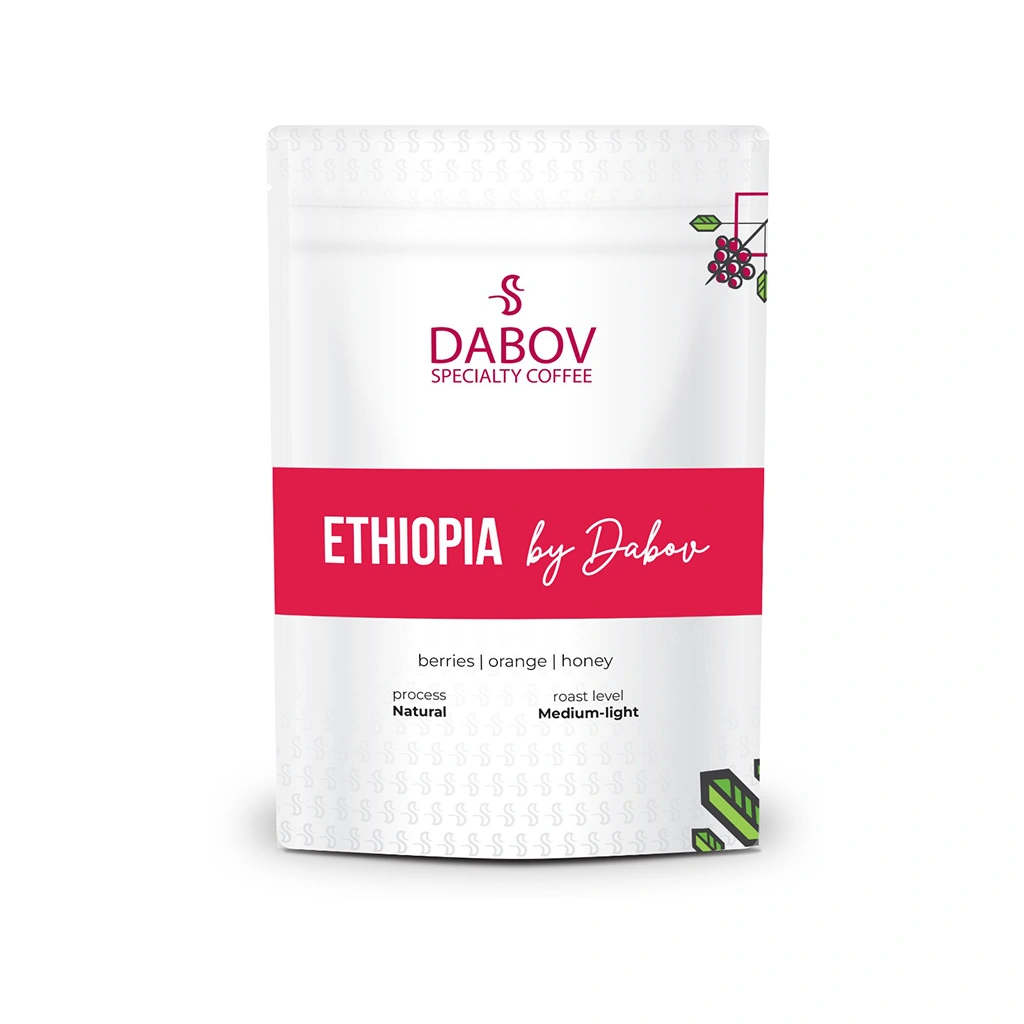
Ethiopia is not an emerging origin — it is the oldest. But within Ethiopia, the Guji zone in the south has emerged as a distinct sub-region with a flavor profile meaningfully different from the better-known Yirgacheffe (Gedeo zone) and Sidama coffees. Guji coffees at their best show stone fruit character — peach, apricot, plum — alongside the floral jasmine notes common across southern Ethiopian Arabica. The altitude ranges from 1,800 to 2,200 meters and the mineral density in Guji soil is notably high.
The naming of Guji as a distinct provenance — rather than simply "southern Ethiopian" — is relatively recent, dating from around 2015–2017 when importers began specifying Guji washing stations separately from neighboring zones. This kind of granularity is a signal of market maturity within the origin and typically precedes a wave of roaster investment in specific washing-station relationships.
Honduras: Central America's Overlooked Heavyweight
Honduras has been the largest coffee producer in Central America by volume since 2011, yet it remains overshadowed by Guatemala and Costa Rica in specialty-market consciousness. That imbalance is beginning to correct. The Copán and Opalaca departments produce high-altitude lots — 1,400–1,800 meters — that rival Guatemala's Huehuetenango in cup quality when processed carefully. The Marcala denomination in the La Paz department holds a Protected Designation of Origin for its coffees, the first in Central America.
The impediment to Honduras's specialty recognition has historically been processing inconsistency and limited export infrastructure at the farm level. This is improving through farmer cooperatives that have invested in raised drying beds, controlled fermentation protocols, and direct-trade relationships with North American importers. The cost-per-cup relative to Guatemala or Costa Rica makes Honduras increasingly attractive to quality-focused roasters who face margin pressure on Central American sourcing.
Vietnam's Arabica Transition
Vietnam is the world's second-largest coffee producer by volume, but almost entirely Robusta for instant production. Its reputation in specialty circles is negligible but beginning to form. The Da Lat plateau in Lam Dong province — at 1,400–1,600 meters — is developing Arabica production with some early specialty-grade output. Vietnamese Arabica remains inconsistent in quality; processing infrastructure lags significantly behind Latin America and East Africa. But the first direct-trade importers working with Da Lat farms are beginning to appear in European specialty markets. Some early lots show citrus and stone-fruit character that wouldn't embarrass a mid-tier washed Central American. Market entry by specialty importers typically precedes a regional quality inflection by three to five years — making 2027–2030 the window to watch for Vietnam in the specialty tier.
Emerging Regions: A Comparative Overview
| Region | Country | Altitude (m) | Dominant Variety | Processing | Specialty Standing |
|---|---|---|---|---|---|
| Guji Zone | Ethiopia | 1,800–2,200 | Heirloom landraces | Washed, natural | Established, expanding |
| Nariño | Colombia | 1,800–2,300 | Caturra, Gesha | Washed, honey | Rising rapidly |
| Kayanza | Burundi | 1,800–2,100 | Bourbon | Washed, natural | Rising, CoE active |
| Copán / Opalaca | Honduras | 1,400–1,800 | Catuaí, Lempira | Washed | Underrecognized, improving |
| Da Lat | Vietnam | 1,400–1,600 | Catimor, Arabica | Variable | Early-stage |
| Yunnan | China | 1,200–1,800 | Bourbon, Gesha | Washed, honey | Early-stage, high investment |
| Araku Valley | India | 900–1,100 | Mixed Arabica | Washed | Early-stage, tribal cooperative |
China's Yunnan Province
Yunnan is the most surprising entry on any list of emerging coffee regions. China has cultivated Arabica commercially since the 1980s in Yunnan, but almost entirely as commodity coffee for domestic instant production. The emerging story is in the specialty tier, where a cohort of Chinese agronomists and roasters began investing in higher-elevation farms around 2015, focusing on Bourbon and Gesha varieties at 1,400–1,800 meters with proper post-harvest infrastructure.
The results are commercially viable specialty coffee — consistently in the 83–86 cupping range — at price points that allow positioning as a regional specialty. China's rapidly expanding domestic specialty market provides demand that doesn't depend on export, insulating Yunnan producers from international commodity-price volatility in ways that African and Latin American producers cannot enjoy.
The Role of Processing Innovation
One pattern unites most emerging regions: processing innovation as a quality lever when terroir alone cannot close the gap with established origins. Controlled fermentation — anaerobic, carbonic maceration, extended warm-water fermentation — has allowed producers in marginal terroir to create distinctive, high-scoring lots that attract specialty buyers despite growing at lower altitudes or in less ideal soil conditions.
This is both an opportunity and a risk. At its best, processing innovation creates genuinely new flavor experiences that expand the coffee flavor map. At its worst, it masks poor raw material under fermentation character — coffees that score well in blind cuppings but reveal thin body and poor structure when the novelty fades. Sophisticated buyers are developing frameworks for distinguishing process-driven flavor from terroir-driven flavor, and producers relying on processing to compensate for weak raw material will face increasing buyer skepticism as the market matures.
Climate Change as a Re-mapping Force
The climate change impact on coffee is not uniform. Traditional growing regions in low-elevation Central America and southern Brazil face real threats: rising minimum temperatures, irregular rainfall, and increased coffee leaf rust (Hemileia vastatrix) pressure. The same warming trend opens altitude zones and latitudes that were previously too cold for Arabica. Parts of southern Mexico's Chiapas highlands, highland areas of South Africa, and the central valleys of Chile are being evaluated for commercial Arabica viability. The Specialty Coffee Association's Future of Coffee initiative is actively mapping projected suitability zones under multiple climate scenarios through 2050. Their preliminary models suggest that 2–3 new commercially viable Arabica countries could emerge within this century.
The net effect over the next three decades will be a geographic redistribution of quality coffee production — upward in altitude within existing countries, and poleward toward cooler regions. The specialty market's obsession with provenance and uniqueness will likely accelerate buyer interest in these climatic-frontier coffees as established origins face supply pressure and price volatility.
Frequently Asked Questions
What makes a coffee region "specialty" versus "commercial"?
Specialty designation refers to green coffee scoring 80 or above on the SCA 100-point cupping scale. Achieving this consistently requires appropriate growing altitude, careful cherry selection at harvest, sound post-harvest processing, and clean export handling. Commercial coffee grades on defect counts and moisture, not flavor quality, and trades at New York C commodity prices.
Which emerging regions are most likely to reach first-tier specialty status in the next decade?
Guji (Ethiopia) is already there. Nariño (Colombia) and Kayanza (Burundi) are at the threshold. Honduras's Copán and Opalaca are underrecognized but approaching. Yunnan (China) is the most likely long-range entrant given the capital flowing into it. Vietnam's Da Lat plateau is plausible by 2035 if processing infrastructure investment continues.
How should a buyer identify and purchase coffee from an emerging region?
Look for roasters who specify origin at the washing-station or producer level, who publish harvest dates, and who can name the processing protocol. These signals indicate direct-trade or close-to-direct relationships where quality premiums actually reach producers. Generic country-blend labels tell you nothing about sub-regional quality variation.
Conclusion
The coffee map is being redrawn in real time. Climate change, specialty-market economics, and a generation of producers applying controlled fermentation and precision agriculture to marginal terroir are collectively expanding the geography of quality coffee. For buyers, this means new origins on roaster menus, more granular sub-regional labeling, and coffees with flavor profiles that established origins cannot replicate. The regions in this article are the ones most likely to deliver on that promise over the next decade. Browse our single-origin coffee selection to explore current lots from both established and emerging origins.