The Origins: Ethiopia and the Discovery of Coffee
The legend of Kaldi—the Ethiopian goatherd who noticed his goats energized after eating berries from a particular tree—dates to the 9th century and remains the most cited origin story in coffee culture. Whether Kaldi was real or apocryphal, the archaeological and botanical record supports Ethiopia as the native habitat of Coffea arabica. The species grows wild in the montane rainforests of southwestern Ethiopia, particularly in the Kaffa zone—from which the word "coffee" is thought to derive.
Ethiopian farmers have consumed coffee for at least a millennium in forms that predate brewing: dried cherries chewed for energy, leaves steeped as a tea, and coffee mixed with animal fat as a portable food. The Ethiopian coffee ceremony—a formal ritual of roasting green beans over an open flame, grinding by hand, and brewing in a clay jebena pot—remains one of the most significant social institutions in the country and is a UNESCO-recognized intangible cultural heritage.
East Africa: The Specialty Heartland
East Africa's highland terrain—the Ethiopian Plateau, the Kenyan Aberdare Range, the Rwandan hills, the Ugandan Elgon massif—provides the altitude, volcanic soils, and rainfall patterns that produce the fruity, bright, complex coffees most associated with the specialty market.
Ethiopia: Yirgacheffe, Sidamo, and Harrar
Ethiopia's coffee regions are the most genetically diverse in the world. The country contains an estimated 5,000–10,000 distinct Arabica landrace varieties, compared to the handful of named cultivars grown in Latin America and East Africa. This genetic breadth is the root of Ethiopian coffees' extraordinary flavor range.
Yirgacheffe sits in the Gedeo Zone of southern Ethiopia at 1,700–2,200 meters above sea level. The region's combination of altitude, consistent rainfall, and shade-grown cultivation under native Sidama forest trees produces coffees with a tea-like body and floral aromatic intensity that has made it the archetype of light-roast specialty coffee. Washed Yirgacheffe—the dominant processing method—is characterized by bergamot and jasmine aromatics, lemon-citrus acidity, and a delicate, clean finish. Natural Yirgacheffe, where the whole cherry dries on raised beds, produces more body and intense blueberry and stone-fruit notes.
Sidamo is the broader zone surrounding Yirgacheffe, producing coffees with more body and a slightly more wine-forward, berry-dominant profile. Sidamo natural processing—particularly lots from cooperative-run drying beds in Guji—has attracted significant attention for intense blueberry, strawberry jam, and fermented wine character.
Harrar in eastern Ethiopia is a different world. Grown at 1,400–2,100 meters in the arid highlands east of Addis Ababa, Harrar is almost exclusively naturally processed—the whole cherry dries in the intense sun before beans are removed. The result is heavy body, low acidity, and an intensely fruity, sometimes wild profile: blueberry, dark cherry, chocolate, and the occasional herbal or spice note. Harrar is the "blue velvet" of Ethiopian coffee—rich, dense, and divisive.
| Ethiopian Region | Altitude | Processing | Signature Flavor Profile |
|---|---|---|---|
| Yirgacheffe | 1,700–2,200 m | Washed (dominant) | Jasmine, bergamot, lemon citrus, tea-like body |
| Yirgacheffe natural | 1,700–2,200 m | Natural | Blueberry, stone fruit, heavy sweetness |
| Sidamo | 1,400–2,200 m | Washed and natural | Berry, wine, medium-full body |
| Harrar | 1,400–2,100 m | Natural | Wild blueberry, dark cherry, chocolate, heavy body |
| Limu | 1,400–2,000 m | Washed | Spice, floral, balanced acidity |
| Guji | 1,800–2,200 m | Both | Tropical fruit, berry, high brightness |
Kenya: The Auction System and SL Varieties
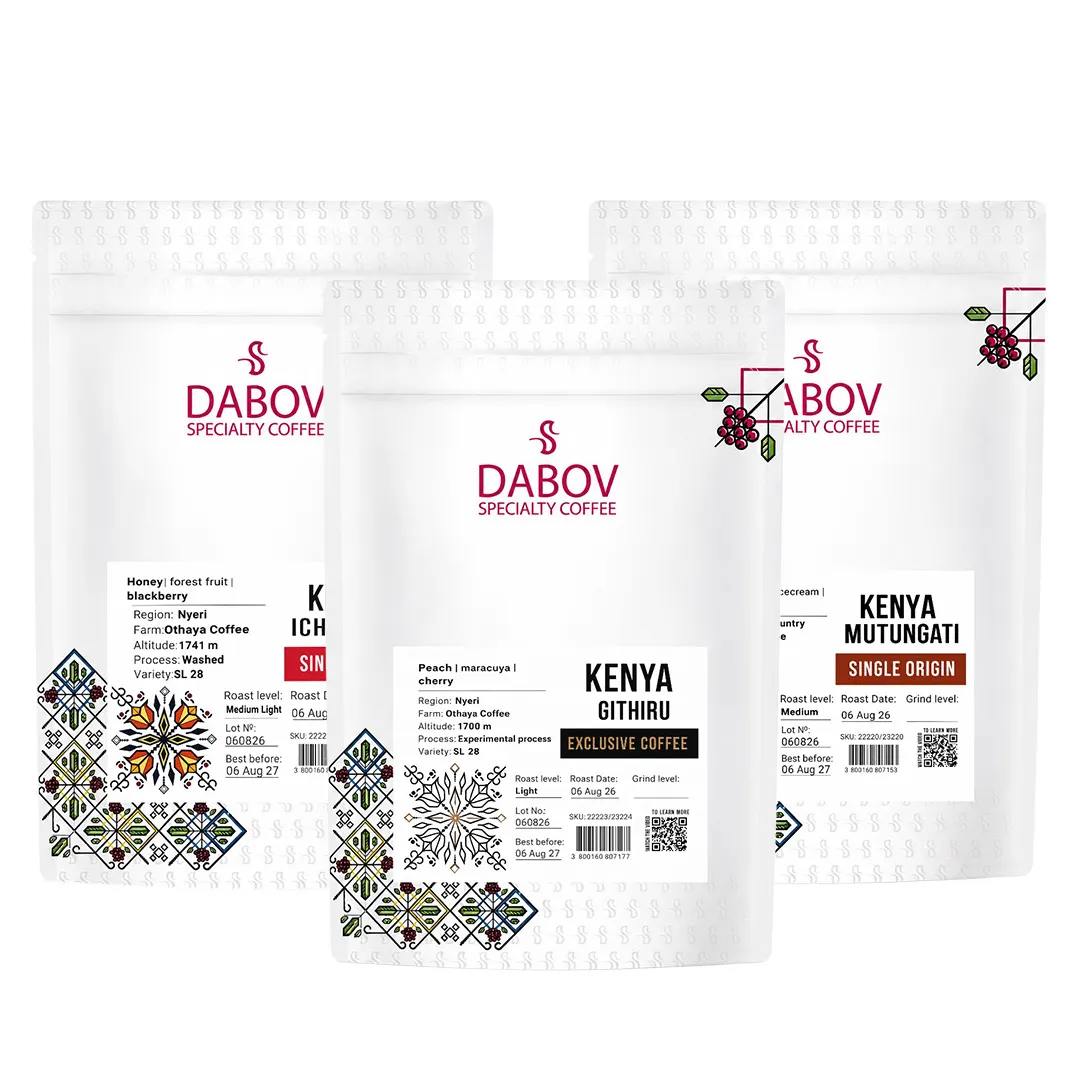
Kenya's SL28 and SL34 cultivars, double-fermentation washed processing, and the Nairobi Coffee Exchange's weekly auction produce some of the most consistently identifiable coffees in the world. For a deep dive on Kenya's sub-regions and grading system, see the dedicated Kenyan coffee article—but the continental overview is this: Kenya represents the pinnacle of process-driven quality engineering in specialty. While Ethiopian coffees are defined by their wild genetic diversity, Kenyan coffees are defined by agronomic discipline and market infrastructure.
Rwanda: Post-Conflict Transformation
Rwanda's specialty coffee transformation is one of the most remarkable economic stories in modern agriculture. Prior to the 1994 genocide, coffee was a commodity crop managed for export volume, not quality. Post-conflict reconstruction efforts, led initially by USAID programs and then by Rwanda's National Agricultural Export Development Board (NAEB), invested heavily in washing stations and quality training—and results compounded quickly.
Rwandan coffee is almost entirely Bourbon variety Arabica, grown at 1,200–2,000 meters on the country's famous "Thousand Hills." The Bourbon variety in Rwanda expresses an distinctive profile: orange zest, black tea, caramel, clean brightness, and medium body. A well-processed Rwandan washed cup from the Lake Kivu region or Nyamasheke sector often carries a quality signature as distinctive as Yirgacheffe or Nyeri—though less widely known outside the specialty trade.
Rwanda's washing station density is among the highest in Africa—over 300 active stations for a country slightly larger than Vermont. This density creates logistical efficiency: farmers can deliver cherries within a few hours of picking, which is critical for maintaining fruit quality and clean fermentation.
DRC: Lake Kivu's Emerging Identity
The Democratic Republic of Congo's coffee sector has operated in the shadow of decades of conflict, but the Lake Kivu basin in eastern DRC—North and South Kivu provinces—has emerged as a genuine specialty origin. The region sits between 1,400 and 2,000 meters, benefits from volcanic Kivu soils and the moderating humidity of Lake Kivu, and grows a mix of Bourbon, Typica, and locally adapted varieties.
Congolese Kivu coffees exhibit a wine-like acidity with flavors of red plum, raspberry, hibiscus, and sometimes chocolate or spice. The cup profile sits between Rwandan clean brightness and Ethiopian winey depth. International organizations including TechnoServe and the specialty roaster Camber Coffee have worked with Kivu cooperatives on processing improvements, and several Kivu lots have now appeared in high-profile specialty accounts in Europe and North America.
The challenge in the DRC remains logistics and political stability. Many farms sit hours from paved roads, and conflict in some northern zones periodically disrupts supply chains. But the underlying quality potential is genuine—and growing.
West and Central Africa: Robusta Country
West Africa produces predominantly Coffea canephora—Robusta—rather than Arabica. The lower altitudes, hotter temperatures, and higher rainfall of countries like Ivory Coast, Nigeria, Cameroon, and Guinea favor Robusta's disease resistance and productivity.
Robusta's higher caffeine content (2.2–2.7% vs. Arabica's 1.2–1.5%) made it the backbone of commercial espresso blends and instant coffee. Ivorian Robusta—the Ivory Coast is Africa's largest Robusta producer—is characterized by strong body, earthy and woody notes, and the thick crema-generating compounds (melanoidins and emulsified lipids) that espresso blenders value. These coffees rarely appear in single-origin specialty contexts, but they underpin much of the commercial coffee industry globally.
Uganda is the anomaly in this regional picture: it produces significant Arabica from the slopes of Mount Elgon and the Rwenzori Mountains at altitude, alongside substantial Robusta from lower zones. Ugandan Arabica from Sipi Falls at 1,800–2,200 meters can exhibit clean citrus and fruit character approaching Kenyan or Rwandan quality, though inconsistent processing remains a limiting factor.
Processing Methods That Define African Flavors
Africa's processing diversity is as important as its terroir diversity. The natural process—drying the whole cherry intact—was the default in Ethiopia for centuries, not by design but by circumstance: the Ethiopian highlands lack the abundant water needed for large-scale wet processing. The result was the "blueberry bomb" character of a Harrar or a natural Sidamo, now recognized as among the most intense flavor expressions in specialty coffee.
Washed processing spread through East Africa during the 20th century as international coffee agencies promoted it for its cleaner, more consistent cup quality and better market acceptance. Kenya refined washed processing into the double-fermentation protocol (see the Kenyan coffee article for detail). Rwanda built its entire specialty identity around high-quality washed Bourbon lots.
Honey processing—leaving varying amounts of mucilage on the bean during drying—is less common in Africa than in Central America but has appeared in Rwanda and Ethiopia as producers explore intermediate flavor profiles.
Animal-processed coffees (including "civet coffee" varieties) exist at the margins of the African market but are generally considered a novelty rather than a quality marker, and some production methods raise significant animal welfare concerns.
Sustainability, Smallholders, and the Future of African Coffee
More than 90% of African coffee is grown by smallholder farmers on plots of less than 2 hectares. This land structure has both virtues and vulnerabilities. The virtues: hand-picking at peak ripeness is practical at small scale, producing cherry quality that mechanized large-farm harvesting rarely matches. The vulnerabilities: small farmers lack capital for inputs, irrigation, and processing equipment; they are price-takers rather than price-setters; and climate volatility hits hardest at the margins.
Climate change poses existential risk to parts of Africa's coffee belt. Research by the International Center for Tropical Agriculture projects that suitable land for Arabica cultivation in Africa could shrink by up to 50% by 2050 under high-emissions scenarios, with Ethiopia, Kenya, and Uganda among the most affected. The mitigation strategies under development include shifting cultivation to higher altitudes, breeding climate-resilient varieties (including crosses that incorporate Coffea stenophylla, recently rediscovered in Sierra Leone and noted for heat tolerance), and expanding shade-growing practices that buffer against temperature extremes.
Direct trade and transparency certifications—Rainforest Alliance, organic, and auction-linked premiums—are improving farmer economics in pockets across the continent. Rwanda's cooperative-linked washing station model is the most cited example of successful value capture at the producer level. Ethiopia's trademark protection of Yirgacheffe, Harrar, and Sidamo names through the Ethiopian Intellectual Property Office has helped leverage geographical indication premiums in export markets.
Frequently Asked Questions
Why is Ethiopian coffee so much more diverse than coffee from other origins?
Ethiopia is the center of origin for Coffea arabica. The plant has been growing wild and cultivated there for over 1,000 years, producing thousands of distinct landrace varieties through natural variation. In contrast, Latin American and most other African coffees derive from a narrow genetic bottleneck of varieties introduced during colonial trade. Ethiopian biodiversity translates directly to flavor diversity—no other origin can match its range.
What is the difference between washed and natural Ethiopian coffee?
Washed Ethiopian coffee (like classic Yirgacheffe) is pulped, fermented to remove mucilage, washed clean, and dried on raised beds. The result is a clean, floral, citrus-bright cup. Natural Ethiopian coffee dries with the whole cherry intact—the bean ferments inside the fruit for weeks. The result is heavier body, lower acidity, and intense dried fruit and berry flavors. Same origin, radically different cup because of processing.
Is Rwandan coffee similar to Kenyan coffee?
Both are East African high-altitude washed Arabicas, and they share some family resemblance—bright acidity, clean finish. But Kenyan coffee (SL28, SL34) tends toward blackcurrant, grapefruit, and winey density, while Rwandan Bourbon reads as orange zest, black tea, and caramel sweetness. They are comparable in quality tier but distinct in profile.
Why isn't DRC coffee more widely available in specialty shops?
Logistics and political instability. The eastern DRC, where the best specialty-grade Arabica grows, is remote and has experienced periodic conflict. Supply chains are fragile, export infrastructure is limited, and traceability—essential for premium specialty pricing—is difficult to maintain at scale. Quality is genuinely there; the bottleneck is getting it to market reliably.
Conclusion
Africa's coffee geography is the reference point for all specialty coffee. Ethiopian landrace diversity established the genetic baseline for the entire industry; Kenya's SL28 program and auction infrastructure demonstrated that agronomic selection and competitive pricing can drive quality upward at scale; Rwanda proved that post-conflict economies can rebuild around quality agriculture with the right institutional investment; and the DRC's emerging Kivu lots show that quality can survive even significant structural adversity. Each of these regions is understandable through specific entities—Yirgacheffe's bergamot esters, SL28's thiol-driven blackcurrant, Rwandan Bourbon's orange-zest acidity—not through vague praise. Knowing what to look for makes African coffee not just better to taste, but more compelling to understand. Browse our single-origin coffee selection to explore current-harvest lots from Ethiopia, Kenya, and beyond.