What the C-Market Could Not Measure
The New York Intercontinental Exchange's coffee futures contract — the "C-market" — prices Arabica coffee by origin, grade, and differentials applied for known deficiencies. It does not price flavor. A lot of naturals from a specific farm in Sidama, Ethiopia, dried on raised beds with careful cherry selection and cupping at 90 points, trades on the C-market at the same differential structure as an 80-point lot from the same region with mediocre processing. The farmer's quality premium is invisible to the pricing mechanism.
This is not a historical accident. The C-market was designed to price fungible commodity lots efficiently, to allow trade houses and large roasters to hedge their costs across a global crop. It works extraordinarily well at that function. But fungibility — the assumption that one bag of washed Colombian Arabica is interchangeable with another — is precisely what specialty coffee's supply chain is organized to refute.
The structural problem became acute for specialty-oriented roasters in the 1990s. They wanted to buy specific, high-quality lots from specific origins — to replicate a cup profile year over year, to tell a coherent story to consumers about provenance — and the commodity supply chain could not accommodate that request. The infrastructure for identifying, tracking, and pricing quality at the lot level simply did not exist at scale.
The SCAA Cupping Protocol and the Language of Flavor Scoring
Before quality could be priced differently, it had to be measured consistently. The Specialty Coffee Association of America (SCAA, later merged with the Specialty Coffee Association of Europe to form the SCA) developed a standardized cupping protocol — a systematic method for evaluating brewed coffee samples — that became the industry's common quality language.
The SCAA cupping form rates coffee on ten attributes: fragrance/aroma, flavor, aftertaste, acidity, body, balance, uniformity, clean cup, sweetness, and overall impression. Each attribute is scored on a scale contributing to a 100-point total. Coffees scoring 80 or above qualify as "specialty grade"; those scoring 90 or above represent exceptional lots.
The protocol's value is not that it perfectly captures the subjective experience of drinking coffee — any experienced taster will note that cupping conditions (temperature, dilution, no milk or sugar) favor certain flavor profiles. Its value is that it is reproducible. Two Q Graders working with the same lot in different countries, following the protocol, should arrive at scores within a few points of each other. That reproducibility makes scores tradeable information.
| Score Range | Classification | Market Position | Typical Sourcing Channel |
|---|---|---|---|
| 90–100 | Outstanding / Exemplary | Top lots, auction pricing, collectors | Cup of Excellence, direct micro-purchase |
| 85–89 | Excellent | Premium specialty | Direct trade, specialty importers |
| 80–84 | Very Good (specialty threshold) | Entry-level specialty | Specialty importers, direct trade |
| 75–79 | Above average (not specialty) | Commercial premium | Traditional trade, some specialty blends |
| Below 75 | Below average / commodity | Mass market, commodity blends | C-market, national roasters |
Q Grader Certification: Building a Credentialed Tasting Class
The reproducibility of cupping scores required human tasters trained to the same standard. The Coffee Quality Institute's Q Grader program, launched in the early 2000s, addresses this by certifying individual tasters through a rigorous examination: 22 tests over 3–4 days covering sensory skills including olfactory identification, triangulation (identifying the odd cup among three), green coffee grading, and calibrated cupping.
Passing all 22 tests on the first attempt is uncommon; most candidates require multiple sittings on some modules. Certification must be renewed every three years through re-calibration, ensuring that a Q Grader's scores remain consistent with the global standard over time.
The Q Grader credential became the specialty sourcing industry's lingua franca. An importer with Q Grader staff could communicate quality expectations to an origin partner in terms that both parties understood precisely. A cooperative that invested in Q Grader training for its own quality control staff could provide buyers with calibrated pre-shipment sample scores that reduced the risk of receiving a shipment below contracted quality. The credential built trust across a supply chain where buyer and seller might be 10,000 kilometers apart, speak different languages, and operate under different legal systems.
The Cup of Excellence: Auctions as Price Discovery
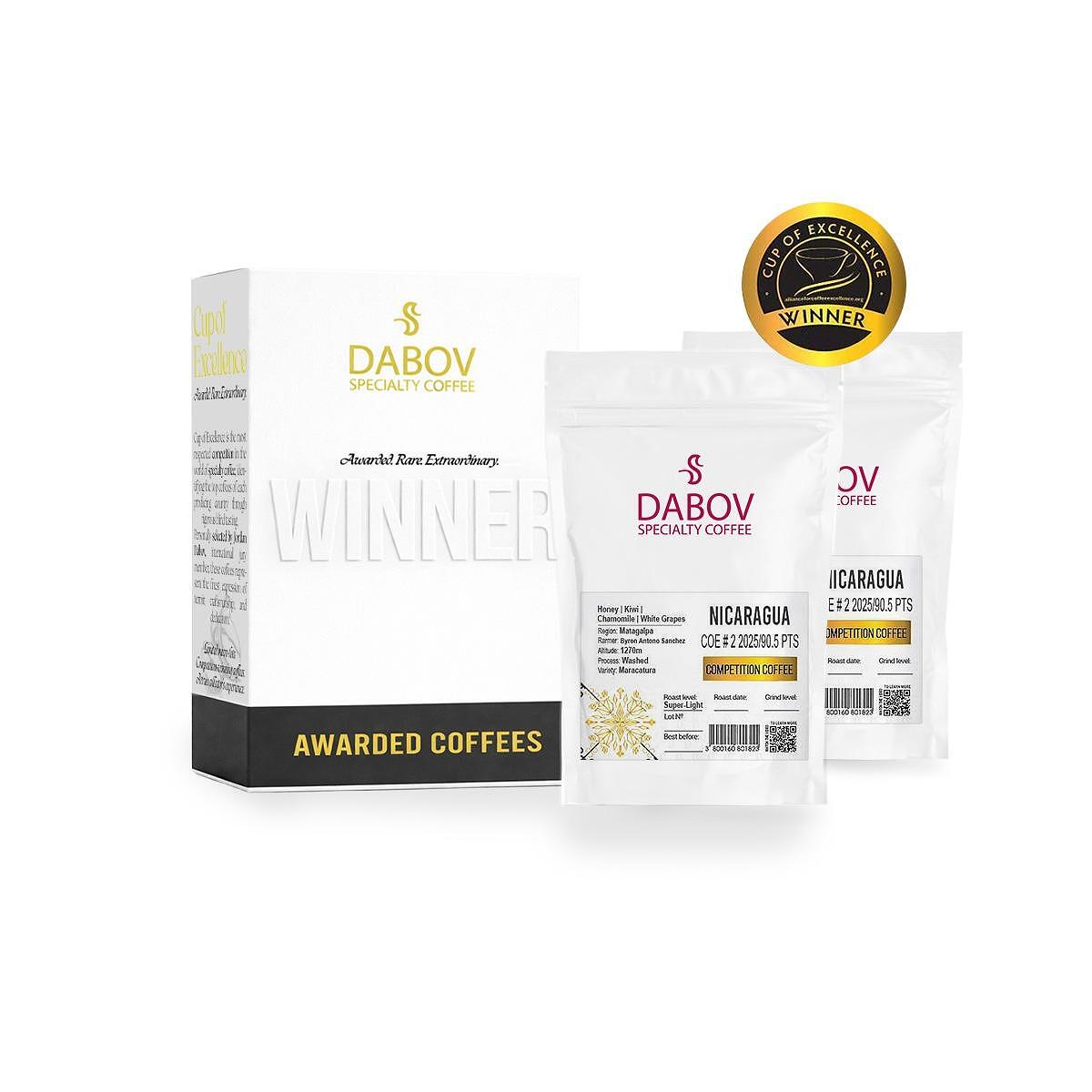
The Cup of Excellence program, launched in Brazil in 1999 by the Alliance for Coffee Excellence (ACE), represents the clearest structural innovation in specialty coffee's supply chain transformation. Its mechanism is simple: an annual competition open to producers within a participating country, with lots cupped by an international jury of Q Graders. The top-scoring lots are auctioned online to roasters worldwide; the producer receives the full auction price minus a small ACE administration fee.
The CoE solves two problems simultaneously. For the producer, it creates a direct, transparent price discovery mechanism: what the market actually pays for a 90-point natural processed Wush Wush from Acatenango versus an 88-point washed Bourbon from Santa Barbara is no longer an estimate — it is a public auction record. For the buyer, it provides a vetted, scored lot with the full chain of custody from farm to export.
The auction prices are not small. In recent years, top-ranked CoE lots have sold at internet auction for $50–$300 per pound green, with extraordinary lots occasionally exceeding $1,000 per pound. The median CoE auction price sits in the $10–$25 per pound range — still a 7–15× premium over C-market. Even the participating lots that do not win the competition are typically sold at above-market specialty prices through the CoE's sister program, the Good Food Awards and Best of Panama auctions.
The CoE's secondary effect — arguably more important than the individual auction prices — is that it creates a public record of what excellent coffee from a given origin looks like. Roasters who win CoE lots publish tasting notes. Other buyers who did not win use the score and notes as a reference when sourcing similar lots from the same country next season. The program functions as an ongoing quality benchmark that raises the floor for what buyers expect from origin.
Direct Trade Sourcing Contracts: How the Importer-Roaster Relationship Reorganized
Before specialty supply chains matured, the relationship between a US roaster and an origin country was almost always intermediated. The roaster bought from an importer who bought from an exporter who bought from a collector who bought from farmers. At each transfer, information about origin compressed. By the time the roaster received a bag, the most specific description available was typically "washed Colombian, EP grade."
The direct trade model — pioneered operationally by Stumptown, Intelligentsia, and Counter Culture in the early 2000s — pushed the sourcing relationship as far upstream as logistically feasible. In practice, this meant:
- Origin visits by the roaster's green buyer, typically once per harvest season
- On-site cupping of farm or cooperative lots before purchase commitment
- Negotiated prices based on cupping score and previous relationship, not C-market differentials
- Multi-year purchase commitments, or at minimum, stated intent to return
- Pre-harvest price agreements that locked in a floor before the crop was picked
The last point is structurally significant. A producer who knows in February that their harvest will sell at $3.50 per pound regardless of what the C-market does between February and October can make agronomic investments that a producer operating on spot-price uncertainty cannot. The security of a pre-agreed price is worth something separate from the price level itself.
The Green Coffee Importer's Evolving Role
The direct trade model compressed the supply chain, but it did not eliminate the specialty importer — it transformed their role. Mass-market importers trade large volumes of undifferentiated lots. Specialty importers like Trabocca, Olam Specialty, Nordic Approach, Collaborative Coffee Source, and Cafe Imports provide a different service: they maintain year-round origin relationships on behalf of roasters who cannot afford to staff a full-time green buying operation across a dozen producing countries.
A specialty importer's value proposition includes pre-shipment sample evaluation, quality verification against contracted scores, customs clearance expertise, warehouse management with humidity and temperature control, and sometimes pre-financing at origin. For a 500-kg-per-month specialty roaster, the economics of staffing a dedicated green buyer who travels to Ethiopia, Colombia, and Guatemala every harvest are unfavorable. The specialty importer provides fractional access to that sourcing expertise.
The importer-roaster relationship in the specialty world increasingly looks like a tripartite arrangement: producer, importer, and roaster aligned around a specific lot's quality profile, with the importer functioning as a quality guarantor and logistics coordinator rather than a price-setting intermediary. The importer's margin is justified by services rendered, not by information asymmetry.
Traceability Lot Codes and the Information Infrastructure
The practical mechanism that makes specialty sourcing transparency operational is the traceability lot code. A lot code — a string of text like "ETH-YRG-2024-KAB-005" — encodes origin country, region, season, cooperative or farm name, and internal lot identifier. When printed on a retail bag or accessible via QR code, it allows a consumer or a buyer to retrieve the full chain of custody for that specific coffee.
Implementing lot codes requires coordination at every stage: the wet mill assigns a processing batch number, the dry mill maintains batch segregation during sorting and grading, the exporter retains batch identity through fumigation and stuffing, and the importer carries the code through their warehouse system. Any break in this chain — a mill that batches multiple producers' parchment together without tracking, an exporter that consolidates small lots — collapses the traceability.
Investment in traceability infrastructure — particularly at the mill and cooperative level in producing countries — has been one of the significant development-finance contributions to the specialty supply chain. Organizations including TechnoServe and Root Capital have funded mill upgrades, cooperative management training, and wet processing infrastructure precisely because physical infrastructure is the bottleneck that prevents high-quality cherry from surviving to export as a traceable, specialty-grade lot.
The Economics of Farmgate Premium Math
The core claim of the specialty supply chain transformation is that reorganizing sourcing around quality routes more money to origin. It is worth stress-testing this claim with actual numbers, even approximate ones.
Consider a smallholder producing two bags (120 kg) of green coffee from a two-hectare farm:
- Commodity route: C-market at $1.60/lb = $423 total, minus collection and processing costs (~$200) = ~$223 net to farmer
- Cooperative specialty route: $3.00/lb FOB minus cooperative processing and export costs (~$1.00/lb) = ~$2.00/lb farmgate = ~$529 net to farmer
- Direct microlot route: $5.00/lb FOB, farm bears own drying costs (~$0.80/lb) = ~$4.20/lb net = ~$1,111 net to farmer
The microlot direct route returns approximately five times the commodity route on the same physical production. Even accounting for the additional labor involved in careful cherry selection and farm-level processing, the economics are materially better. The constraint is access — not every farm can sell every lot at microlot pricing — but the existence of that premium tier creates upward pressure on quality throughout the origin's supply chain.
Frequently Asked Questions
What is the Cup of Excellence and how does it work?
The Cup of Excellence is an annual competition run by the Alliance for Coffee Excellence in participating coffee-producing countries. Producers submit lots, which are cupped by a national jury and then an international jury of Q Graders. Lots scoring 87 or above are auctioned online to roasters worldwide; the producer receives the auction price minus a small fee. It is the most transparent price discovery mechanism for high-quality coffee that currently exists.
What does a Q Grader actually do?
A Q Grader is a coffee taster certified by the Coffee Quality Institute through a 22-test examination covering olfactory identification, calibrated cupping, and green coffee grading. Q Graders evaluate coffee using the SCA's standardized protocol and assign scores on a 100-point scale. Their certification must be renewed every three years. Specialty importers and roasters use Q Grader scores to negotiate prices and verify lot quality against contracted specifications.
How is direct trade different from fair trade?
Fairtrade is a certification program with a defined price floor and audit standards managed by Fairtrade International. Direct trade is an informal term describing a sourcing relationship between a roaster and a producer that bypasses standard commodity brokerage — it has no certification body, no required price floor, and no audit. Direct trade is often more financially lucrative for producers than Fairtrade minimum prices, but it lacks the accountability structure that certification provides.
Why do specialty roasters visit origin before buying?
Origin visits allow green buyers to cup samples at the farm or cooperative level before committing to a purchase, to verify that processing infrastructure matches the quality represented in pre-shipment samples, and to establish the personal relationship that underpins multi-year sourcing commitments. A lot score on paper means less if the buyer has never seen the drying beds where the coffee was processed.
Conclusion
The specialty coffee supply chain's transformation from a commodity opacity model to a score-based, relationship-oriented, farmgate-premium system took roughly three decades and required simultaneous developments in quality measurement (the SCAA protocol), human capital (Q Grader certification), price discovery (Cup of Excellence auctions), and logistics relationships (direct trade sourcing contracts). None of these components alone would have been sufficient; together they created an infrastructure through which a roaster in Brooklyn or Tokyo can buy a specific lot from a specific farm in Yirgacheffe at a price calibrated to its actual quality.
The work is unfinished. Most smallholder production still flows through commodity channels. The specialty tier's organizational innovations have not penetrated the 90 percent of global coffee that never approaches an 80-point cupping threshold. But the architecture is now sufficiently mature that it can scale — if the capital, training, and market access continue to follow the quality wherever it is grown. Explore our specialty green coffee selection to source directly from roasters who operate within this transformed supply chain.