The relationship between commodity coffee prices and specialty coffee prices is often described in a single sentence: specialty is decoupled from the C-price. That sentence is true in the narrow sense that no specialty roaster pays exactly the C-price for their green coffee. It is misleading in the broader sense that C-price movements do propagate into specialty costs, just with delay, variability, and structural modifiers that commodity buyers never experience. Understanding the transmission mechanism — and the points where it can be interrupted — is the practical core of specialty sourcing strategy.
The C-Price as a Reference Point, Not a Fixed Floor
The C-contract (see the companion article on coffee trading mechanics) sets a benchmark for commodity-grade Arabica. Specialty coffee trades at the C-price plus a differential, and the differential is where the decoupling argument lives. The claim is that when the C-price rises, specialty differentials absorb or offset the movement, keeping effective specialty prices more stable.
This claim is partially correct and needs careful qualification:
At fixed-price direct-trade contracts: True decoupling occurs. The roaster and producer agreed to a specific price per pound before the harvest, independent of ICE. If the C-price doubles, the roaster pays the contracted price. The contract is a genuine hedge.
At differential-based contracts: Partial decoupling. The contract specifies "C + 45 cents per pound." If the C-price doubles, the effective price rises by approximately the same magnitude as the C-price increase. The differential stays fixed; the absolute price rises.
At spot market purchases: No decoupling. Spot purchases reflect current market prices inclusive of any current differential. A spike in the C-price hits spot buyers immediately and fully.
The practical implication: the structural protection against C-price volatility comes from the type of pricing relationship you have with your supply chain, not from the category "specialty coffee" in the abstract.
How C-Price Spikes Reach the Specialty Buyer
Even with fixed-price relationships for a portion of their lineup, most roasters carry some spot market or forward-at-differential exposure. When the C-price spikes, here is the transmission sequence:
1. Exporters and importers re-price new contracts. When C rises, sellers quote higher differentials or withdraw existing offers and renegotiate. The importer's spot inventory (purchased at lower C-prices) is repriced for new customers. New forward contracts reference the current C-price plus the current market differential.
2. Importers raise spot prices for available inventory. Coffee already in a US or European warehouse that was purchased at C+40 during a lower C environment may be repriced at the current effective rate. This is legal and common — the importer re-marks their inventory to reflect replacement cost.
3. Roasters face a sourcing decision. Continue buying from importer at new prices; absorb costs and compress margin; raise retail prices; or reformulate offerings (switching to origins where current price-quality ratios are more favorable).
4. Retail prices move slowly, if at all. Specialty café pricing has a strong psychological stickiness. Customers expect small price changes, but a 30–40% green coffee cost increase is rarely fully passed through to the menu board without significant customer communication. Most roasters absorb the first 3–6 months of a price spike before adjusting retail.
The Specialty Premium as Structural Buffer
The most important insight about specialty coffee pricing in volatile markets is that the premium you pay for exceptional quality creates contractual structures that incidentally provide price stability. This is not the primary purpose of the specialty premium — it exists to compensate for quality, traceability, and producer investment — but it is a real secondary effect.
A roaster paying C+120 for a high-scoring Ethiopian Yirgacheffe has almost certainly made a direct or quasi-direct commitment to that producer, typically with a forward contract signed at or before harvest. The premium creates both the motivation and the mechanism for that contractual relationship. When the C-price spikes, the roaster's exposure on that Ethiopian lot is limited to whatever proportion of the forward contract was written at a differential (rather than a fixed price).
By contrast, a roaster whose entire lineup is built on importer-sourced, C-differential contracts is entirely exposed to C-price movements. The low differential on commodity-adjacent lots reflects the absence of any forward commitment; what looks like a cost-efficient purchase in a stable market becomes a full-exposure position in a volatile one.
Cup of Excellence and the Price-Discovery Function
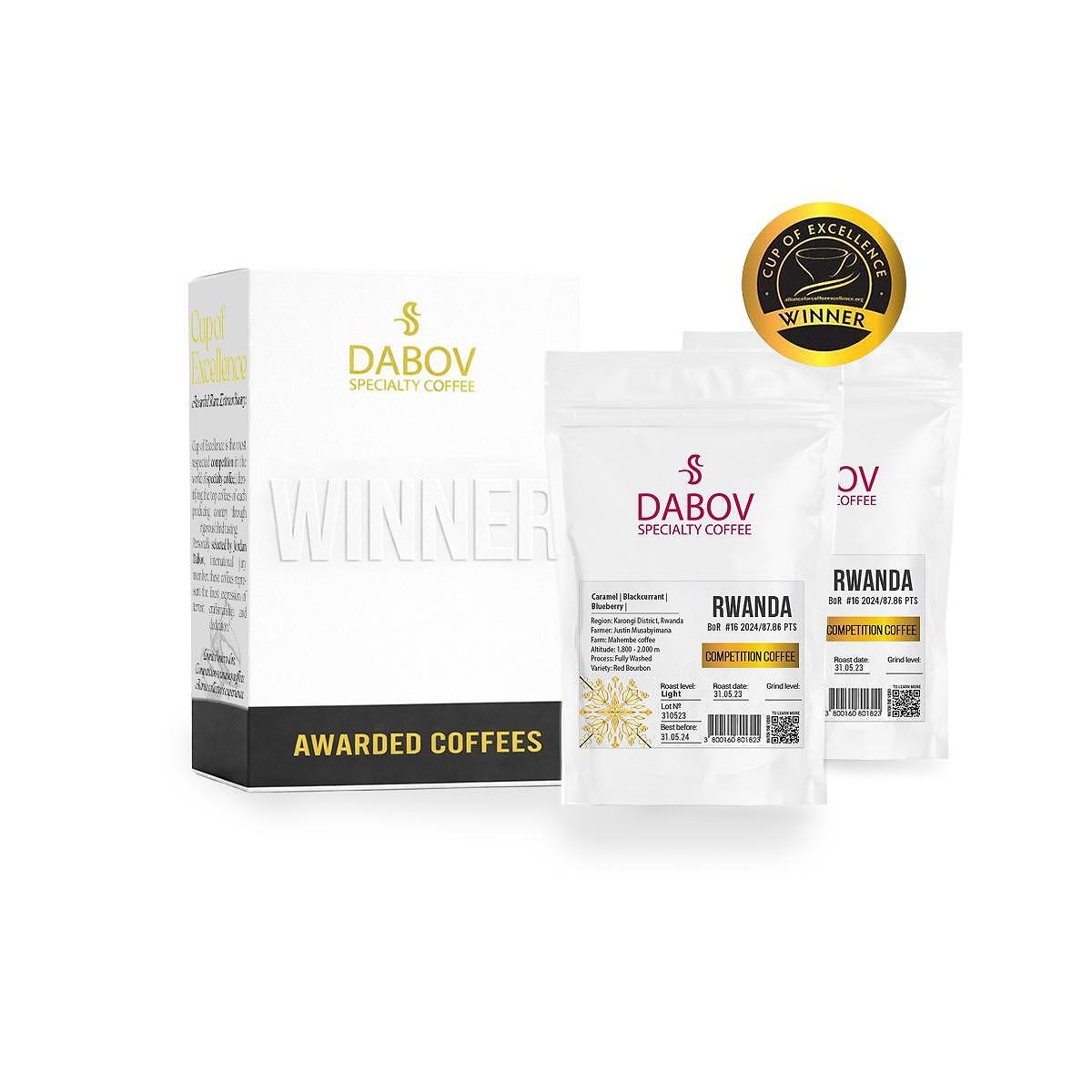
The Cup of Excellence (CoE) program — operated by the Alliance for Coffee Excellence — runs competitive auctions in major producing countries, with lots pre-screened by national juries and then scored by international panels. Winning lots sell at auction to the highest international bidder; prices regularly reach $10–$50 per pound, with exceptional lots clearing above $100.
CoE matters to the price-trends story in two ways:
As a price discovery mechanism. CoE auction results establish empirical evidence for what buyers worldwide will pay for exceptional quality from specific origins. When a Honduran natural processes lot scores 92 and auctions at $22/lb, that information flows back through the specialty supply chain — regional exporters, importers, and specialty roasters all recalibrate their sense of what Honduran specialty coffee is worth.
As a direct-trade catalyst. Many CoE relationships become multi-year direct-trade agreements. A roaster who wins or purchases CoE lots from a specific producer typically has a strong incentive to secure ongoing access to that producer's material, leading to negotiated fixed-price relationships that are structurally independent of ICE.
The CoE system also creates a quality competition at origin that is not primarily price-driven. A farmer entering CoE is investing in selection, processing care, and presentation quality for reputational rather than immediate financial reasons — but the reputational payoff, when it comes, is in the form of dramatically higher prices and the attention of international buyers. This creates a virtuous cycle that is genuinely resistant to commodity price pressure.
Price Floors and Transparency Reports
A growing number of specialty roasters publish transparency reports — annual disclosures of the prices paid for each green coffee in their lineup. Intelligentsia Coffee began publishing this data in 2016; Counter Culture, Stumptown, and dozens of smaller roasters have since followed. The reports typically show the FOB price paid, the Fair Trade minimum price (if applicable), and often the farm-level price paid to the producer.
Transparency reports serve multiple functions. They are a marketing tool that differentiates specialty roasters from commodity buyers. They are an accountability mechanism that prevents "direct trade" from becoming an empty marketing claim. And they function as informal price floors — by publicly committing to prices above Fair Trade minimums, roasters create a reputational cost to walking back those prices during a C-price decline, which gives producers greater confidence to make quality investments.
How Roasters Respond to Sustained C-Price Elevation
When the C-price rises and stays elevated for multiple harvest cycles, roasters exhaust their forward-price buffers and must make structural adjustments. The responses vary by size and sourcing model:
Reformulation. Switching from high-differential origins (East Africa, Central America) to lower-differential origins (Brazil, Peru) for blend components reduces per-pound green cost while maintaining overall cup quality. A blend that was 40% Ethiopian and 30% Colombian might shift to 30% Ethiopian, 30% Brazilian natural, and 25% Colombian to achieve a similar flavor profile at lower cost.
Retail price adjustment with communication. Roasters who have built customer relationships around transparency can — and increasingly do — explain price increases in terms of C-price dynamics, producer welfare, and supply chain pressures. Customers who understand why prices move are less likely to defect.
Bag size reductions. One of the more common but less visible responses to cost pressure is reducing the net weight of retail bags from 12 oz to 10 oz, or from 250g to 227g, while maintaining the same bag price. This preserves the perceived price point while improving per-unit economics.
Vertical integration. Some well-capitalized roasters respond to sustained C-price pressure by acquiring or investing in origin-country processing infrastructure — providing capital to a cooperative in exchange for multi-year forward purchase agreements at prices anchored below current market levels. This is effective at scale but inaccessible to most small roasters.
| Roaster Size | Most Common Response to C-Price Spike | Typical Hedge Ratio |
|---|---|---|
| Micro (<500 lb/month) | Absorb margin, delay retail price change | 0–20% (few forward contracts) |
| Small (500–2,000 lb/month) | Mix of absorption and retail increase | 20–40% forward committed |
| Mid-size (2,000–10,000 lb/month) | Reformulate + raise prices + hedge futures | 40–70% forward committed |
| Large (>10,000 lb/month) | Full hedging program + strategic inventory | 60–100% forward committed |
When the Specialty Premium Fails to Protect
Not every specialty sourcing structure provides price insulation. Several scenarios break the decoupling logic:
When fixed-price contracts expire. A roaster with a 12-month fixed-price contract enjoys full insulation for that period. When the contract renews after a sustained C-price spike, the new fixed price will reflect the new market reality. The protection is real but temporary.
When C-price declines below the specialty floor. The 2001–2012 period saw the C-price fall below $1.00/lb — below the cost of production for most arabica farmers. Specialty differentials were applied to this low base, and roasters faced a different problem: producers abandoning coffee farming for more profitable crops. The specialty market's price floor commitments were tested severely; many were maintained, many were not.
When quality aspirations exceed budget. A roaster who has committed publicly to paying above a certain price floor but whose retail prices cannot absorb a C-price spike faces a genuine bind — they cannot honor the floor without margin destruction, and they cannot abandon it without reputational damage. This pressure accelerates the shift to direct-trade, fixed-price structures.
The SCA 80-Point Threshold and Its Pricing Implications
The Specialty Coffee Association's 80-point threshold — coffees scoring 80+ on the SCA's 100-point cupping protocol qualify as "specialty" — functions as a quality gateway with price implications. Coffees that cross the 80-point threshold enter a pricing tier that is structurally different from commodity coffee: they command differentials, they attract specialty importer interest, and they can access the Cup of Excellence and similar programs.
The threshold also creates a quality trap: a coffee scoring 79 may be organoleptically excellent but trades as commodity. A coffee scoring 81 attracts specialty premiums. This discrete jump in value has driven significant producer investment in post-harvest processing quality — specifically in drying table management, fermentation control, and cherry selection — because the ROI on crossing the 80-point line is material.
For specialty buyers, understanding the SCA scoring context means recognizing that the 80–85 tier (entry-level specialty) is still subject to significant C-price exposure, while the 85–92+ tier (premium specialty) is typically purchased on relationships and forward contracts that provide meaningful insulation. The most price-resilient sourcing strategies concentrate volume in the premium tier even when the per-pound cost is higher — because the structure of those contracts provides stability that the 80–83 tier typically cannot.
Frequently Asked Questions
How much of a C-price spike gets passed through to specialty coffee retail prices?
The pass-through rate varies by roaster size, contract type, and timeline. In the short term (0–6 months), most specialty roasters absorb C-price increases in margin rather than retail price. Beyond 6 months of sustained elevation, retail prices typically adjust by 30–60% of the green cost increase — partial pass-through, with the remainder absorbed through reformulation, bag size adjustment, or margin compression.
Does buying specialty coffee at higher prices actually insulate farmers from C-price risk?
Yes, but only under specific contractual conditions. A fixed-price forward contract at C+200 protects the farmer from C-price declines as long as the buyer honors it. An open-ended "direct trade" relationship without a price floor provides no protection — the buyer can walk away when prices are unfavorable. Genuine insulation requires written contracts with price floors, and ideally multi-year commitments that cover the two-to-three year replanting cycles that define agricultural investment decisions.
How can I find out what my roaster paid for their green coffee?
Look for a transparency report — an annual disclosure of green coffee purchase prices by lot. Many specialty roasters publish these on their websites. If no transparency report exists, you can ask directly. A roaster who cannot or will not disclose general price ranges is not operating in the transparency framework that characterizes the specialty sector's best practices.
Is the specialty coffee premium sustainable during extreme price spikes?
The track record is mixed. During the 2021–2022 spike, most large specialty roasters maintained their direct-trade commitments and absorbed margin pressure. Several smaller roasters suspended or renegotiated forward contracts. The structural resilience of specialty premiums depends heavily on the financial health of the individual roaster — which is why building forward contract positions, futures hedges, and diversified sourcing during stable periods is so important.
Conclusion
The C-price is not a specialty coffee problem, but it is a specialty coffee reality. Understanding how commodity price movements propagate through the specialty supply chain — and where direct-trade relationships, fixed-price forward contracts, and Cup of Excellence structures create genuine insulation — is the difference between sourcing strategy and sourcing reaction. Roasters who build their supply chain architecture during price stability are positioned to maintain quality commitments during price volatility. Those who wait until the spike arrives typically find their options have narrowed to margin absorption or customer disappointment.
The specialty premium is not just a payment for quality. It is the foundation of a contractual relationship that has price stability as a secondary benefit. That secondary benefit becomes the primary value in years like 2021–2022. Build it before you need it.
Browse our roasted coffee selection — each offering carries the sourcing relationship behind it, with price structures that reflect direct commitments to the producers who grew them.