Kenya's Coffee Geography: Why Altitude and Soil Matter
Kenya's principal coffee belt runs along the slopes of Mount Kenya and the Aberdare Range, sitting between 1,400 and 2,100 meters above sea level. At these elevations, the cooler temperatures slow cherry maturation—a single cherry may take 9–12 months from flowering to harvest-ready ripeness, compared to 6–8 months at lower altitudes. That extended maturation window allows the fruit to accumulate more sugars, more complex acids, and a denser cellular structure in the bean itself.
The soils across this belt are predominantly deep red and reddish-brown Andosols—volcanic in origin, rich in iron oxides, and naturally slightly acidic. This acidity in the growing medium is mirrored in the cup. The mineral-rich composition also supplies the coffee plant with potassium and phosphorus in concentrations that promote intense fruit development.
The Three Major Growing Sub-Regions
Kenya is not one flavor—it is several, shaped by micro-climatic and altitudinal variation across distinct sub-regions.
| Sub-Region | Altitude Range | Soil Type | Signature Cup Profile |
|---|---|---|---|
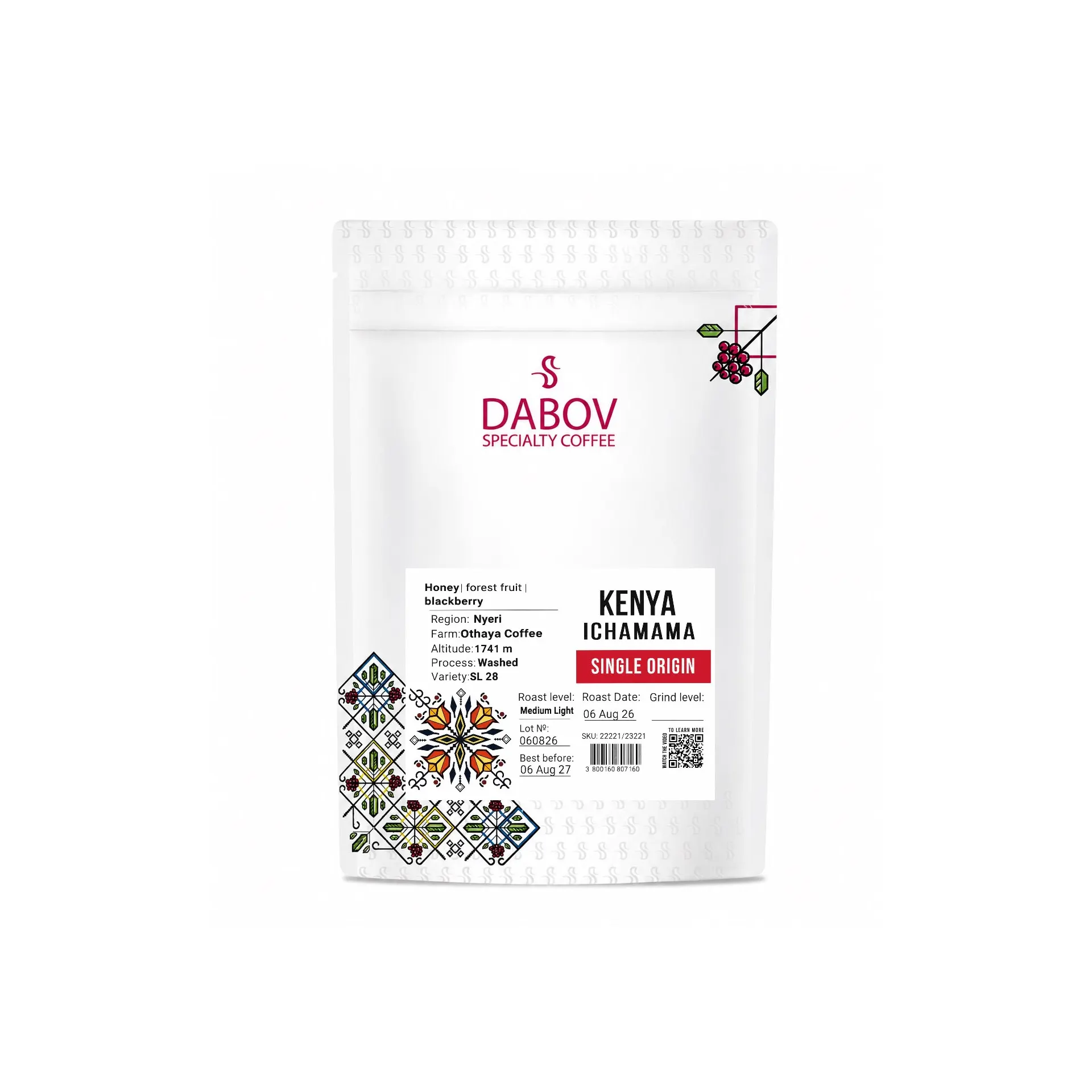
| Nyeri | 1,500–2,100 m | Deep red Andosol, high iron | Intense blackcurrant, blackberry, dense body, winey finish |
| Kirinyaga | 1,400–2,000 m | Mineral-rich volcanic, slightly lighter | Citrus brightness, floral (jasmine), cleaner finish |
| Bungoma | 1,100–1,600 m | Heavier clay-loam | Fuller body, lower acidity, chocolate and nut notes |
| Embu | 1,200–1,900 m | Volcanic transitional soils | Balanced, berry-forward, medium body |
| Murang'a | 1,400–1,900 m | Red-brown volcanic | Bright citrus, light floral, good clarity |
Nyeri is Kenya's most celebrated sub-region. The farms and smallholder cooperatives around Othaya, Tetu, and the slopes facing Mount Kenya consistently score the highest at the Nairobi Coffee Exchange. Nyeri coffees from top washing stations like Kagumoini and Gichathaini regularly attract premium bids and ship to specialty roasters worldwide at prices well above the C-market.
Kirinyaga, wrapping the southern and eastern slopes of Mount Kenya, produces coffees with a slightly cleaner, more floral expression—less wine-forward than Nyeri, more jasmine and citrus-forward. The Thirikwa and Kii washing stations in Kirinyaga have developed strong direct-trade relationships with European and North American roasters specifically for this differentiated profile.
Bungoma, in western Kenya near Uganda, sits lower and warmer. Its coffees will not exhibit the signature Kenyan brightness—they are the anomaly that proves the elevation rule.
The Cultivar Story: SL28, SL34, Ruiru 11, and Batian
Kenyan coffee's distinctive cup profile is inseparable from its cultivar genetics. The Scott Laboratories selections from the 1930s—SL28 and SL34—were developed to identify drought-tolerant, high-quality varieties for colonial-era plantation farming. They became the foundation of modern Kenyan specialty.
SL28
SL28 is widely regarded as Kenya's prestige cultivar, responsible for much of the blackcurrant intensity and wine-like acidity associated with the origin. Its cup quality is exceptional—dense body, vibrant fruit, complex finish—but it is demanding: susceptible to coffee berry disease (CBD) and coffee leaf rust (CLR), and relatively low-yielding per tree. For specialty buyers who want archetypal Kenya, SL28 lots command the highest premiums.
Genetically, SL28 is thought to have drought-tolerant East African heritage, possibly descended from the Tanganyika Drought-Resistant variety. This lineage contributes both its large bean size and its distinctive metabolite profile—particularly the thiol compounds that produce blackcurrant and cassis notes.
SL34
SL34 offers a slightly different cup expression: more citrus-forward, heavier body, less of the intense blackcurrant but with excellent grapefruit and stone-fruit acidity. It is more vigorous and adaptable in the field than SL28, making it the dominant variety in Kirinyaga and parts of Murang'a. SL34 is also susceptible to CBD and CLR, which is why it's being supplemented with newer varieties on many farms.
Ruiru 11
Released in 1985 by the Coffee Research Institute at Ruiru, this compact hybrid was bred to resist coffee berry disease. It yields more per hectare than SL28 or SL34—but its cup quality is considered inferior by most specialty buyers: lower acidity, less complex, flatter finish. Many cooperatives require minimum plantings of Ruiru 11 for disease management but separate it from their SL lots at intake.
Batian
Batian (2010) is the current generation: compact like Ruiru 11 but with significantly better cup quality. Named after one of Mount Kenya's twin peaks, Batian resists both CBD and CLR while approaching SL34 cup quality. It's the recommended variety from Kenya's Coffee Research Institute and is gradually increasing in plantings, though it still lacks the intense character of SL28 in top lots.
The Double-Fermentation Washed Process
Kenya's processing method is the structural backbone of its cup brightness. The "Kenya process" is a variant of the washed method that adds a critical second fermentation step—sometimes called double washing or the extended-fermentation protocol.
The sequence at a Kenyan washing station (locally called a factory):
- Pulping — ripe cherries are depulped within 12 hours of picking, removing the outer fruit skin
- First fermentation — beans ferment in water tanks for 24–48 hours to break down mucilage
- First wash — beans are washed in channels of clean water to remove fermented mucilage
- Soaking — beans are soaked in fresh, clean water for an additional 12–24 hours (the Kenya-specific step)
- Second wash and grading — beans move through grading channels; heavier, denser beans sink and are separated from lighter floaters
- Raised-bed drying — 14–21 days on African raised beds, turned regularly for even drying
The extended soaking step drives additional enzymatic breakdown of phenolic compounds and acids, contributing to the cleaner, brighter, more defined acidity that distinguishes top Kenyan washed lots from coffees processed with a standard single-fermentation washed method.
Grading: AA, AB, and What the Numbers Mean
Kenyan coffee is graded primarily by bean size using a sieve system. Size is a proxy for density and cup quality—larger, denser beans from high-altitude slow-matured cherries tend to yield more complex cups.
- AA — beans that pass through a size 18 (6.8 mm) sieve; the premium commercial grade
- AB — a blend of A (size 16 sieve) and B (smaller than A); substantial volume, often excellent quality
- PB (Peaberry) — round single seeds from cherries where only one seed developed; often intense flavor concentration; commands its own premium
- C — smaller commercial grade; lower-altitude or lower-quality lots
- E (Elephant bean) — oversized mutant beans; variable cup quality
"Size is the proxy for quality, not the cause of it. A good AA lot from a washing station in Nyeri outperforms a mediocre AA from elsewhere at every cup parameter—but grade tells you the sorting discipline, not the flavor." — Common position among Kenyan specialty traders
The Nairobi Coffee Exchange is Kenya's primary price-discovery mechanism. It is competitive, transparent, and has historically driven upward pressure on quality because producers see direct financial feedback when cup scores and grades lead to higher bids. Some buyers now operate under direct trade arrangements, contracting with cooperatives outside the auction for consistent supply of specific varieties and washing station lots.
Brewing Kenyan Coffee
Kenyan coffee's high acidity, dense body, and pronounced fruit character reward brewing methods that provide extraction precision. The goal is to fully develop the sweetness and complex mid-palate without over-extracting the already-prominent acidity into harsh territory.
Pour-over (V60, Chemex, Kalita Wave): The ideal match for Nyeri and Kirinyaga lots. Precise control over flow rate and total brew time preserves the delicate floral and fruit top notes while building a clean base. Recommended: 93–96°C water, medium-fine grind, 3:00–3:30 total brew time.
AeroPress: Excellent for medium-dark Kenyan lots where you want to emphasize body. An inverted brew at 85–88°C produces lower-acidity cups that still express stone fruit and chocolate notes. A 2-minute steep with a fine-medium grind and gentle press yields a concentrated, full-bodied cup; dilute with 50 ml of hot water for a flat white-style long drink.
Espresso: Challenging but rewarding. Washed Kenyan beans are dense and resist over-extraction—often run well at longer ratios (1:2.5 to 1:3) and higher temperatures (94–96°C). The result is a bright, complex shot with none of the typical espresso bitterness. If you find the acidity too forward straight from the portafilter, add a small amount of hot water (2–3 ml) directly to the shot—the dilution rounds the sharpest citric edges without collapsing the fruit character.
One universal rule across all methods: rest the beans at least 5–7 days post-roast. Kenyan coffee off-gases aggressively and tastes harsh, over-carbonated, and acidic when brewed too fresh. The additional rest allows CO₂ to stabilize and lets the sweetness emerge properly.
Frequently Asked Questions
What makes SL28 different from other Kenyan varieties in the cup?
SL28 consistently produces more intense blackcurrant and dark berry acidity, higher perceived sweetness, and a wine-like finish compared to SL34 or Ruiru 11. The difference is genetic: SL28's metabolite profile during cherry maturation concentrates specific thiols and organic acids that produce its signature. It's rarer in commercial channels because of its low yield and disease susceptibility.
Why is Kenyan AA more expensive than AB?
AA is not inherently better—it is larger, which in Kenya's high-altitude context correlates with denser, more complex beans. But grade is only part of the story. A well-processed AB lot from a top Nyeri washing station often cups higher than a careless AA from a lower-altitude farm. Grade reflects sorting discipline; cup score reflects farming and processing quality.
Does the double-fermentation process make Kenyan coffee more acidic?
The extended soaking step does not add acidity—it refines it. The additional enzymatic activity clarifies the acids already present in the bean, making the acidity taste cleaner and more distinct rather than more intense. Improperly fermented Kenyan coffee can taste sour and vinegary; the Kenya process, done correctly, produces precision rather than excess.
Which Kenyan sub-region should I try first?
Start with a Nyeri AA from a named washing station (Kagumoini, Gichathaini, or Othaya are well-known benchmarks). Nyeri is the archetype—if you enjoy it, explore Kirinyaga for a slightly more floral, less wine-forward expression. For milder acidity and more body, look to Embu or Murang'a.
Conclusion
Kenyan coffee's reputation rests on a precise convergence: the genetic heritage of SL28 and SL34 cultivars producing characteristic thiols and organic acids; high-altitude Andosol soils supplying nutrient density for slow, complex cherry maturation; and a double-fermentation washed process that clarifies and intensifies rather than masks origin character. The Nairobi Coffee Exchange then functions as a quality amplifier—competitive bidding rewards traceability and cup quality in ways that flat-price commodity markets don't. The result is one of the most consistent, recognizable flavor signatures in specialty coffee. Explore our single-origin coffee selection to find Kenyan lots from current harvest years.