The Coffee Belt: Geography of Cultivation
Coffea arabica evolved in the montane forests of southwestern Ethiopia at elevations of 1,500 to 2,000 meters, under the filtered light of a forest canopy, in a climate of mild temperatures and reliable seasonal rainfall. That original niche defines the range in which Arabica can be grown commercially: a narrow equatorial belt between the Tropics of Cancer and Capricorn, where frost is rare, temperatures range from 15 to 24 degrees C, and annual rainfall reaches 1,200 to 2,000mm.
Within that belt, altitude is the most powerful single variable affecting cup quality. Higher altitude means cooler temperatures, which slows cherry maturation from a few weeks to several months. Slow maturation allows more complete sugar development, denser cellular structure, and the accumulation of flavor precursor compounds that become the complex organics of a well-roasted specialty coffee. Beans from 1,800 meters in Huila, Colombia, and beans from 800 meters in Cerrado, Brazil, are both Arabica, but they belong to entirely different flavor categories.
Ethiopia: Birthplace of Arabica and Genetic Reservoir
Ethiopia is the only country where Coffea arabica grows both cultivated and wild in forest understories. The genetic diversity of Ethiopian coffee populations is orders of magnitude greater than anywhere else in the world, because these are the original populations from which all commercial Arabica cultivars derive. That genetic diversity is directly responsible for the extraordinary range of flavor profiles in Ethiopian coffees, from the intensely floral, bergamot-citrus character of washed Yirgacheffe to the dark, winey, blueberry-jam intensity of dry-processed Harrar.
Yirgacheffe and Gedeo zone: Grown at 1,700 to 2,200 meters in the SNNPR region, these coffees from the Gedeo agroforestry system are among the most distinctive in the world. Washed processing produces clean, transparent cups where jasmine, lemon curd, bergamot, and green tea notes are typical. The Gedeo zone is a UNESCO World Heritage Site for its unique multi-canopy agroforestry model that has been maintained for centuries.
Sidamo (Sidama): The broader plateau region around Yirgacheffe, producing coffees with slightly more body and less floral intensity but similar bright acidity. Washed Sidama coffees often show peach, apricot, and stone fruit notes alongside the citrus character typical of the region.
Harrar: Grown at 1,500 to 2,100 meters in eastern Ethiopia using the natural (dry) processing method, Harrar coffees are profoundly different. The fruit intensity from natural processing, combined with the wild landrace genetics of the area, produces cups with blueberry, dark chocolate, and wine-like complexity.
Kenya: SL Cultivars and the Nairobi Auction System
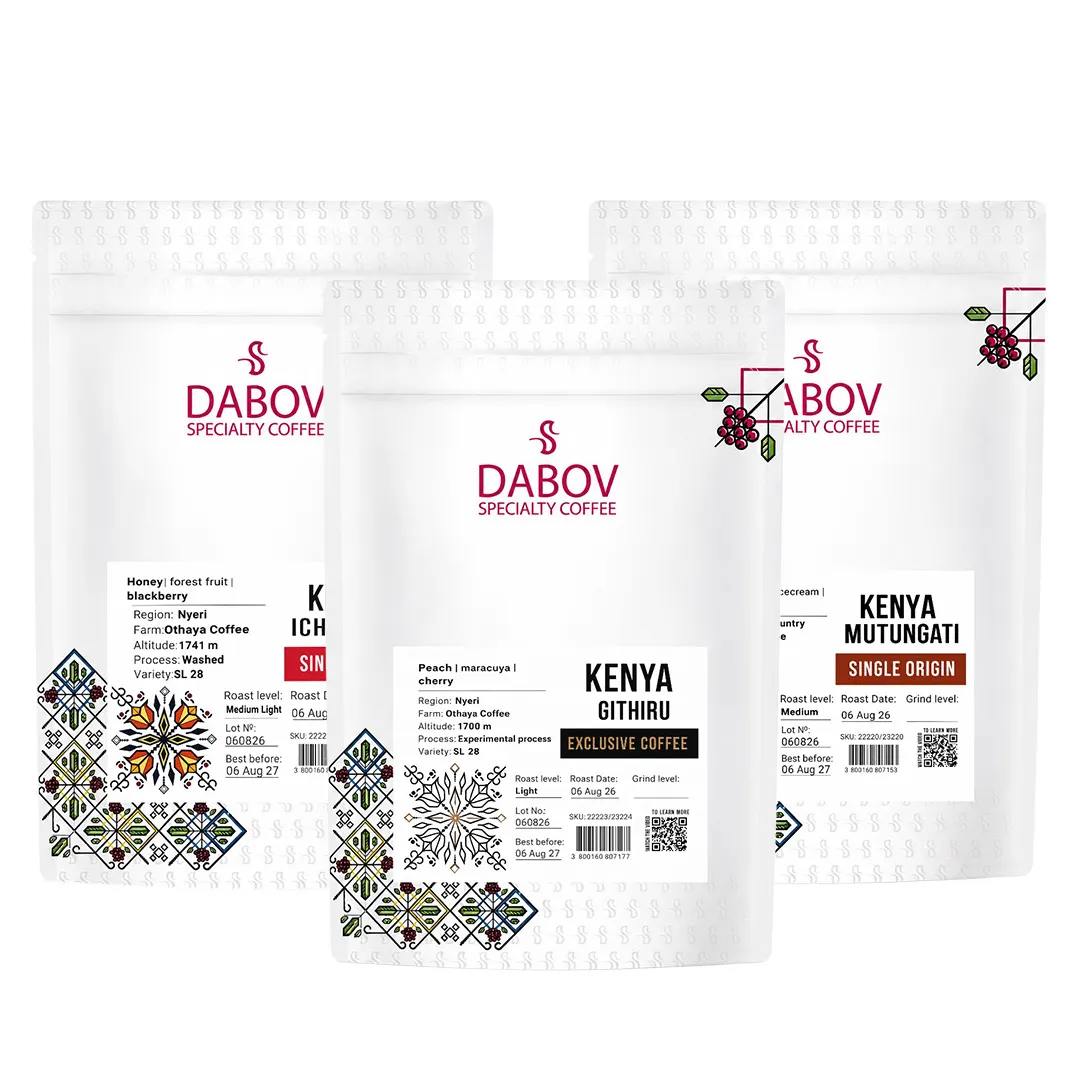
Kenyan specialty coffee occupies a narrow price tier above almost all other African origins. The reasons are traceable and specific: the SL28 and SL34 cultivars developed by Scott Laboratories in the 1930s, the high volcanic altitude of the Aberdare Range and Mount Kenya slopes at 1,400 to 2,000 meters, the bright red nitisol soils, and the wet processing infrastructure maintained by cooperative mills.
SL28 in particular has an unusual biochemistry that produces exceptionally high concentrations of phosphoric acid, the smooth, clean acid associated with citrus and black currant character. Combined with the high organic matter in Kenyan volcanic soils and the careful wet-processing that prevents fermentation off-notes, the result is coffee that is unmistakable: deeply acidic in a way that reads as juicy and complex rather than sharp or harsh. Tasting notes of black currant, tomato, and dark berries are common.
The Kenyan auction system, through which the majority of specialty Kenyan coffee passes, is both a quality control mechanism and a pricing structure. Cooperatives submit lots to the Nairobi Coffee Exchange, where they are graded and auctioned to licensed buyers. The system ensures traceability and creates competition for quality. AA grade designation refers to bean size at screen 18 and above, not cup quality; some of the most complex Kenyans are AB or PB (peaberry) grade.
Colombia: Three Cordilleras, Year-Round Harvest
Colombia's unique geography gives it an agricultural advantage that no other major producer shares: three parallel ranges of the Andes create a patchwork of microclimates at varying altitudes, aspects, and rainfall patterns across the country. Because different regions reach peak cherry ripeness at different times of year, Colombia produces high-quality green coffee year-round rather than in a concentrated single harvest window.
The major specialty-producing departments include Huila, Nariño, Cauca, and Antioquia, each with distinct elevation profiles and flavor tendencies. Nariño produces coffees at extreme altitudes up to 2,300 meters with exceptional acidity and dense cellular structure. Huila at 1,500 to 1,900 meters produces the caramel sweetness, medium body, and mild fruit notes that represent the Colombian archetype internationally.
The dominant cultivars are Caturra (a natural mutation of Bourbon), Castillo (a disease-resistant hybrid developed by Cenicafé), and Typica in older plantings. All are Arabica and all share the clean, well-balanced profile that makes Colombian coffee one of the most reliable choices for specialty buyers who need consistent quality across large volumes.
Brazil: Volume, Natural Processing, and Espresso
Brazil is the largest coffee producer in the world, responsible for approximately one-third of global supply. It is also the dominant source of natural-processed Arabica for espresso blends globally. The geography is different from most other specialty origins: lower altitudes of 800 to 1,200 meters, flat to gently rolling terrain suited to mechanical harvesting, and a pronounced dry season that facilitates natural processing.
The main specialty-producing regions are Cerrado Mineiro, Sul de Minas, and Mogiana. Cerrado Mineiro, now a recognized geographical indication, produces coffees with a consistent flavor profile: medium body, low acidity, nutty and chocolate notes, and the sweetness from natural processing. The key cultivars are Bourbon, Mundo Novo, and Catuai. Yellow Bourbon from specific farms at higher altitudes within Sul de Minas occasionally produces coffees with complexity rivaling higher-altitude Colombian or Central American lots.
Central America: Costa Rica, Guatemala, Honduras
Central America's volcanic mountain ranges create some of the most diverse growing conditions in the Coffee Belt. Altitude ranges from 1,200 to 2,000 meters. The volcanic soils are mineral-rich and well-drained. Rainfall is reliable, and most countries have distinct growing seasons that allow careful cherry ripeness management.
Costa Rica is distinguished by its restriction to Arabica cultivation since 1989 (Robusta is legally prohibited) and its development of the honey process, in which coffee is dried with varying amounts of mucilage left on the bean. Yellow, red, and black honey designations reflect the amount of mucilage and corresponding sweetness in the cup. Tarrazú, grown at 1,500 to 1,900 meters on the slopes of Cerro de la Muerte, is the most celebrated origin within Costa Rica.
Guatemala produces coffees across eight distinct growing regions, of which Huehuetenango at 1,500 to 2,000 meters under dry conditions and Antigua in the shadow of three volcanoes are the most recognized. Guatemalan coffees typically show brown sugar sweetness, mild fruit, and caramel body with moderate acidity.
Honduras has emerged as one of the highest-volume specialty producers in Central America over the past 15 years, driven by investment in wet milling infrastructure and the elevation of the Copán and Marcala appellations. Honduran coffees at their best show stone fruit, chocolate, and a distinctive mild sweetness that works well in both pour-over and espresso.
Indonesia: Wet-Hulled Complexity and Giling Basah
Indonesian coffees, particularly those from Sumatra, Sulawesi, and Flores, are categorically different from any other major origin because of the wet-hulling process unique to the region. In Giling Basah, coffee cherry is pulped and fermented briefly, then the parchment is removed while the bean still carries 30 to 50 percent moisture content, far wetter than any other processing step in normal coffee production.
This high-moisture parchment removal exposes the green bean directly to the humid tropical environment during drying. The biological activity during this exposed drying phase produces a distinctive flavor signature: low acidity, very full body, and a complex array of earthy, herbal, cedar, tobacco, and occasionally musty notes that are absent from all other processing methods.
Sumatran Mandheling, Gayo Aceh, and Toraja from Sulawesi are the most recognized within this category. All reward roasting to Full City or Full City+ more than most other origins, with those roast levels developing the chocolate and cedar notes well without pushing into harshness.
Origin Comparison Reference
| Region | Altitude (m) | Primary Processing | Dominant Cultivars | Signature Cup Profile |
|---|---|---|---|---|
| Ethiopia Yirgacheffe | 1,700-2,200 | Washed | Heirloom landraces | Jasmine, citrus, bergamot |
| Ethiopia Harrar | 1,500-2,100 | Natural | Heirloom landraces | Blueberry, dark chocolate, winey |
| Kenya Central | 1,400-2,000 | Washed double ferment | SL28, SL34 | Black currant, citrus, full body |
| Colombia Huila | 1,500-1,900 | Washed | Caturra, Castillo | Caramel, red apple, balanced |
| Colombia Nariño | 1,800-2,300 | Washed | Caturra, Typica | High acidity, stone fruit, complex |
| Brazil Cerrado | 800-1,200 | Natural | Bourbon, Mundo Novo | Chocolate, hazelnut, low acid |
| Costa Rica Tarrazú | 1,500-1,900 | Washed, honey | Caturra, Catuai | Honey sweetness, caramel, clean |
| Guatemala Huehuetenango | 1,500-2,000 | Washed | Bourbon, Caturra | Brown sugar, mild fruit, caramel |
| Sumatra Mandheling | 900-1,500 | Wet-hulled | Tim Tim, Ateng | Earthy, cedar, chocolate, full body |
Frequently Asked Questions
Does single-origin mean higher quality than a blend?
Not necessarily. Single-origin is a sourcing transparency claim, not a quality claim. A well-designed blend can be more complex and consistent than a mediocre single-origin lot. What single-origin guarantees is traceability to a specific place, which allows you to understand what you are tasting and select deliberately.
Why do Ethiopian coffees taste so different from Brazilian coffees?
Altitude, processing method, and genetics account for most of the difference. Ethiopian specialty coffees are typically grown at 1,700 to 2,200 meters using washed or natural processing from heirloom landrace varieties with exceptional genetic diversity. Brazilian lots are grown at 800 to 1,200 meters using natural processing from modern Bourbon and Typica derivatives. The combination of lower altitude, natural process, and different genetics produces the nutty, chocolate, low-acid profile typical of Brazil versus the floral, fruit-forward, high-acid profile typical of Ethiopian specialty lots.
What is the Coffee Belt?
The Coffee Belt is the equatorial zone between the Tropics of Cancer and Capricorn where climate conditions support commercial coffee cultivation. It encompasses roughly 70 countries in Africa, Asia, Central and South America, and Oceania. Within the belt, quality is strongly correlated with altitude, soil quality, and farming practices rather than simply with latitude.
How does processing method affect what I taste?
Processing method is one of the most powerful post-harvest levers on flavor. Washed coffees are stripped of cherry pulp and mucilage before drying, producing clean, transparent cups that reflect origin and cultivar character clearly. Natural coffees are dried as whole cherries, infusing the bean with fruit sugars and fermentation compounds that add sweetness, body, and fruit intensity. Honey processing leaves some mucilage on the bean during drying, producing a middle ground of sweetness with less fermentation character than naturals.
Conclusion
The best coffee growing regions are not arbitrary rankings; they are the result of specific intersections of altitude, soil chemistry, cultivar genetics, and human agricultural knowledge accumulated over decades or centuries. Ethiopia matters because it harbors the genetic diversity that underpins all commercial Arabica. Kenya matters because its specific terroir and cultivar combination produces a flavor profile that cannot be replicated elsewhere. Brazil matters because its scale and natural processing infrastructure supply the body and sweetness that blends and cold brew depend on.
Buying coffee by origin is how you navigate from luck to deliberate choice. Once you know that you respond to the phosphoric acidity and black currant notes of SL28 from Mount Kenya slopes, or to the jasmine and bergamot of a washed Gedeo Yirgacheffe, you can search for those characteristics systematically rather than hoping to reproduce an experience you cannot describe. Explore our roasted coffee selection to find single-origin lots sourced from the regions covered here.