

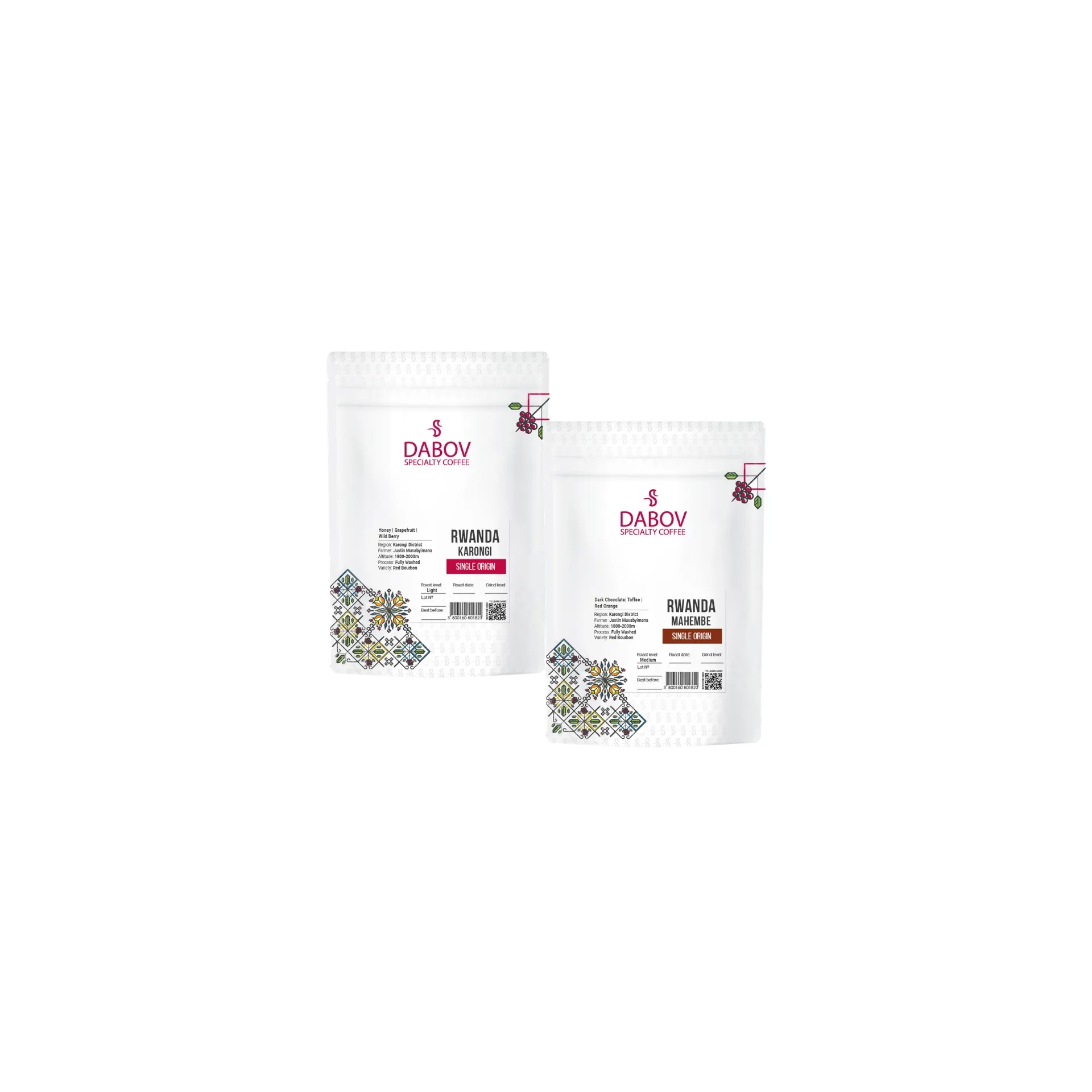
A home coffee bar with excellent equipment and expired beans, no backup filters, and a grinder that has not been calibrated in four months is not a professional-grade setup — it is a professional-looking disappointment. The gap between having the right tools and consistently making great coffee is almost always in the consumables: sourcing, rotation, inventory, and maintenance. Here is how to close that gap.
The Three-Bean Rotation System
Keeping three distinct coffees on hand at all times is the simplest system that serves every need a home bar encounters — the curious daily drinker, the afternoon crowd that avoids caffeine, and the person who just wants something reliable and comforting.
Position 1: Single-origin, lighter roast. This is your exploration slot — the coffee that changes most frequently, sourced from whatever origin or processing method interests you right now. Ethiopian washed, Kenyan SL28, Guatemalan Huehuetenango, Colombian anaerobic. The criteria: a roast date within the last 10 days, a clearly stated origin, and something specific to taste for — a named variety, a processing method, an altitude. This is the bean you use for deliberate brewing: pour-over, AeroPress, or careful French press.
Position 2: Comfort blend, medium roast. This is your daily driver. It does not need to be complex; it needs to be reliable. A good house blend from a local roaster — medium roasted, forgiving of slight grind or temperature variation, works equally well in a French press and an automatic machine — earns this slot. You should always have 100–150 grams of this on hand. It is the coffee you make before you are fully awake.
Position 3: Decaf. A quality decaf is not an afterthought. If you host guests or share your bar with someone who avoids caffeine, having a decaf that cups close to its caffeinated counterpart is a genuine hospitality gesture. Swiss Water Process or Mountain Water Process decaf Arabicas retain significantly more origin character than CO2-extracted options — look for these specifically. Keep 50–100 grams on hand at all times.
Bean Rotation Cadence
The three-bean system only works if you rotate on schedule. Stale beans are the single most common quality failure in home bars that otherwise have good equipment.
| Position | Target Quantity | Reorder Trigger | Freshness Window | Source Cadence |
|---|---|---|---|---|
| Single-origin (Pos. 1) | 150–250g | When below 75g | 2–4 weeks post-roast | Every 2–3 weeks |
| Comfort blend (Pos. 2) | 200–350g | When below 100g | 3–5 weeks post-roast | Every 3–4 weeks |
| Decaf (Pos. 3) | 100–150g | When below 50g | 4–6 weeks post-roast | Every 4–5 weeks |
Decaf loses aromatic complexity more slowly than caffeinated coffee because the processing step (Swiss Water or similar) removes some volatile compounds that would otherwise off-gas, leaving it more stable. Four to six weeks is a realistic freshness window for quality SWP decaf.
Buy Position 1 from local specialty roasters or rotating subscription services (Trade, Onyx, Dispatch Coffee). Buy Position 2 in larger quantities from a roaster whose blend you have vetted — consistency matters more than novelty here. Buy Position 3 whenever your stock falls below the reorder trigger.
Filter Inventory
Running out of filters at 6:30am is a small catastrophe with an entirely preventable cause. Different brewing methods require different filter stocks — and they are not interchangeable.
| Brewing Method | Filter Type | Par Stock | Reorder Unit | Notes |
|---|---|---|---|---|
| Hario V60 (01) | Tabbed white paper | 100 filters | Box of 100 | Size 01 fits single-cup; confirm ring vs. tabbed |
| Hario V60 (02) | Tabbed white paper | 100 filters | Box of 100 | Most common home V60 size |
| Chemex 3-cup | Chemex bonded square | 50 filters | Box of 100 | Thicker than standard; buy Chemex brand |
| Chemex 6-cup | Chemex bonded square | 50 filters | Box of 100 | Same filter as 3-cup |
| AeroPress | AeroPress micro-filters | 200 filters | Pack of 350 | Small; a pack lasts 6+ months |
| Moka pot | None required | — | — | Metal basket is the filter |
| French press | None required | — | — | Metal mesh is the filter |
| Auto-drip | Brand-specific basket filter | 50 filters | Box of 100–200 | Check your machine's basket size |
A par stock of 50–100 filters per method you use regularly means you have 1–3 months of daily brewing covered. Set a calendar reminder to check filter levels monthly.
Buy unbleached filters where both bleached and unbleached options exist — the difference is minimal once pre-rinsed, but some cuppers find bleached filters add trace paper notes. Pre-rinsing (pouring hot water through the dry filter before adding grounds) eliminates this concern entirely and is worth making a habit regardless.
Milk and Milk Alternatives
Milk stock strategy depends on how many milk-based drinks you make per week. If you make one latte daily, you need 150–200ml of milk per day — about 1 liter per week at minimum. Stock accordingly, not just whatever happens to be in the fridge.
For steaming (espresso-based drinks):
| Milk Type | Foam Quality | Flavor Profile | Notes |
|---|---|---|---|
| Whole dairy (3.5%+ fat) | Excellent microfoam | Rich, slightly sweet | Best for latte art; gold standard |
| 2% dairy | Good | Lighter, less sweet | Works well for most drinks |
| Oat milk (barista version) | Good-excellent | Mild oat flavor, slightly sweet | Oatly Barista, Minor Figures: designed for foaming |
| Soy milk (barista version) | Fair-good | Neutral, slight beany note | Can curdle in acidic espresso — pour espresso into milk |
| Almond milk (barista version) | Poor-fair | Nutty, thin | Separates easily; not recommended for microfoam |
| Coconut milk (barista version) | Fair | Sweet, coconut forward | Flavor-dominant; intentional choice |
"Barista version" milk alternatives are formulated with higher fat content and added stabilizers that allow them to foam. Standard oat milk or almond milk does not foam reliably — the barista versions are not a premium upsell, they are a different product.
Keep at least two milk types stocked: your primary (whole dairy or oat barista), and a backup alternative for guests. A 1-liter carton of oat barista milk has a longer shelf life than fresh dairy, making it a reliable backup that does not expire between social occasions.
Syrups and Flavor Additions
A focused syrup inventory serves most home bar needs without requiring a shelf full of bottles that go stale before you finish them.
Core rotation (three bottles):
- Plain simple syrup — 1:1 sugar and water, either homemade or purchased. Dissolves cleanly in cold and hot drinks. Replace refined white sugar with this for drinks where granulated sugar would not dissolve (iced drinks).
- Vanilla syrup — the single most versatile flavored syrup. Works in lattes, cold brew, and hot coffee. Monin and Torani are widely available; DaVinci offers a natural vanilla that skews less synthetic.
- One seasonal syrup — rotate based on what you are currently making. Caramel in fall and winter. A light floral (lavender, elderflower, rose) in spring and summer. Hazelnut year-round if that is your preference.
Volume guidance: A 750ml bottle of standard syrup, used for one to two drinks per day, lasts approximately 3–4 weeks. A 1-liter bottle lasts 4–6 weeks. Do not buy more than you use in 6 weeks — syrups lose flavor potency and can grow mold in their poured-from spout after opening.
Spices and dry additions: Keep small quantities of ground cinnamon, cocoa powder (Dutch-process for drinks, not baking cocoa), and vanilla extract for garnishing and stirring. A 50g tin of cinnamon lasts 6 months at one drink per day; replenish annually regardless.
Cleaning Supply Inventory
The single biggest preventable quality degrader in home espresso is a machine or grinder that has not been cleaned on schedule. Build a cleaning supply inventory that makes the schedule effortless to follow.
| Item | Purpose | Par Stock | Reorder Trigger | Cadence |
|---|---|---|---|---|
| Cafiza espresso machine cleaner | Backflush cleaning (espresso) | 1 box (100 tabs or 500g) | Below 20 tabs / 100g | Weekly backflush; monthly deep clean |
| Grinder cleaning tablets (Grindz) | Burr cleaning without disassembly | 1 box (430g) | Below 100g | Monthly, or every 10–15 pounds of coffee |
| Descaling solution (citric acid or brand-specific) | Scale removal from kettle and machine boiler | 2 packets | Below 1 packet | Every 2–3 months (hard water: monthly) |
| Unscented dish soap | General rinsing and manual cleaning | Standard bottle | When low | Daily or as needed |
| Group head brush (nylon, 2-in-1) | Portafilter and group head clearing | 1 brush | When worn (annually) | After every espresso session |
| Microfiber cloths | Surface wipes, steam wand purging | 4–6 cloths | When stained or worn | Weekly wash |
| Screen cleaning brush | V60, pour-over rinse | 1 brush | When worn | Weekly |
Organize your cleaning supplies in a small bin or basket beneath the coffee station, separate from general kitchen cleaning supplies. Dedicated placement eliminates the friction of finding what you need — friction is the enemy of consistent cleaning habits.
The Grinder Calibration Log
A grinder that has not been re-calibrated since you set it up three months ago is a grinder that is almost certainly slightly off. Burrs wear down gradually; coffee oils coat calibration surfaces; thermal changes in the kitchen affect tolerances. The gap between "set it and forget it" and a properly maintained grinder becomes audible in the cup as extraction becomes less consistent over time.
What to track in a calibration log:
| Entry | What to Record |
|---|---|
| Date | When you adjusted or cleaned |
| Grinder setting | Numeric or visual position on grind ring |
| Beans in grinder | Which coffee, roast date |
| Brewing method | French press, V60, espresso — affects target grind |
| Brew result | Extraction outcome: over, under, balanced |
| Adjustment made | Direction and amount of adjustment |
| Notes | Any unusual sounds, dose, or output observation |
A paper log in a dedicated notebook kept next to the grinder is fine. A simple spreadsheet works equally well. The format matters less than the habit. Review the log when your extraction suddenly drifts — you can correlate the change with when you last used a different bean, cleaned the grinder, or adjusted the burr gap.
Calibration events to always log:
- After cleaning with Grindz tablets (burr position can shift slightly)
- When switching from one bean type to another with very different density
- After any grinder disassembly
- If you notice suddenly increased fines in your pour-over or sudden resistance in espresso pull
Seasonal Rotation: Adjusting Stock Through the Year
Consumable needs shift with season and usage patterns. A brief seasonal adjustment guide:
Summer: Cold brew concentrate replaces some hot brewing volume. Stock coarser-grind supplies and larger batch containers. Position 1 rotation can lean toward naturally processed coffees (fruity, dessert-forward) that perform well in cold applications. Oat milk consumption typically rises as iced lattes increase.
Fall/Winter: Hot drink volume increases. Comfort blend (Position 2) consumption rises; stock slightly more. Seasonal syrup slots fill with caramel, cinnamon, and spiced options. Milk consumption from steaming increases — adjust dairy par stock accordingly.
Year-round: Filters, cleaning supplies, and decaf rotation are essentially season-neutral. Review and restock these on the first of each month regardless of season.
Frequently Asked Questions
How do I know when beans are too old to use?
The practical test is brewing a pour-over and observing the bloom. Fresh beans (within 2–4 weeks post-roast) bloom vigorously — the grounds swell and produce visible CO2 bubbles when you add water. Stale beans bloom minimally or not at all. The cup will taste flat, lacking the high notes and aromatic complexity you expect from the origin. When bloom disappears, the beans are past peak. They are still safe to brew — they just taste significantly less interesting.
Should I freeze beans for long-term storage?
For long-term storage of beans you will not use for more than a month, freezing works well — but only if you freeze in an airtight container (not the paper bag) and thaw completely before opening the container. The risk is condensation from the temperature differential when you open a cold container — moisture is the enemy. For your regular three-position rotation, room-temperature airtight storage is correct. Do not cycle beans in and out of the freezer.
How many grams of beans do I go through per week?
At a standard 15g dose per cup, one cup per day = approximately 105g per week = about 450g per month. Two cups per day doubles those numbers. Use your actual brewing frequency to calculate par stock — a well-calibrated par stock means you never run out and never keep a full unopened bag sitting for more than a few weeks.
Is a dedicated grinder log really necessary?
It is not strictly necessary, but it dramatically accelerates your ability to troubleshoot extraction problems and replicate successful brews. Without a log, "the coffee tasted off this morning" is a mystery. With a log, you can correlate it with a burr adjustment you made three days ago or a new bag of beans you opened yesterday. Five minutes of logging per week saves hours of frustrated dialing-in.
What is the best way to dispose of used coffee grounds?
Coffee grounds are an excellent compost input — high in nitrogen, acidic, and useful for deterring some garden pests. If you compost, add all grounds directly. If not, local community gardens often accept coffee grounds. Avoid pouring grounds down the drain regularly — they accumulate and can contribute to drain blockages over time, especially with fats from milk residue.
Conclusion
A home coffee bar that runs like a professional setup is not defined by its most expensive piece of equipment. It is defined by whether the beans are fresh, whether the filters are in stock, whether the milk options are complete, whether the grinder was cleaned last week, and whether someone has been paying attention to what the extraction is telling them. Build the three-bean rotation, set par stocks on filters and cleaning supplies, keep a calibration log, and review your consumables inventory once a month. That is the pro difference — not the hardware.
For your Position 1 single-origin slot, browse our specialty roasted coffee selection — each lot is dated and described with the tasting notes that help you choose what to taste for next.