Why Decaf Brews Differently: The Porosity Problem
When green coffee beans undergo decaffeination, the extraction process doesn't just remove caffeine — it partially disrupts the bean's internal cell structure. The cellular matrix, which in a regular green bean is dense and intact, becomes more permeable after prolonged exposure to water, CO2, or solvent. After roasting, this means the decaffeinated bean has more open pathways for water to penetrate.
The practical result: water extracts soluble compounds from decaf grounds faster than from equivalent regular beans. This isn't a subtle difference. In a side-by-side comparison at the same grind setting and water temperature, decaf will typically run 15–30 seconds faster through a V60 than regular coffee and will reach over-extraction bitterness with less contact time.
Over-extracted decaf doesn't just taste bitter — it often tastes muddy or astringent, a quality that comes from polyphenol extraction at elevated temperature over excessive time. Unlike a slightly over-extracted regular coffee where you might taste dark caramel notes, over-extracted decaf frequently just tastes indistinct and unpleasant. The margin for error is narrower.
Decaffeination Methods and How They Affect Flavor
Not all decaffeination processes are equal. The method used shapes both the flavor profile and the structural changes to the bean.
| Method | Caffeine Removed | Flavor Retention | Chemical Use | Notes |
|---|---|---|---|---|
| Swiss Water Process | ~99.9% | Good — clean, bright | None | Most common for specialty decaf |
| CO2 Process | ~99% | Excellent — preserves volatile aromatics | None | Higher cost; used by premium roasters |
| Mountain Water Process | ~99.9% | Good | None | Similar to Swiss Water; uses Mexican glacier water |
| Methylene Chloride (DCM) | ~99.7% | Decent | Yes | Residue levels are below detectable in roasted beans |
| Ethyl Acetate ("natural") | ~99% | Moderate | Derived from fruit esters | May add faint sweetness in some batches |
For specialty-focused decaf, Swiss Water and CO2 processes are the standard. Swiss Water-processed decaf from a quality roaster at a light-to-medium roast level can express genuine origin character — Ethiopian Swiss Water decaf still shows fruit and floral notes; Colombian shows its characteristic nuttiness and mild citrus.
Avoid decaf that doesn't disclose its decaffeination method. The omission usually indicates DCM or EA solvent processing, which isn't harmful (traces burn off during roasting) but it does signal the roaster isn't particularly focused on this segment of their offering.
Sourcing: What to Look For
Freshness matters more for decaf than most people realize. The increased porosity that makes decaf extract faster also makes it go stale faster — the open cellular structure allows oxygen access and flavor degradation at a higher rate than intact regular beans.
Roast date is non-negotiable. Buy decaf roasted within the past two to three weeks for filter brewing, or one to three weeks for espresso. A "best by" date without a roast date is a red flag — it means the roaster doesn't expect you to think about freshness.
Whole beans, always. Pre-ground decaf is already starting from a disadvantaged position. Ground coffee has an enormous surface area, and decaf's increased porosity means it goes flat even faster than pre-ground regular coffee.
Specific origins worth seeking out:
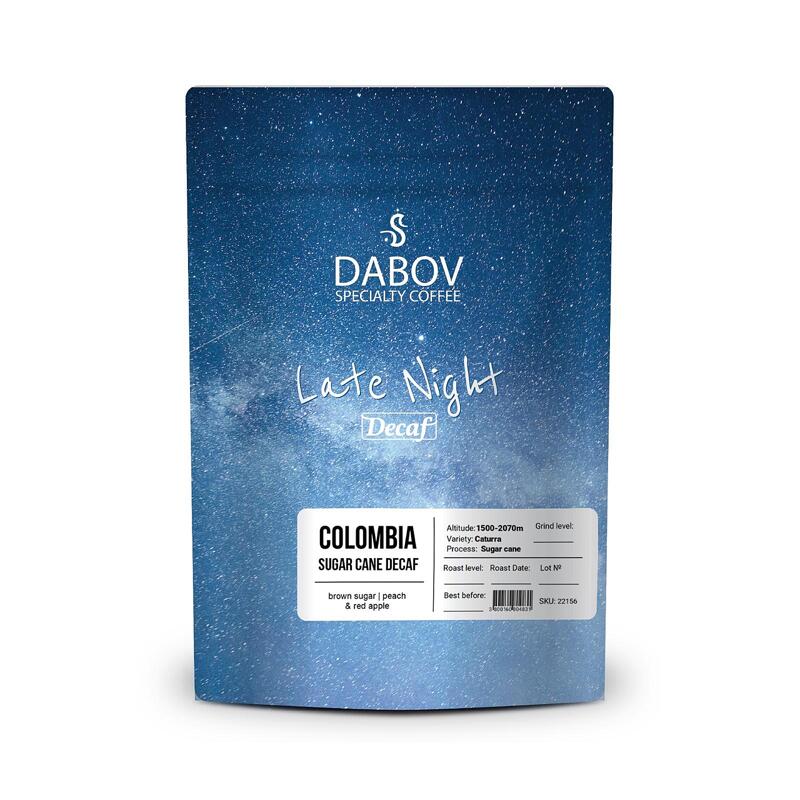
- Colombian Swiss Water Process decaf: Consistent, widely available, excellent for everyday filter brewing. Expect brown sugar, mild stone fruit, and hazelnut.
- Ethiopian CO2-process decaf: More expensive and harder to find, but when you do, it retains genuine brightness and fruit character — a convincing decaf for light-roast fans.
- Sumatra Swiss Water Process decaf: Low acidity, heavy body, earthy notes — well-suited for French press and dark-roast drinkers.
Recipe Adjustments by Brew Method
The core adjustments for decaf across all methods:
- Grind slightly coarser than you would for the same method with regular coffee. This slows the extraction rate to compensate for the bean's higher porosity.
- Lower the water temperature by 2–4°C. Cooler water extracts more slowly, giving you a wider window before over-extraction.
- Taste earlier than you would with regular coffee and be prepared to stop.
Here's how those principles translate by method:
Pour-Over (V60, Chemex, Kalita Wave)
Starting recipe for decaf pour-over (V60 02):
- Dose: 20g
- Water: 320g at 90–92°C (lower than the 93–95°C you'd use for regular coffee)
- Grind: medium (one or two steps coarser than your regular pour-over setting)
- Target total brew time: 3:00–3:30 (slightly shorter than regular)
The shorter target brew time might seem counterintuitive — you'd expect slower extraction to mean longer time — but the coarser grind means water drains faster. You're compensating for increased porosity with a coarser grind, and the coarser grind drives a faster drain time. The net extraction should be similar to what you'd get with regular coffee at your standard recipe.
If your decaf brews are still tasting flat or muddy at this setting, try dropping temperature to 88–89°C before going coarser. Flat decaf is often a temperature issue as much as a grind issue.
French Press
French press is forgiving for decaf because the immersion method gives you ongoing control — you can taste at three minutes versus four and adjust steeping time accordingly.
Decaf French press recipe:
- Dose: 60g per liter (standard 1:16 ratio)
- Grind: coarse — same as regular French press or one step coarser
- Water: 92–93°C
- Steep time: 3:30–4:00 minutes (versus 4:00–4:30 for regular)
The critical variable here is not over-steeping. Regular French press can handle 4:30 with coarse grounds; decaf French press goes muddy fast after 4 minutes. Set a timer and don't walk away.
AeroPress
The AeroPress is arguably the most forgiving method for decaf because you can vary steep time precisely and the immersion-plus-pressure combination extracts efficiently even from porous beans.
Decaf AeroPress inverted recipe:
- Dose: 15g
- Water: 230g at 88–90°C
- Grind: medium-fine
- Steep: 1:30 minutes total
- Plunge: 30 seconds steady pressure
Lower temperature is more important in AeroPress decaf than in most other methods because the pressure amplifies extraction rate — already elevated due to porosity. Starting at 88°C gives you insurance against the muddy zone.
Espresso
Decaf espresso is notoriously the hardest to dial in. The increased porosity means resistance through the puck is lower than regular coffee at the same dose and grind, causing flow to start faster and increasing the risk of channeling.
Key adjustments:
- Grind slightly finer than your regular espresso setting to rebuild resistance
- Aim for a 26–30 second shot time (slightly shorter than the 28–32 range for regular espresso)
- Some baristas increase the dose by 1–2g to improve puck integrity
- Pre-infusion (a low-pressure pre-wet of 4–5 seconds before full pressure) helps prevent channeling through the more porous puck
Roast Level and Its Effect on Decaf
Decaf responds to roast level similarly to regular coffee, but the relationship is compressed. Very light-roasted decaf often under-develops — the bean's altered cellular structure means light roasting leaves more unroasted, grassy notes than the same degree of roast in regular coffee. Medium to medium-dark roasting tends to work best for most decaf origins, allowing full development without tipping into the bitter-ashy territory that dark-roasted decaf often inhabits.
If you prefer light-roasted coffees for their acidity and origin clarity, choose decaf from a roaster who specifically light-roasts their decaf and accounts for the structural differences (often a slightly extended development time relative to their regular light roasts).
Tasting Decaf Critically: What Good Looks Like
Once you've dialed in the grind and temperature adjustments, here's what a well-brewed specialty decaf should taste like across common origins:
A well-brewed Colombian Swiss Water decaf should be clean and balanced — brown sugar sweetness in the front, mild hazelnut in the mid-palate, a soft finish without noticeable bitterness. If the cup is thin or sour, the dose is too low or the grind is too coarse. If it's astringent, the temperature is too high or the grind is too fine.
An Ethiopian CO2-process decaf at medium roast should show genuine fruit character — think dried stone fruit rather than fresh berry, with floral notes in the aroma. It should NOT taste like "generic dark coffee." If it does, the beans are stale or the roaster's development time was insufficient.
The benchmark question: does this cup taste like a specific origin rather than just "coffee"? If you can identify flavor characteristics tied to the growing region, the decaf is performing correctly. That level of specificity is achievable — it just requires freshness, proper technique, and a roaster who takes their decaf sourcing seriously.
Frequently Asked Questions
Does decaf coffee taste worse than regular coffee?
It can, but it doesn't have to. The quality gap between standard supermarket decaf and a freshly roasted, properly sourced specialty decaf is enormous. Swiss Water or CO2-processed decaf from a quality roaster, brewed with recipe adjustments for the bean's characteristics, is entirely capable of producing a delicious cup with genuine origin character.
What is the best brew method for decaf?
AeroPress and French press are the most forgiving for beginners because their immersion approach and adjustable steep time tolerate variation better than pour-over. Pour-over produces the cleanest expression of a quality decaf's flavor, but requires more precise dialing. Espresso is the most technically demanding.
Should I use the same grind for decaf as regular coffee?
No. Decaf's increased porosity means you should use a slightly coarser grind for filter methods and a slightly finer grind for espresso, relative to your regular settings for the same method. Counterintuitive for espresso, but the goal is to rebuild puck resistance that the porosity reduces.
Why does my decaf taste bitter and muddy?
Over-extraction is the most likely cause. Try coarsening the grind by one step and lowering water temperature by 2–3°C. If the problem persists, check the roast date — old decaf beans (more than 4 weeks post-roast) extract poorly regardless of technique.
Is decaf good for cold brew?
Yes — cold brew is one of the more forgiving formats for decaf because the low temperature and long steep time (12–18 hours) give a gentle, controlled extraction. Use the same coarse grind as regular cold brew but check flavor at 12 hours rather than waiting the full 18, since decaf can over-extract even in cold water given enough time.
The Takeaway
Decaf coffee's bad reputation is largely a brewing problem, not a bean problem. Understanding that decaffeinated beans are structurally more porous — and therefore extract faster and over-extract more easily — is the single insight that transforms decaf results. Grind coarser for filter methods, lower water temperature by 2–4°C, and taste earlier than you would with regular coffee.
Pair those adjustments with a freshly roasted, Swiss Water or CO2-processed single-origin decaf, and the gap between decaf and regular is far smaller than its reputation suggests.
Find specialty decaf options in our coffee selection, all roast-dated for freshness.