
The Botanical Foundation: Arabica vs. Robusta
Coffee exists in approximately 124 distinct species, but only two dominate global commerce: Coffea arabica and Coffea canephora (robusta). This distinction is fundamental to understanding coffee quality and the choices farmers make during cultivation.
Arabica accounts for 60–70% of global production despite being the more temperamental species. Arabica plants thrive at elevations between 1,200–2,000 meters above sea level (MASL), where cooler temperatures slow cherry maturation and allow sugars and acids to develop in complex ratios. Arabica's optimal temperature range is 15–24°C (59–75°F); frost kills the plant, while sustained heat above 27°C reduces quality. Arabica inherently produces beans with higher acidity, nuanced aromatics, and lower caffeine (1.2–1.5% by dry weight), characteristics that define specialty coffee. However, arabica's delicate physiology makes it vulnerable to leaf rust (Hemileia vastatrix), coffee wilt disease, and the coffee berry borer (Hypothenemus hampei).
Robusta grows at lower altitudes (200–800 MASL) and tolerates temperatures up to 30°C. Its hardiness, higher caffeine content (2.5–3.0%), and robust flavor profile make it economical for instant coffee and espresso blends seeking crema and body. Robusta's lower acidity and earthy, tobacco-like notes distinguish it from arabica's citrus and floral profiles. A single robusta plant yields 40% more cherries than arabica, which economics favor in commodity markets but which specialty roasters largely avoid.
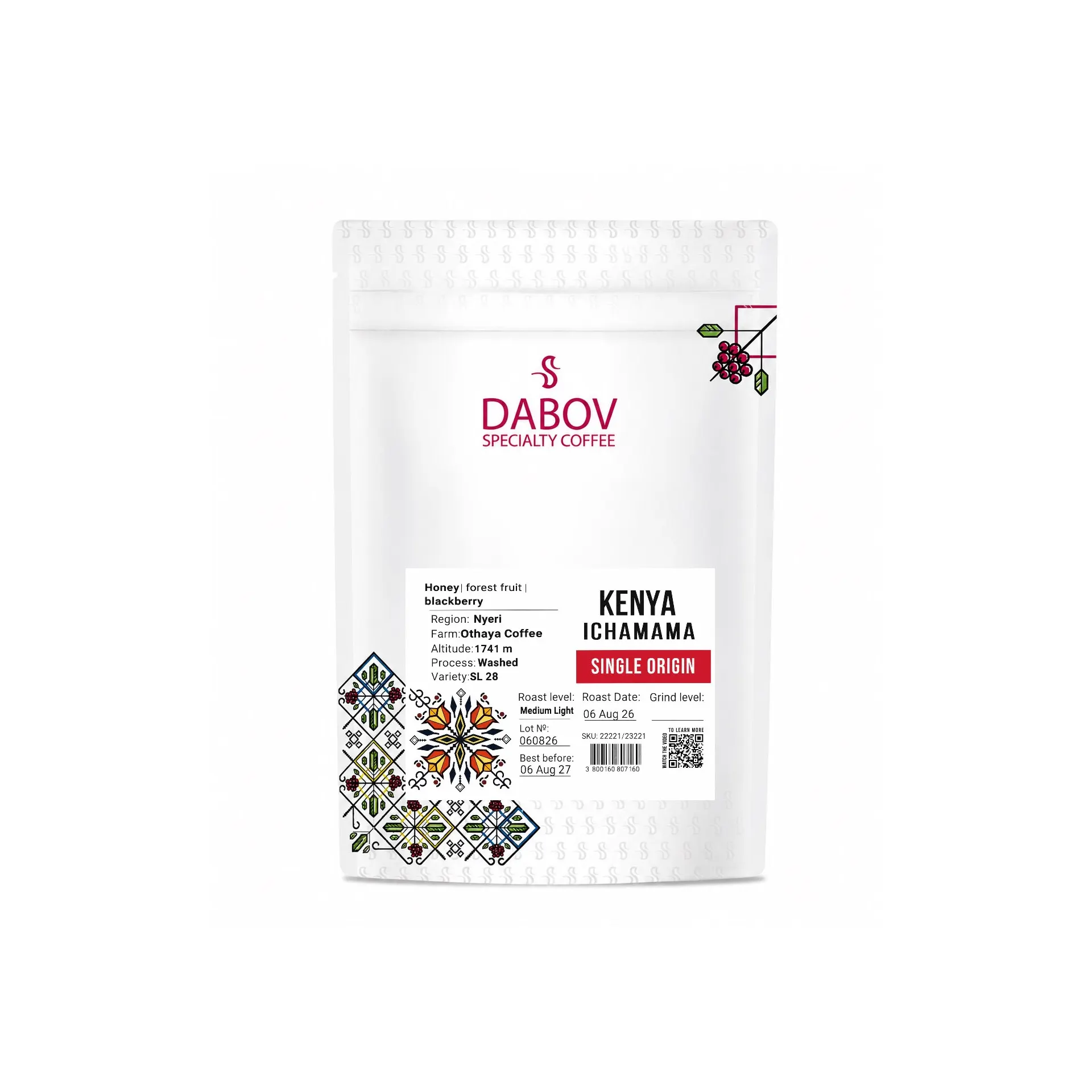
Within arabica, regional cultivars carry distinct flavor signatures. Bourbon, Typica, and Geisha are heirloom varieties with centuries of cultivation history. Bourbon—grown extensively in Brazil and Rwanda—develops chocolate and caramel notes. Geisha, originally from Ethiopia's Gesha region but prized after discovery in Panama's Boquete at 1,600–2,200 MASL, produces floral, citrus-forward profiles and consistently auctions above $500/pound. SL28, a Kenyan cultivar selected in the 1930s for drought resistance and disease resilience, develops blackcurrant and jasmine aromatics. Yellow Bourbon from Colombia, a natural mutation of red Bourbon, exhibits honey-forward sweetness due to higher sucrose retention.
Stage 1: Seed Selection and Plant Establishment
Quality coffee begins with seed selection. Unlike commodity crops where any viable seed suffices, specialty coffee production demands seeds from high-performing, disease-resistant mother plants. Farmers or nursery operators select cherries from plants exhibiting disease resistance, balanced yield, and desirable cup characteristics. These seeds undergo controlled fermentation for 24–48 hours to remove any pulp residue, then dry to 10–12% moisture before storage at 15–20°C in breathable cloth bags.
Germination occurs in shaded nurseries using well-draining media (typically 1:1 sand and compost). Optimal conditions are 25–28°C and consistent moisture—too wet invites fungal disease, too dry stunts the radicle emergence. Seeds germinate in 30–60 days; the radicle (embryonic root) emerges first, followed by cotyledons (seed leaves) after 8–12 days. By 4–6 months, seedlings develop 4–6 true leaves and reach 20–30 cm height—ready for field transplanting.
Field establishment requires meticulous site preparation. Soil pH ideally sits between 6.0–6.5; volcanic loam with 5–8% organic matter provides optimal nutrient and water-holding capacity. Elevation profoundly affects final cup quality. Ethiopian coffees from the Yirgacheffe region at 1,700–2,200 MASL develop bright acidity and floral complexity; Colombian coffees from Geisha-adjacent elevations in Huila at 1,900–2,100 MASL develop jammy sweetness. Each 100 meters of elevation gain reduces average temperature by 0.5°C and extends cherry maturation by 3–5 days, allowing more sugars to accumulate.
Planting density affects shade management and disease pressure. Dense planting (2,000–3,000 plants/hectare) allows for inter-canopy ventilation; sparse planting (1,500–2,000 plants/hectare) simplifies mechanized harvesting. Shade management is pivotal: full-sun monoculture maximizes yield but increases pest pressure, soil erosion, and temperature extremes. Shade-grown systems at 30–40% canopy coverage using nitrogen-fixing Inga or native trees maintain biodiversity, reduce input costs through leaf-litter fertilization, and allow slower, more complex flavor development.
Stage 2: Cultivation and Flowering
Coffee plants reach productive age at 3–4 years; a mature plant produces 0.5–2 kg of dried green coffee annually depending on cultivar, elevation, and management. Flowering is triggered by soil moisture after a dry season—seasonal rain patterns are critical. In East Africa, long rains (March–May) trigger flowering; in Brazil, flowering occurs August–October after the May–July dry season.
Flowering lasts 48–72 hours; flowers are small (< 1 cm), white, jasmine-scented, and hermaphroditic. While coffee plants self-pollinate, cross-pollination by insects increases fruit set. Honeybees and native bees are crucial; farms with high bee diversity see 15–20% higher yields. After pollination, the flower matures into a green berry within 2 weeks, then slowly expands over 5–7 months into a cherry.
Nutrient management during development determines final cup balance. Excessive nitrogen (>100 kg/ha/year) produces large cherries but vegetal, grassy flavors; balanced nitrogen (60–80 kg/ha/year) with adequate potassium (80–100 kg/ha/year) develops sweetness and complex acidity. Micronutrients matter: boron deficiency causes flower drop; magnesium deficiency yellows older leaves; zinc deficiency stunts new growth. Organic farms apply compost (5–10 tons/ha/year) to supplement NPK; conventional farms use synthetic fertilizers timed to growth phases.
Water management separates exceptional cups from ordinary ones. Arabica requires 1,500–2,000 mm annual rainfall, distributed across rainy seasons with a dry spell to concentrate sugars. Drought stress at cherry maturation (3–4 months pre-harvest) concentrates sugars and acids; excessive drought (<1,000 mm annually) produces small, underdeveloped cherries. Irrigation—drip systems favored over flood—maintains soil moisture at field capacity (25–30% volumetric water content) without waterlogging. Fermentation diseases (Botrytis, Fusarium) proliferate in overwatered soils.
Stage 3: Harvest and Initial Processing
Harvest timing defines acidity, sweetness, and body. A coffee cherry requires 6–8 months from flower to full ripeness (red/dark maroon color). Mature cherries have peak Brix (sugar content) at 20–22°. Overly immature cherries (yellow/light red, Brix 12–16°) produce grassy, sour notes; overripe cherries (dark maroon, shriveled skin) develop fermented, vinegary flavors. Selective picking—harvesting only ripe cherries and leaving immature ones for later—demands labor but yields consistent, high-quality beans. Strip picking (removing all fruit regardless of ripeness) is efficient for commodity production but requires sorting post-harvest.
Once harvested, cherries must be processed within 24 hours to prevent fermentation and fungal spoilage. Three primary methods dominate:
Washed (Wet) Processing: Water removes the 5–6 cm thick cherry skin and mucilage (sticky pectin layer). Cherries are depulped mechanically to separate skin from bean; the denuded bean, still coated in 1–2 mm of mucilage, enters fermentation tanks for 12–72 hours. Fermentation temperatures of 24–27°C and pH 4.2–4.8 activate pectinases (enzymes) that break down mucilage. Cool mountain water (16–18°C) slows fermentation; warm water (27–30°C) accelerates it. After fermentation, beans are washed in channels to remove loosened mucilage, then sun-dried on patios to 11–12% moisture. Washed coffees develop clean, bright acidity (citric acid 0.8–1.2%), medium body, and crisp finish. This method demands substantial water—5,000–7,000 liters per ton of cherries.
Natural (Dry) Processing: Entire cherries dry intact for 2–4 weeks, with beans absorbing sugars from the fruit during drying. This labor-light method suits water-scarce regions (Ethiopia, parts of Brazil). Dried cherries are hulled to remove all layers at once, yielding beans coated in residual fruit fragments and sugars. Natural coffees develop full body (high suspended solids), fruity aromatics (esters from fermentation), and lower perceived acidity due to neutralizing compounds from fruit. Ethiopian naturals develop blueberry, strawberry, and floral notes; Brazilian naturals develop chocolate, caramel.
Honey (Pulped Natural) Processing: A hybrid approach: fruit skin is removed mechanically, but 1–4 mm of mucilage is retained during drying. "White honey" (10% mucilage) yields clean cups; "black honey" (90% mucilage) produces fruity, complex profiles. Drying time: 7–15 days depending on mucilage thickness and humidity. Costa Rica and Colombia pioneered this method for quality consistency.
Stage 4: Drying, Milling, and Grading
After processing, beans must reach 11–12% moisture for stable storage. Sun-drying on raised beds or patios takes 10–20 days depending on climate. Mechanical dryers (forced-air at 40–50°C) accelerate drying but risk flavor loss if rushed below 16°C internal bean temperature during initial drying (steam loss damages cellular structure). Properly dried beans are brittle, crack audibly when bent, and show a white chalk line when cut (endosperm moisture indicator).
Milling removes parchment (arabica) or hull layers (robusta) using friction machines. Polishing—optional additional buffing—removes silvery seed coat and improves visual appeal but may strip beneficial oils. Milled beans, now "green coffee," are size-graded on screens: Screen 19/20 (large), Screen 17/18 (medium), Screen 16 and below (small). Specialty coffee typically grades Screen 17+ with <11 defects per 300g sample (SCA standards).
| Processing Method | Water Use | Flavor Profile | Acidity | Body | Fermentation Duration | Drying Time |
|---|---|---|---|---|---|---|
| Washed | 5,000–7,000 L/ton | Clean, crisp, bright | High (0.8–1.2% citric) | Medium | 12–72 hours | 10–20 days |
| Natural | <500 L/ton | Fruity, complex, jammy | Low (0.4–0.6%) | Full | 2–4 weeks on cherry | 20–35 days |
| Honey (40% mucilage) | 1,000–2,000 L/ton | Balanced, sweet, fruity | Medium (0.6–0.9%) | Medium-Full | 24–48 hours | 10–18 days |
| Anaerobic Fermented | 1,000 L/ton | Wine-like, intense floral | High (complex acids) | Medium | 48–120 hours sealed | 14–21 days |
Cupping assessment determines market grade. Professional cuppers brew 9g per 150 ml water at 93°C, cool to 70°C after 3–4 minutes, and evaluate aroma, flavor, aftertaste, acidity, body, balance, and overall impression on a 100-point scale. Scores above 85 earn "specialty" designation; 80–85 "premium"; below 80 "commercial."
Stage 5: Green Coffee Storage and Logistics
Green coffee stability depends on moisture and temperature. Optimal storage is 12–16°C and 55–60% relative humidity. Moisture below 11% invites brittleness and cracking during roasting; above 13% risks fungal growth and fermentation. Green coffee in burlap bags or jute-lined containers can age 6–12 months without significant flavor loss; vacuum-sealed specialty lots are rested 4–6 weeks post-milling to allow moisture equilibration and CO2 off-gassing before roasting.
Oxygen exposure degrades green coffee; lipid oxidation develops rancid, musty flavors. Hermetic GrainPro bags limit oxygen ingress, preserving delicate, high-altitude coffees. Storage temperature fluctuations accelerate degradation; warehouses in origin countries (often warm tropical climates) risk moisture gain and mold; importing to cool climates (Oregon, Denmark, Kenya) stabilizes green coffee in controlled environments. Major importers cup samples quarterly to track quality before releasing to roasters.
Green coffee defects increase during storage. Insect damage (coffee berry borer tunnels), fungal damage (Fusarium-infected beans), and moisture-induced fermentation develop off-flavors. Roasters inspect arrivals and may sort out defects or accept quality loss.
Stage 6: Roasting and Final Transformation
Roasting is the final alchemical transformation. Green beans (7–12% moisture, pale greenish) are heated to 195–220°C depending on desired roast level and style. During the first 4–6 minutes (drying phase), beans lose residual moisture and turn yellow. Internal temperatures reach 150–160°C; bean density is still high. At 150°C, Maillard reactions accelerate—amino acids and reducing sugars polymerize, creating brown pigments and flavor compounds (pyrazines, aldehydes, furans).
First Crack occurs at 196–205°C (typically 9–11 minutes into roast). Steam pressure from residual moisture and CO2 from chemical reactions cause cell walls to rupture, producing audible popping sounds. At First Crack, beans have expanded 50–100%, density drops ~30%, and color reaches Agtron 65–70 (light cinnamon brown). Beans dropped immediately after First Crack yield light roasts with preserved origin acidity and floral/fruity notes. Extended development (12–25% of total roast time post-First Crack) allows further Maillard deepening, sugar caramelization, and pyrolysis (thermal decomposition at >220°C), producing chocolate, nutty, full-bodied profiles.
Drop temperature determines final roast. Light roasts (205–210°C): bright, crisp, origin-forward. Medium roasts (218–224°C): balanced sweetness and acidity. Dark roasts (230–240°C): full body, chocolate, reduced acidity. Second Crack (225–235°C) indicates over-development for specialty coffee; oils migrate to bean surfaces, beans become brittle, and flavors flatten.
Post-roast cooling is critical. Hot beans continue cooking from internal heat; immediate cooling (air or water) halts reactions. Beans emit CO2 for 12–48 hours post-roast. Specialty roasters rest beans 12–24 hours before grinding to allow CO2 off-gassing and flavor stabilization. Proper rest improves extraction consistency.
Stage 7: Grinding, Brewing, and Extraction
Grinding exposes fresh surfaces and accelerates oxidation. Grind size determines extraction rate: espresso (200 microns), pour-over (300 microns), French press (800+ microns). Burr grinders produce uniform particle size; blade grinders produce inconsistent fragments causing uneven extraction.
Brewing extracts soluble solids (sugars, acids, phenolics, caffeine) from grounds. Target extraction is 18–22% of dry coffee solids dissolved into brewed liquid. Optimal brewing temperature is 93–96°C (200–205°F); cooler water under-extracts (sour, thin cup); hotter water over-extracts (bitter, harsh). Brew ratio (typically 1:16 coffee to water by weight) and contact time balance extraction. Espresso (9 bars pressure, 25–30 seconds) achieves 25–30% extraction in concentrated format; pour-over (4–6 minutes) achieves 18–20% extraction in dilute format.
Water chemistry affects extraction. Softwater (0–50 mg/L TDS) extracts aggressively, yielding sour cups; hardwater (150–200 mg/L TDS with bicarbonate) buffers extraction, yielding balanced cups. Optimal water has 50–150 mg/L TDS with moderate hardness.
Frequently Asked Questions
How long does coffee take to grow from seed to cup?
Full maturation takes 12–24 months. Seedling stage: 4–6 months in nursery. Field establishment: 3–4 years to first flower. Mature production: 20–30 years of productive life with declining yield after year 15.
Why do specialty coffees cost more?
Elevation, selective harvest, careful processing, and cupping quality increase costs. Labor for hand-picking: $1.50–3.00/kg dried bean. Premium milling and grading: $0.30–0.50/kg. Specialty-grade pricing: $4–8/kg green coffee vs. $1.50–2.50/kg commercial. Rarity and provenance command additional markups.
How does altitude affect flavor?
Higher elevation (1,500–2,200 MASL) means cooler temperatures and slower ripening, concentrating sugars and organic acids. Results: brighter acidity, more complex aromatics, lighter body. Low elevation (800–1,200 MASL) produces faster ripening, fuller body, lower acidity, and earthier profiles.
What's the difference between washed and natural coffees?
Washed coffees have fruit removed before drying, yielding clean acidity, crisp finish, and origin clarity. Natural coffees dry intact, absorbing fruit sugars, yielding fruity aromatics, full body, and lower acidity. Natural processing is lower-cost; washed demands more water and labor.
Can I taste the altitude in coffee?
Yes. High-altitude coffees typically show brighter acidity (citric, malic acids), floral/fruity notes from slower ripening. Low-altitude coffees show full body, earthiness, and chocolate from faster ripening and higher chlorogenic acid retention.
Conclusion
From a tiny seed planted at 1,600 MASL in the Geisha highlands of Panama to a precisely roasted, freshly ground cup, coffee's journey embodies agricultural artistry, scientific precision, and global logistics. Each stage—cultivar selection, elevation choice, harvest timing, fermentation duration, drying method, storage conditions, and roast profile—compounds toward final cup quality.
Understanding this journey reframes specialty coffee's premium pricing. You're not just paying for beans; you're paying for the 20+ years of consistent care, the hand-selection of ripe cherries, the precise fermentation protocols, the careful altitude-matched cultivation, and the roaster's judgment in unlocking that bean's buried potential.
Next time you brew, consider the Yirgacheffe coffee you're pouring: it came from a farmer at 2,100 MASL in the ancestral birthplace of coffee, was fermented 48 hours in mountain spring water at 24°C, dried on raised beds over 3 weeks, rested 6 months in a cool importer's warehouse, roasted 14 days ago to a light cinnamon at 209°C, and is now releasing 800 aromatic compounds as hot water extracts 20% of its soluble solids. That's not a commodity. That's the culmination of centuries of cultivation knowledge and individual artisanal judgment.