What Tasting Notes Actually Describe
Tasting notes describe sensory attributes across four dimensions: aroma, flavor, body, and acidity. Each dimension is influenced differently by origin, processing, and roast level, and understanding which variable drives which attribute is what separates genuine sensory evaluation from guesswork.
Aroma is the most complex dimension. Coffee aroma is divided into fragrance (the smell of dry grounds before water contact) and aroma proper (the smell during and after brewing). Floral, fruity, and sweet aromas tend to be associated with lighter roasts and washed processing. Smoky, nutty, and chocolatey aromas dominate in darker roasts and sometimes in natural-processed coffees.
Flavor is the combined experience of taste (perceived by taste buds — sweet, sour, bitter, salty, savory) and retronasal olfaction (aroma compounds perceived via the back of the nasal passage when you swallow or breathe out after tasting). Most of what we call coffee's flavor is actually aroma experienced retronasally. This is why coffee tastes different when your nose is blocked.
Body describes the weight and texture of the liquid in the mouth — thin and tea-like at one end, full and almost syrupy at the other. Body is influenced primarily by the amount of dissolved and suspended solids in the brew, which in turn reflects roast level (darker roasts produce more soluble material) and processing (natural coffees tend toward fuller body).
Acidity in coffee is not the same as sourness. Properly developed acidity is bright and pleasant — like the tartness of a fresh apple or the lift in a good sparkling wine — and is associated with altitude, washed processing, and lighter roasts. Sourness is unpleasant acidity, usually from under-extraction or under-development.
The SCA Flavor Wheel and How to Use It
The Specialty Coffee Association Flavor Wheel, revised in collaboration with World Coffee Research in 2016, provides the standard vocabulary for describing coffee flavor. The wheel moves from general categories at the center to highly specific descriptors at the outer ring.
The practical approach: start at the center with the broad category that matches your strongest impression (fruity? nutty? floral?). Move to the middle tier to identify the subcategory (if fruity — berry? citrus? dried fruit?). Then reach for the outer ring to name the specific note (blueberry? lemon? fig?). You may identify two or three notes from different sections of the wheel in a single cup — that complexity is characteristic of good coffee and is something to appreciate, not simplify.
The wheel's most useful function is giving a common language to experiences that are otherwise subjective. When a roaster writes "blackcurrant, bergamot, cane sugar" on the bag, they are pointing to specific wheel categories and inviting you to find those reference points in the cup. Your perception may differ — that is fine. But having the wheel as a shared reference removes the need to invent new descriptions from scratch.
Origin Profiles: The Five Most Studied Comparisons
Ethiopian Washed (Yirgacheffe, Guji, Sidama)
Ethiopia is the center of genetic diversity for Coffea arabica, and its heirloom landraces — collected varieties from wild populations rather than intentionally bred cultivars — express a flavor range found nowhere else. Washed processing in the Yirgacheffe and Guji zones produces the clearest expression of this genetic complexity.
Typical profile: jasmine and bergamot on the nose, bright lemon-lime acidity with a wine-like lift, blueberry and peach fruit notes in the cup, light body with a clean, lingering finish. The combination of floral aromatics and high acidity is distinctly Ethiopian and unmistakable once you have tasted it.
Why it tastes this way: The heirloom landraces contain flavor precursor compounds not present in introduced commercial varieties. The washed process removes all fruit material cleanly, allowing the variety's intrinsic character to express without fermented-fruit overlay. High altitude (1,700–2,200m) slows cherry development and concentrates flavor.
Ethiopian Natural (Sidama, Jimma)
Natural processing — drying the whole cherry intact — transforms the flavor profile dramatically. The fruit material surrounding the bean imparts fermented sweetness during the 15–25 day drying period.
Typical profile: intense dried fruit (blueberry, strawberry, sometimes wine grape), full body, lower acidity than washed lots from the same region, rich sweetness that persists in the aftertaste. Natural Ethiopian coffees are often described as the most accessible of specialty origins for new drinkers because the sweetness is pronounced and recognizable.
Why it tastes this way: During natural drying, the cherry sugars and fruit acids partially ferment and migrate into the bean, creating flavor compounds (esters and aldehydes) that mimic berry fruit. This is a desired outcome when controlled; poor drying hygiene creates over-fermented off-notes instead.
Kenyan (Nyeri, Kirinyaga, Embu)
Kenyan coffee occupies a singular position: it produces the world's most discussed blackcurrant note, derived in part from the SL-28 and SL-34 varieties selected in the 1930s for the Kenyan climate, and in part from the double-fermentation washed process used at Kenya's wet mills.
Typical profile: sparkling acidity with a wine-like brightness, blackcurrant as the dominant fruit note, sometimes a savory undertone (described variously as tomato or even pomegranate), full body, long sweet aftertaste.
Why it tastes this way: SL-28 and SL-34 are genetically distinct from most Ethiopian and Central American varieties and contain higher concentrations of specific flavor precursors. The double fermentation (first underwater, then in the air) produces a cleaner cup than single fermentation and contributes to Kenyan coffee's characteristic clarity. Kenya's highly organized auction system and strict grading (AA, AB, PB by bean size) enforces quality at scale.
Colombian (Huila, Nariño, Antioquia)
Colombia produces well-balanced Arabica that is neither the most complex nor the most assertive expression of the species — and that balance is its commercial strength. The country's diverse microclimates (the Andes produce three separate coffee harvest seasons in different altitude bands) enable year-round fresh-crop supply, unusual among origins.
Typical profile: medium-to-high acidity, bright but not aggressive; medium body; dominant notes of milk chocolate and brown sugar; fruit notes that vary by region from red apple (Antioquia) to lime and tropical fruit (Nariño) to stonefruit (Huila). Consistently clean, no off-flavors.
Why it tastes this way: Caturra, Castillo, and Colombia varieties — the most widely planted in the country — produce reliable, clean-cupping fruit without the intensity extremes of Ethiopian heirlooms or Kenyan SL lines. The Andes' diverse altitude band allows harvest at optimal ripeness across long windows, reducing defect pressure.
Brazilian (Sul de Minas, Cerrado, Mogiana)
Brazil's sheer production scale — approximately 35–40% of world supply — means that its cup character shapes global expectations of what coffee tastes like for most drinkers. Low altitude, flat terrain, and natural or pulped-natural processing produce a profile distinct from high-altitude African origins.
Typical profile: low acidity (sometimes almost flat), full body, dominant notes of dark chocolate, peanut, caramel, and sometimes a mild dried-fruit note from natural processing. Heavy sweetness, clean finish, no brightness.
Why it tastes this way: Low altitude (700–1,100m) in most Brazilian growing areas means cherries develop less slowly, accumulating less flavor complexity. Natural processing in Brazil's dry climate produces a reliable clean sweetness without the fermentation risk that plagues naturals in humid climates. These characteristics make Brazilian coffee the backbone of most espresso blends: the low acidity and high body provide the extraction base and mouthfeel that milk drinks require.
Sumatran (Mandheling, Lintong)
Sumatran coffee undergoes the Giling Basah (wet-hulling) process unique to Indonesia: the parchment is removed from the bean while the bean is still at high moisture content (30–50%), unlike conventional processing where hulling occurs after the bean has dried to 11–12% moisture. This unusual step exposes the bean cell walls to oxygen during a vulnerable drying phase, producing flavor compounds found nowhere else.
Typical profile: very full body (sometimes described as syrupy), very low acidity, earth and cedar aromatics, dark chocolate, sometimes tobacco or herbaceous notes, complex and sometimes polarizing. The earthiness that makes Sumatran coffee distinctive to fans is the same quality that makes it off-putting to drinkers who prefer clean, bright profiles.
Why it tastes this way: Wet-hulling produces blue-green beans that are biochemically distinct from conventionally processed green coffee. The early moisture exposure during drying creates a suite of earthy, herbal compounds (particularly guaiacol and syringol) that are absent or minimal in washed and natural coffees. Roasters must account for this in their roast profiles — Sumatran beans require different heat curves than African or Central American lots.
Comparative Summary Table
| Origin | Dominant Notes | Acidity | Body | Processing | Roast Sweet Spot |
|---|---|---|---|---|---|
| Ethiopian Washed | Jasmine, lemon, blueberry | High, wine-like | Light | Washed | Light-medium |
| Ethiopian Natural | Dried berry, strawberry, sweet | Medium | Full | Natural | Light-medium |
| Kenyan AA | Blackcurrant, bright, savory | Very high | Medium-full | Double-washed | Medium |
| Colombian | Chocolate, brown sugar, balanced | Medium-high | Medium | Washed | Medium |
| Brazilian | Chocolate, peanut, caramel | Low | Full | Natural / Pulped-natural | Medium-dark |
| Sumatran | Earth, cedar, dark chocolate | Low | Very full | Wet-hulled | Medium-dark |
| Gesha (Panama) | Jasmine, bergamot, tropical fruit | Bright, delicate | Light | Washed / Natural | Light |
How Processing Overrides Origin
One of the most useful pieces of sensory knowledge: processing method often dominates flavor character more than geographic origin. A naturally processed Ethiopian and a naturally processed Kenyan will taste more similar to each other than a washed Ethiopian and a natural Ethiopian from the same farm.
This means that the often-seen pairing of "origin + processing" in roaster tasting notes ("Ethiopian Yirgacheffe, washed" vs. "Ethiopian Sidama, natural") is meaningful and not redundant. The origin tells you about the variety and terroir; the processing tells you the flavor direction the producer chose to pursue.
Developing Your Palate: Practical Exercises
Tasting notes become precise through deliberate practice, not passive consumption.
Triangulation. Take three cups of coffee: two from the same origin/process and one from a different origin. Taste all three and identify which one is different. This forces active attention and builds discrimination faster than sequential tasting.
Comparative cupping. Brew four to six coffees simultaneously by the SCA cupping protocol (8.25g per 150ml, 200°F water, 4-minute steep, break the crust). The simultaneous comparison — tasting all cups within the same 15-minute window as they cool — eliminates the memory distortion that makes sequential tasting unreliable.
Reference flavor training. Buy a coffee aroma kit (LeNez du Cafe and Specialty Coffee aroma references are the standard options). Spend 10 minutes weekly smelling the reference vials for the flavor categories you struggle to identify — berry, floral, earthy, nutty. Your olfactory cortex encodes these as memory anchors. After 4–6 weeks, you will find them in actual coffee more reliably.
Temperature tasting. Taste the same coffee at three temperatures: just brewed (around 160°F), warm (130°F), and cool (100°F). The flavor landscape shifts dramatically. Most coffees show their best complexity in the 120–140°F range; the acidity is more pronounced hot, the sweetness and body more apparent cool.
Roast Level and Its Effect on Tasting Notes
Roast level is the variable that most consistently overrides all others for typical drinkers. A dark-roasted Ethiopian Yirgacheffe tastes nothing like a light-roasted one — the roast character (smoke, dark chocolate, carbon) dominates and suppresses the origin character (jasmine, blueberry).
Light roast: Preserves origin character. Acidity is pronounced. Fruit and floral notes are most accessible. Body is lighter. This is the preferred roast level in the specialty community for understanding what an origin actually tastes like.
Medium roast: Balances origin character with roast-developed notes. Caramel, hazelnut, and milk chocolate notes develop without suppressing fruit and floral character. The broadest commercial appeal.
Dark roast: Roast character dominates. Origin-specific notes are largely suppressed. Bitterness increases, acidity decreases, body feels heavier. Espresso intended for milk drinks often uses darker profiles because the roast-developed notes hold up through milk better than delicate origin character does.
Frequently Asked Questions
Why does my coffee taste different every time I buy the same bag?
Coffee is an agricultural product and varies by harvest year, lot, and storage conditions. More importantly: roasters often change their sourcing between seasons. A bag labeled "Ethiopian single origin" from the same roaster may be from a completely different farmer, cooperative, and processing lot than last season's bag. Look for bags that disclose specific farm, cooperative, or washing station information — that traceability tells you whether you are actually buying the same coffee twice.
Are tasting notes on coffee bags accurate?
They reflect how the roaster experienced that specific coffee under their specific cupping conditions. Your brewing variables (water temperature, grind size, water chemistry) will produce a different extraction and potentially different flavor emphasis. Treat tasting notes as a map, not a guarantee: they tell you the direction the coffee is going, not the exact destination your equipment will reach.
What makes a coffee score 90+ on the SCA scale?
A 90+ score requires exceptional marks across all 10 SCA evaluation categories: fragrance/aroma, flavor, aftertaste, acidity, body, balance, uniformity, clean cup, sweetness, and overall. In practice, 90+ coffees are characterized by exceptional clarity (no off-flavors at any temperature), extraordinary complexity (multiple well-defined flavor notes that develop and shift as the cup cools), and distinctiveness (the cup expresses something specific and memorable rather than being generically pleasant).
Should I add milk or sugar to specialty coffee?
If it makes the coffee more enjoyable for you, yes. The specialty community's preference for black coffee consumption is about preserving the ability to taste origin and processing character — milk and sugar mask these. For learning purposes, tasting a coffee black first and then adding milk teaches you what the milk changes. For daily drinking, use whatever makes the experience best.
Conclusion
Coffee tasting notes are a tool, not a test. The goal is not to prove that you can detect the bergamot note a roaster mentions on the bag — it is to develop enough vocabulary and reference memory to navigate coffee choices with more intention, communicate your preferences clearly to a barista or roaster, and extract more meaning from what is in your cup.
The comparison framework in this guide — origin, processing, roast level — explains the vast majority of the flavor variation you encounter across different coffees. Master those three variables and you can predict with reasonable accuracy what a coffee will taste like from its label alone, make more informed purchase decisions, and understand why certain coffees reward certain brewing methods more than others.
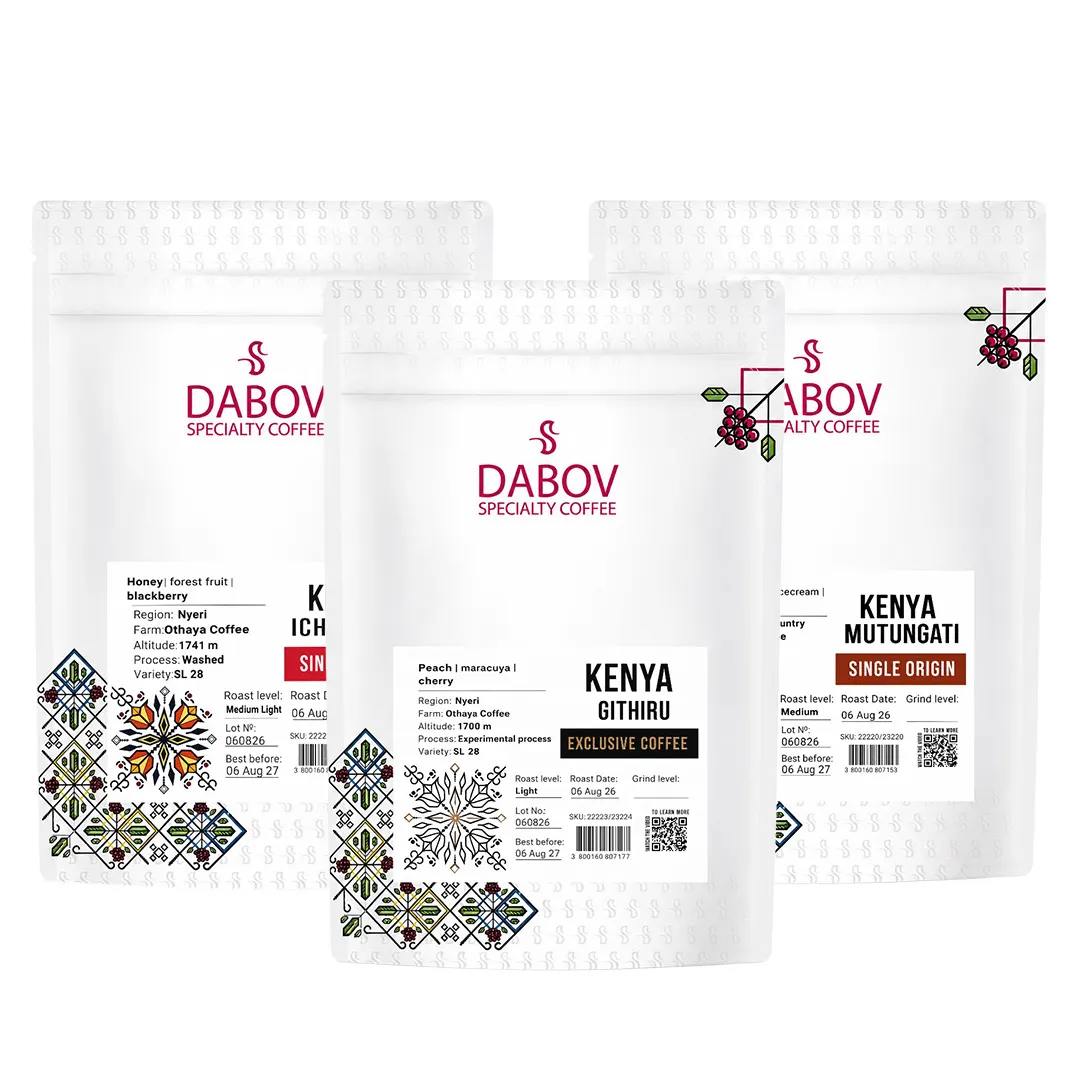
Explore our roasted coffee selection with tasting notes that trace flavor back to farm, processing, and roast — so you know exactly what to expect in the cup.